Alocasia reginula is the smallest of the jewel Alocasia most collectors will grow. It rarely reaches much beyond 25 cm, holds only a handful of leaves at a time, and each leaf is so dark and matt that it reads almost black under ordinary room light. In the trade it is better known as 'Black Velvet', and it is the plant behind the 'Ninja' forms and several of the variegated plants we grow. This page brings them together: what defines the species, how its care differs from the larger Alocasia, and where to find each of our collector guides.
What defines Alocasia reginula
Alocasia reginula A.Hay was published in 1998 in the Gardens' Bulletin Singapore, as part of Alastair Hay's work on the Alocasia of Borneo. Unusually, Hay described it from plants already in cultivation, and at the time its wild origin was unclear. A wild population has since been recorded in Sabah, Malaysian Borneo, from Tabin Wildlife Reserve in the east of the state, in a 2021 checklist of Sabah's aroids by Wong Sin Yeng and Joling.
The epithet reginula is a diminutive of the Latin regina, "queen", so the name translates as "little queen". It follows a regal naming pattern found elsewhere in the genus, which is also the source of a common mix-up with Alocasia reginae (see the questions below).
Leaf characters
- Size: a small, compact plant, usually no more than about 25 cm tall in cultivation, with a compact rosette of leaves.
- Near-peltate blades: the leaf stalk joins the blade just inside its margin, so the leaf reads as a single rounded shield.
- Velvety upper surface: very dark, matt green, soft to the eye rather than glossy, with the main veins picked out in pale silver-green.
- Paler underside: the lower surface is lighter and often flushed purple.
- Thick texture: the leaves are fairly rigid and hold their shape well once hardened.
'Black Velvet', 'Ninja' and other trade names
'Black Velvet' is a trade name for cultivated Alocasia reginula. Hay noted that the plant was already established in cultivation under it, and today the two names are used almost interchangeably. Plants labelled 'Black Velvet' are the species, not a hybrid.
'Ninja', also sold as 'Black Ninja' and 'Black Velvet Ninja', appeared on the market around 2020. It is usually traded as a selection of Alocasia reginula: very close to 'Black Velvet', but described with a double marginal vein and thicker, darker, more heavily textured leaves. Growers do not agree whether it is a genuinely distinct cultivar or a minor mutation, and some report that mature plants become hard to tell apart from 'Black Velvet'. We have found no published parentage for it, so we treat it within the reginula group and our guides describe it on that basis.
The species has also been used as a parent. 'Maharani' is reported as a hybrid between Alocasia reginula and Alocasia melo, which accounts for its thicker, more textured leaves. We cover it separately in our guides to 'Maharani' Albo and 'Maharani' Aurea.
Growing Alocasia reginula: what is different
The fundamentals in our complete Alocasia care guide all apply. A few points matter more with reginula than with the larger, faster species:
- Humidity: new leaves open most cleanly in consistently high humidity, and a cabinet or grow tent suits it well.
- Warmth: keep it warm year-round and away from draughts. Cold, wet roots are the most common way to lose one, particularly in a UK winter. Our winter care and dormancy guide covers the colder months.
- Light: bright, indirect light. The dark leaves cope with less light than many Alocasia, but too little gives long, weak stalks and small leaves. Direct sun will mark the velvet surface. Our guide to LED grow lights explains how we light ours.
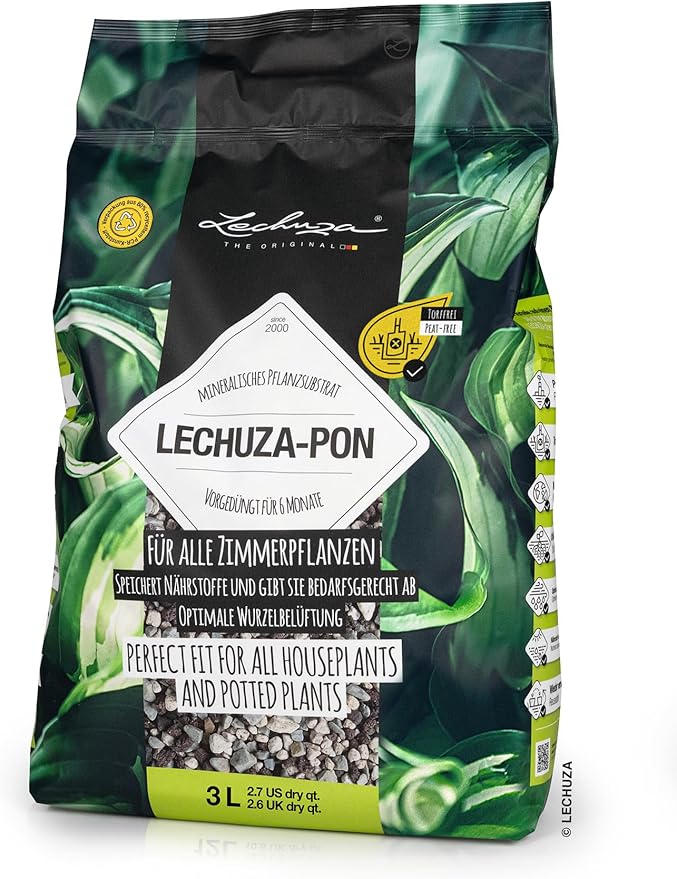
- Substrate and watering: this is the species most prone to rot in our collection. Use a small pot and an open, fast-draining mix, and let the top of the substrate dry slightly between waterings. We grow in our own pon mix, blended from the Soil Ninja range, and our substrate guide explains the blend.
- Feeding: little and often through the growing season, at a gentle strength, following our balanced feed programme.
- Pace: reginula is slow, and a new leaf every few weeks in good conditions is normal. Several leaves yellowing together usually points to cold, overwatering or root trouble, and our root rot guide covers what to check.
Variegated forms carry less chlorophyll than the plain species, so they grow more slowly again and do best towards the brighter end of the light range, short of direct sun. If you also grow Alocasia cuprea, another Bornean jewel Alocasia, the two share very similar conditions.
Our Alocasia reginula collector guides
| Name | Variegation type | Collector guide | Availability |
|---|---|---|---|
| Alocasia reginula 'Black Velvet' Gold | Aurea | Read the guide | View the plant |
| Alocasia reginula 'Black Velvet' Pink | Pink | Read the guide | View the plant |
| Alocasia 'Ninja' Albo | Albo | Read the guide | View the plant |
| Alocasia 'Ninja' Aurea Splash | Aurea (splash) | Read the guide | View the plant |
| Alocasia 'Ninja' Pink | Pink | Read the guide | View the plant |
| Alocasia 'Ninja' Tri Colour | Multi-toned | Read the guide | View the plant |
For every other species and form we cover, see our A to Z of rare Alocasia.
A note on variegation in reginula
Against the near-black leaf of reginula, variegation shows with unusual contrast, which is much of the appeal of these forms. It also behaves differently by type. Aurea sectors tend to be the most robust, since the yellow sectors still carry some chlorophyll; our guide to aurea variegation explains why. Albo sectors carry none and need more care, as covered in our guide to albo variegation. Pink variegation is typically unstable, and the proportion of colour can change from leaf to leaf; our explainer on pink variegation covers why. The complete guide to Alocasia variegation types sets out how the patterns differ.
Frequently asked questions
Is Alocasia 'Black Velvet' the same as Alocasia reginula?
Yes. 'Black Velvet' is the trade name under which Alocasia reginula is grown and sold. Botanically they are the same species.
What is the difference between Alocasia reginula and Alocasia reginae?
They are separate species with similar names. Alocasia reginae N.E.Br. was named in 1884 and Alocasia reginula A.Hay in 1998. Both come from Borneo, but reginula is the smaller plant with dark, velvety, near-black leaves, whilst reginae has a quite different leaf. Labels are sometimes mixed up, so it is worth checking which one a plant is sold as. We have a separate guide to Alocasia reginae Albo.
Is 'Ninja' a hybrid?
We have found no published parentage for 'Ninja'. It is usually traded as a selection of Alocasia reginula, close to 'Black Velvet' but with a double marginal vein and thicker, darker leaves, and some growers report the two converge as plants mature. We treat it within the reginula group.
Where does Alocasia reginula come from?
Borneo. It was first described in 1998 from plants already in cultivation, and a wild population has since been recorded in Tabin Wildlife Reserve in Sabah, Malaysian Borneo.
Why is my 'Black Velvet' rotting?
Almost always too much water for too long, often combined with cold. The root system is small, so a large pot or a dense mix stays wet well beyond what the plant can use. Check the roots, move to a smaller pot and an open mix, and see our root rot guide if they are soft or discoloured.
If you are looking for a particular reginula or 'Ninja' form, or would like advice on one already in your collection, get in touch. You can also join the drop list to hear when new plants are released. We are always happy to talk jewel Alocasia.