Alocasia fornicata sits at the opposite end of the genus from the jewel Alocasia. It is a thin-leaved, upright, fairly vigorous plant from the wet lowlands of South Asia and mainland South East Asia, with arrow-shaped leaves held on long stalks. The plain species is a quiet plant in its own right, but most collectors know it through its variegated forms, which have become some of the most widely grown variegated Alocasia in cultivation. This page brings them together: what defines the species, how its care differs from the compact jewel types, and where to find each of our collector guides.
What defines Alocasia fornicata
Alocasia fornicata (Kunth) Schott has a longer naming history than most. William Roxburgh first described the plant as Arum fornicatum in his Flora Indica (1832). Karl Kunth moved it to Colocasia as Colocasia fornicata in 1841, and Heinrich Schott transferred it to Alocasia in 1854. Both earlier names are now treated as synonyms, and you will also see the name cited as "(Roxb.) Schott" in older floras and some online sources. The epithet comes from the Latin fornix, an arch or vault.
Kew's Plants of the World Online records its native range as India, the Eastern Himalaya, Assam, Bangladesh, Sri Lanka, Myanmar, Thailand, Laos and Vietnam, and describes it as a plant of the wet tropical biome. Regional floras from Bangladesh and eastern India place it in shady, damp places: forest, village thickets, ditches and wet ground. It is common enough there that the spadix and other parts are cooked as a seasonal vegetable in parts of north-east India and Bangladesh, where it is known locally as Baibing (Mizo) and Shola kochu (Bengali).
Leaf characters
- Arrow-shaped blades: the leaves are described as sagittate or hastate, broadly triangular, with two basal lobes that are joined for a short distance at the base. How far they are joined varies between plants, which is one reason wild material can be difficult to name with confidence.
- Thin, glossy texture: a plain, smooth, mid to deep green surface with many fine side veins, very different from the thick, textured leaves of the jewel species.
- Long petioles: leaf stalks are reported at roughly 20 to 45 cm, giving an open, upright habit.
- Size: floras give a height of around 60 cm to 1.5 m for wild plants. Pot-grown plants usually stay towards the smaller end.
Rhizomes and stolons
The species grows from a rhizome, and the Bangladesh flora accounts describe it producing horizontal stolons, which is how it spreads through damp ground in the wild. In cultivation that usually shows as offsets and corms appearing around the parent plant. It is one of the more willing Alocasia in this respect, which is part of why its variegated forms have spread through collections as they have.
A note on the names
'Albo', 'Aurea', 'Lime Aurea', 'Mint' and 'Mint Albo' are collector trade names describing the colour of the variegation, not formally registered cultivars. We use them because they are how these plants are known and traded, and each of our guides explains what the name refers to.
Growing Alocasia fornicata: what is different
The fundamentals in our complete Alocasia care guide all apply. Where fornicata differs is that it behaves more like a lowland, wet-ground plant than a jewel Alocasia:
- Water: it comes from damp, often waterlogged ground and is more tolerant of consistent moisture than the jewel species. Keep the substrate evenly moist in growth, but still in an open mix: a wet, airless pot causes the same problems here as with any Alocasia.
- Humidity: the thin leaves appreciate humidity, but it does not need a cabinet in the way many jewel types do. Good household humidity, away from radiators, is usually enough.
- Light: bright, indirect light. The thin blades mark more quickly in harsh sun than a leathery jewel leaf would. Our guide to LED grow lights covers the UK winter.
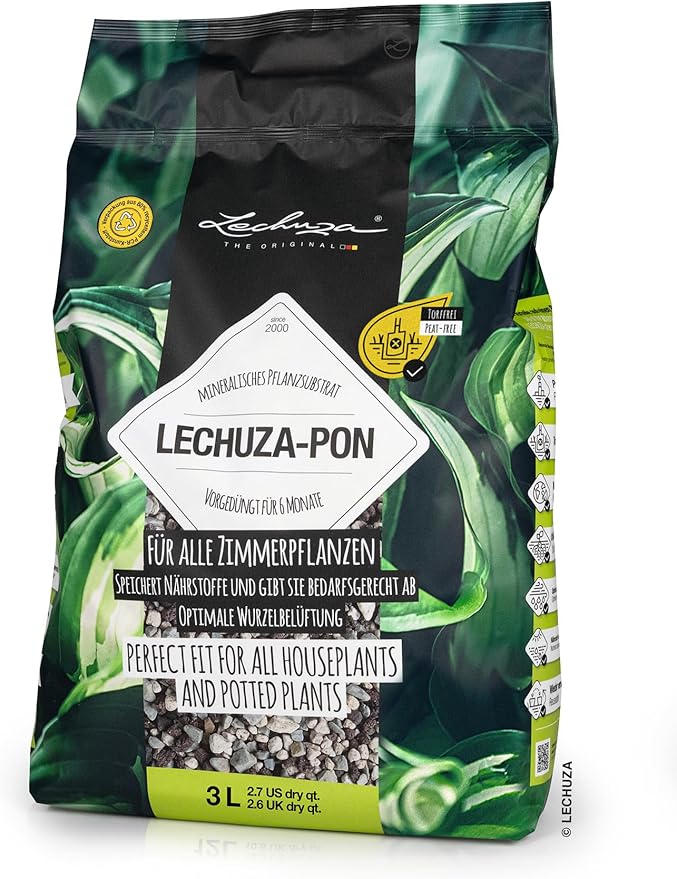
- Substrate: a faster-growing root system than the jewels, so it fills a pot sooner. We grow in our own pon mix, blended from the Soil Ninja range, and our substrate guide explains the blend.
- Feeding: it uses more food than the slow jewel species. Feed regularly through the growing season, following our balanced feed programme.
- Winter: growth slows sharply in low light and cool temperatures, and a plant may drop back to a leaf or two. Our winter care and dormancy guide covers what to expect, and the root rot guide covers what to check if leaves collapse.
- Corms: the corms it produces can be grown on. See how long a corm takes to sprout and when to move a corm to pon or soil.
Variegated forms carry less chlorophyll than the plain species, so they tend to grow more slowly and do best towards the brighter end of the light range, short of direct sun.
Our Alocasia fornicata collector guides
| Name | Variegation type | Collector guide | Availability |
|---|---|---|---|
| Alocasia fornicata | None (plain species) | Read the guide | View the plant |
| Alocasia fornicata 'Albo' | Albo (white) | Read the guide | View the plant |
| Alocasia fornicata 'Aurea' | Aurea (yellow) | Read the guide | Join the drop list |
| Alocasia fornicata 'Lime Aurea' | Aurea (lime yellow) | Read the guide | Join the drop list |
| Alocasia fornicata 'Mint' | Mint | Read the guide | Join the drop list |
| Alocasia fornicata 'Mint Albo' | Mint and albo | Read the guide | Join the drop list |
A related plant sits alongside these: Alocasia gageana × fornicata 'Aurea', a hybrid rather than a form of the species. It has its own collector guide, and you can join the drop list to hear when it is offered. For every other species we cover, see our A to Z of rare Alocasia.
A note on variegation in fornicata
Fornicata carries more types of variegation than most species in our collection. Albo forms show white, aurea forms yellow to lime, and mint forms a pale, washed green. None of these patterns is fixed: the balance of colour and green can shift from leaf to leaf, and a plant may push greener or paler growth over time. Heavily white leaves are weaker than green ones and tend to be shorter-lived. Our explainers on albo variegation and aurea variegation cover the detail, and the complete guide to Alocasia variegation types sets out how albo, aurea, mint and pink patterns differ.
Frequently asked questions
Where does Alocasia fornicata come from?
South Asia and mainland South East Asia. Kew records it from India, the Eastern Himalaya, Assam, Bangladesh, Sri Lanka, Myanmar, Thailand, Laos and Vietnam, where it grows in shady, damp places in forest and on wet ground.
Is Alocasia fornicata a jewel Alocasia?
No. It has thin, glossy, arrow-shaped leaves on long stalks and grows faster and larger than the compact, thick-leaved jewel species such as Alocasia cuprea. It is more tolerant of moisture and less dependent on very high humidity.
Why does my fornicata keep producing new shoots around the pot?
That is normal. The species spreads by rhizomes and stolons in the wild, and in a pot this shows as offsets and corms around the parent. They can be separated and grown on once they are established.
Are 'Albo', 'Aurea' and 'Mint' different species?
No. They are trade names for variegated forms of Alocasia fornicata, describing the colour of the variegation. Alocasia gageana × fornicata 'Aurea' is different: it is a hybrid, not a form of the species.
Is the variegation on a fornicata permanent?
Not guaranteed. Each new leaf can carry more or less colour than the last. Bright, indirect light and steady conditions give a variegated plant the best chance of producing well-balanced leaves.
If you are looking for a particular fornicata form, or would like advice on one already in your collection, get in touch. We are always happy to talk Alocasia.