Alocasia Gageana × Fornicata Aurea: The Complete Collector's Guide

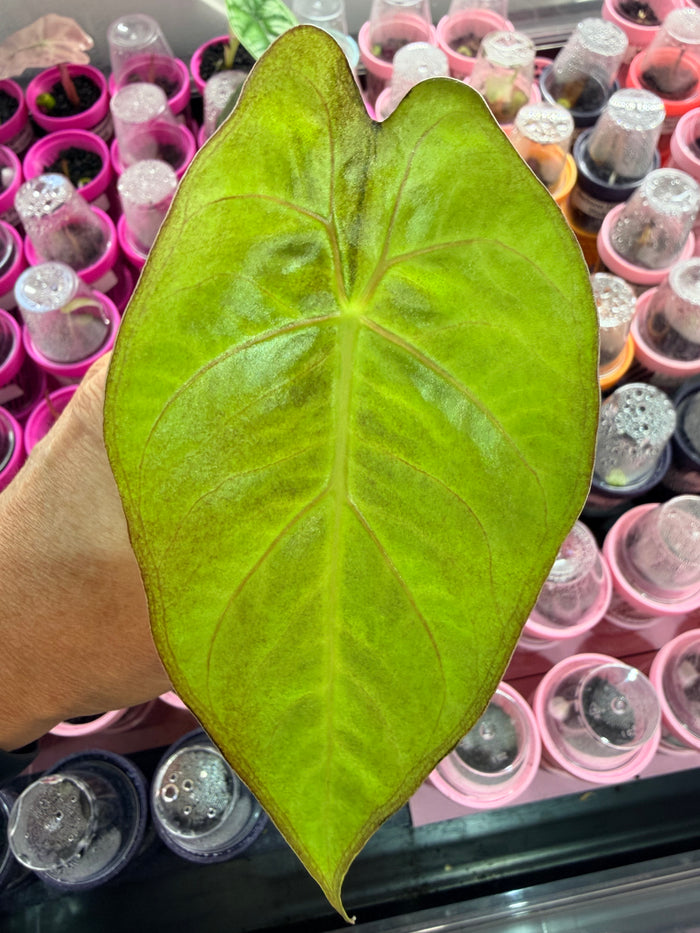
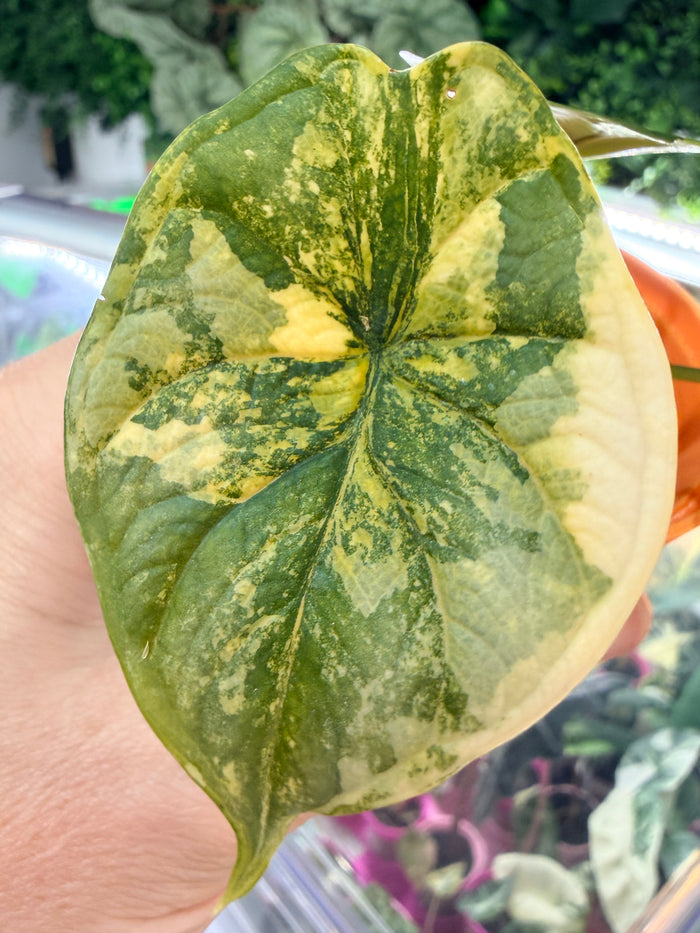
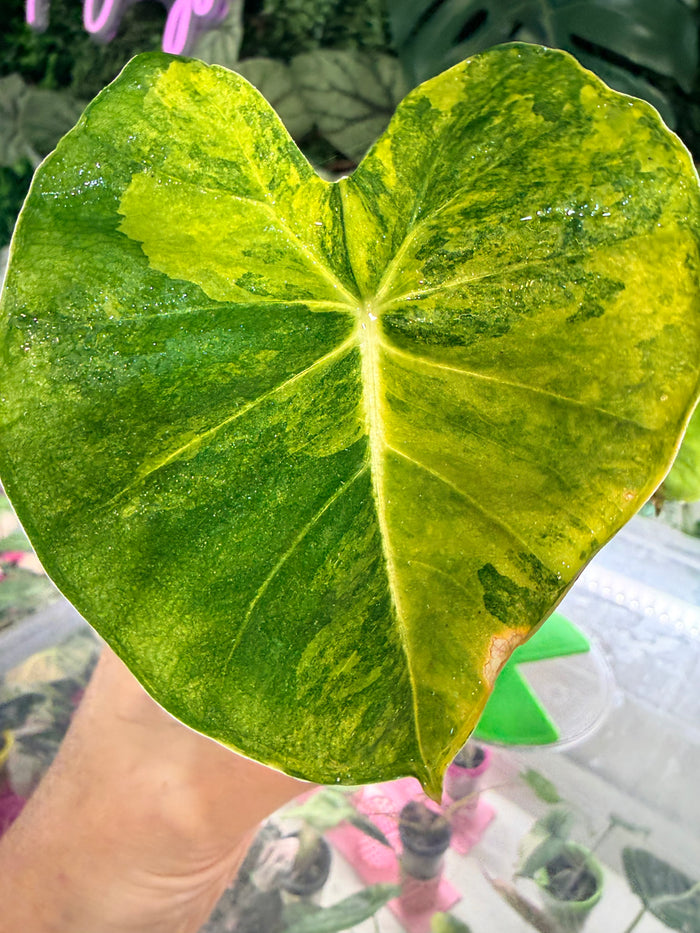
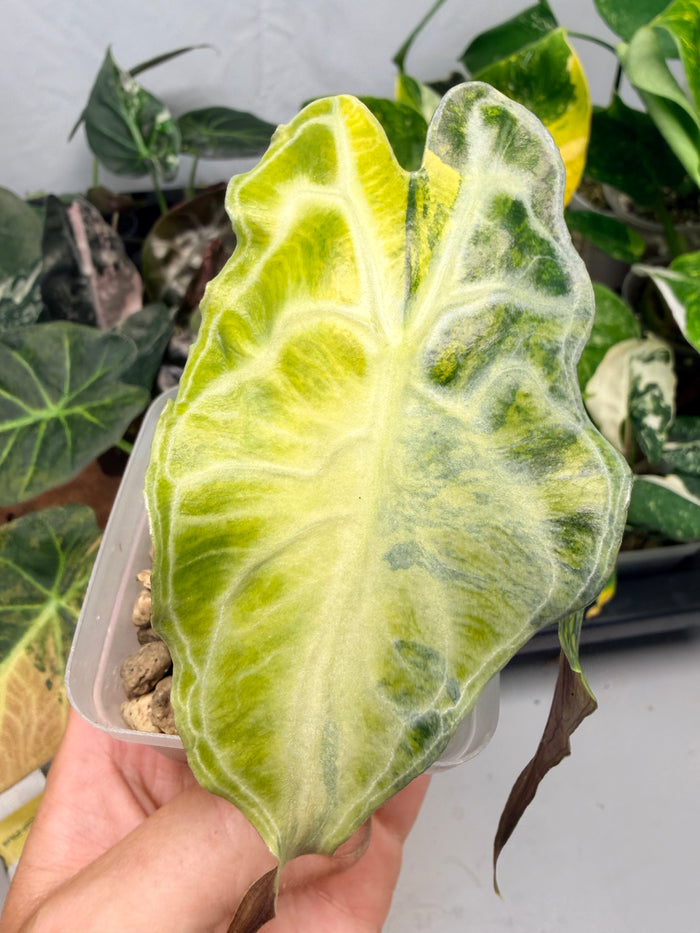
The Alocasia Gageana × Fornicata Aurea represents an interspecific hybrid combining characteristics of two distinct and botanically interesting Alocasia species, Alocasia gageana, the Dwarf Upright Elephant Ear from Burma and mainland South-East Asia, and Alocasia fornicata, the subtropical Indian subcontinent species with its elegant ovate-lanceolate leaves and distinctive pinkish petioles, with the addition of golden aurea variegation. Interspecific hybrids in Alocasia are not uncommon, but the combination of these two parent lineages creates a plant where hybrid leaf architecture and aurea colour expression interact in ways that are specific to this cross.
Species Background: Alocasia gageana and Alocasia fornicata
Alocasia gageana occupies a specific and interesting taxonomic position, it is the Dwarf Upright Elephant Ear, a species native to Burma, Laos, Thailand, and south-western Yunnan in China, formally described by Engler and Krause in 1920 from the Burmese distribution. Some recent taxonomic treatments have reclassified it as Englerarum montanum, but the name Alocasia gageana remains widely used in horticulture. The species is closely related to, and frequently confused with, the much larger Alocasia odora, from which it differs principally in its more compact growth habit, reaching approximately 60-90cm in cultivation compared to the odora's potential of 2-3m.
This close relationship with Alocasia odora is botanically significant: Alocasia gageana is one of the parents of Alocasia 'Calidora' (the Persian Palm), a cross between Alocasia gageana × Alocasia odora that has become a widely grown ornamental. The gageana contributes the more compact, manageable habit to this cross, while odora contributes scale and vigour. Understanding the gageana parent is therefore useful context for collectors who grow Calidora and its relatives.
In standard cultivation, Alocasia gageana produces broad, paddle-shaped, upward-pointing leaves on robust upright stems, the classic 'elephant ear' form associated with the odora lineage, but at a scale that is manageable for UK indoor collection. The leaves are broad, bright to medium green with paler venation, and the overall impression is of vigour and tropical presence rather than the precision and detail of the jewel Alocasia species. The Gageana Albo and Gageana Aurea forms bring variegated colour complexity to this inherently vigorous, large-leaved form.
Alocasia fornicata is native across North-East India, Bangladesh, the East Himalayan foothills, Laos, Myanmar, Sri Lanka, Thailand, and Vietnam, first described by Roxburgh in 1832 and named by Schott in 1841. The name derives from Latin fornix (arched or vaulted). Known for its slightly pink-blush petioles, ovate-lanceolate leaves with gently waved margins, and a spreading habit via stolons. Consumed as a seasonal vegetable in North-East India where it is called Baibing.
The Gageana × Fornicata Hybrid
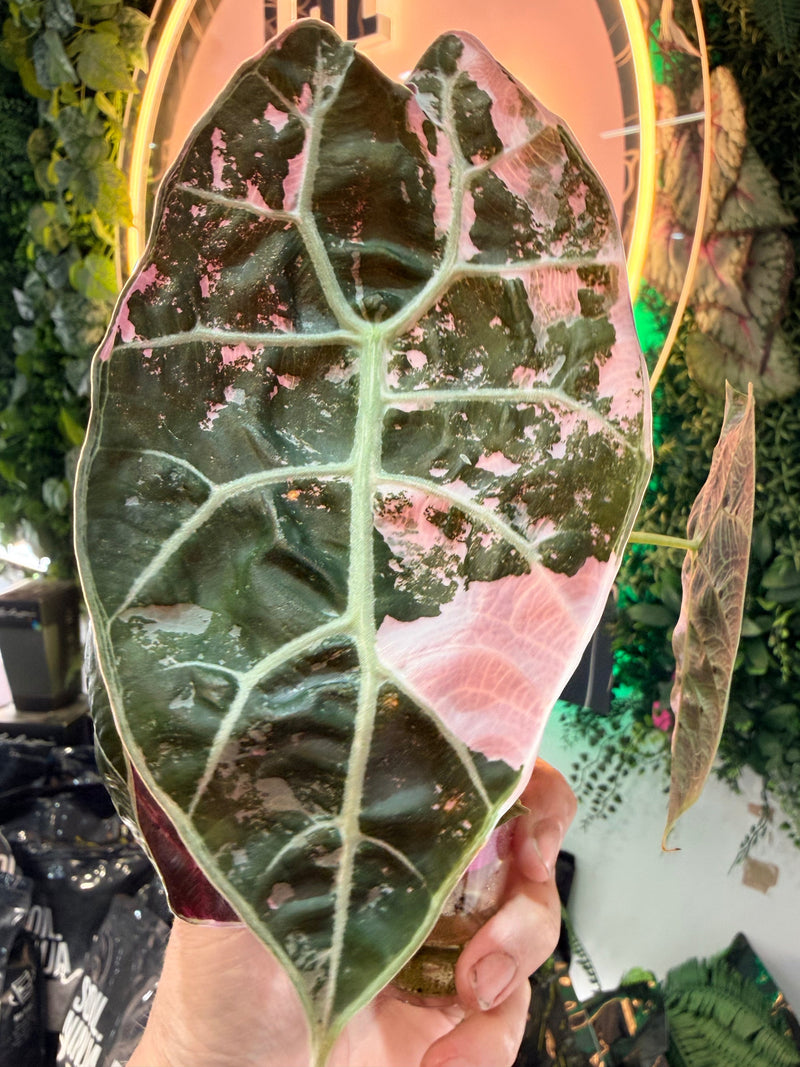
The cross between Alocasia gageana and Alocasia fornicata produces a plant that expresses intermediate characteristics between its parents, typically broader than the fornicata and more refined than the gageana, with the upright posture of the gageana lineage combined with something of the elegant leaf character and petiole warmth from the fornicata. The hybrid's precise character varies between individual specimens reflecting Mendelian segregation of parental traits, and the aurea variegation, appearing on this hybrid foliage, creates golden sectors across a leaf whose shape and character already combines elements from two geographically and botanically distinct species.
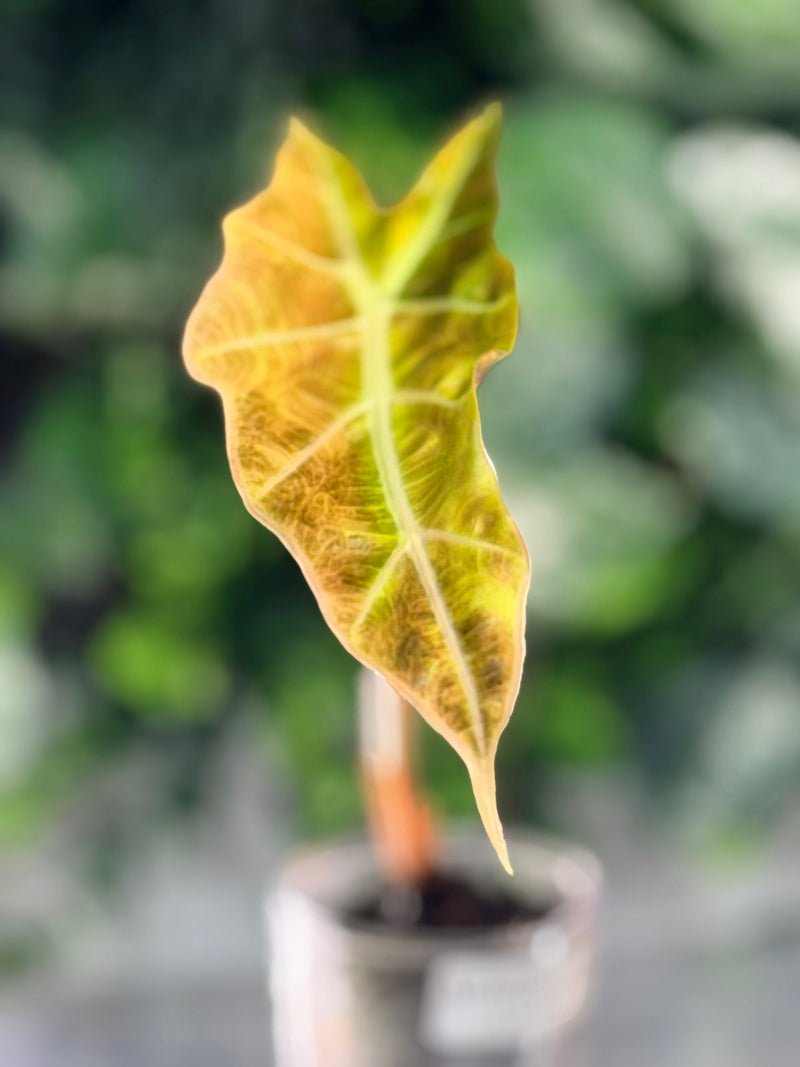
The aurea sectors retain photosynthetic capacity and contribute to the hybrid's vigour, which tends to be good given the hybrid's access to the metabolic characteristics of both parent species. Light is the critical variable for maintaining golden expression, consistent bright indirect light with LED supplementation from October to March. Our aurea variegation guide covers the carotenoid mechanism in detail.
Care Requirements
Temperature 18-27°C, the fornicata parent's subtropical tolerance contributes somewhat broader temperature range than strictly tropical species. Humidity 60-75%, Fluval Stratum substrate, thorough watering when top 2-3cm is dry. Feed at half to two-thirds strength from our plant feed range every 2-3 weeks during the growing season. A heat mat supports root health through UK winters.
We release this hybrid through our drop model. Join the collector list for early access and view our Alocasia Gageana × Fornicata Aurea listing.
Questions about the Gageana × Fornicata Aurea or Alocasia hybrid collecting? Contact our team for specialist guidance from our UK nursery.
From the nursery