
Alocasia are among the most architecturally striking houseplants you can grow, and among the most rewarding when you get their care right. With over 100 species distributed across tropical and subtropical Asia, Southeast Asia, and into Australia, this is a genus of extraordinary diversity. The compact jewel-like forms of Alocasia reginula sit at one end of the spectrum; the towering, paddle-leaved Alocasia macrorrhizos at the other. Between them lies a world of rare variegated cultivars, documented hybrids, and collector-grade specimens that represent some of the most desirable plants in the houseplant world today.
At The Alocasia Company, most of what we sell is grown on from corm at our private UK nursery. That means we have direct, hands-on experience of what these plants need across every stage of their development, from dormant corm through to mature, producing specimen. This guide draws on that experience. It covers substrate, feeding, light, temperature, humidity, watering, pot selection, propagation, and pest management in the depth that serious growers actually need, rather than the surface-level advice that fills most care guides.
Whether you are caring for your first Alocasia or managing an established collection of rare and variegated specimens, the principles here apply. Alocasia are not difficult plants when their requirements are understood, they are simply specific. Give them what they need and they will reward you with growth, foliage quality, and variegation expression that justifies every bit of attention you invest.
What Are Alocasia Plants?
Alocasia belong to the family Araceae, the aroids, and are closely related to Colocasia, Xanthosoma, and Caladium. They are characterised by their peltate or sagittate leaves (shield-shaped or arrow-shaped, depending on species), prominent venation, and the distinctive way the leaf blade attaches to the petiole at or near its centre rather than at the base. This attachment point, combined with the often waxy, hydrophobic leaf surface, gives Alocasia foliage its characteristic ability to shed water in beads, a feature that has practical care implications we will return to when discussing humidity.
Most species evolved as understory plants in primary and secondary tropical forests, growing in the filtered light beneath a dense canopy, in rich organic soils with consistent moisture and high ambient humidity. Understanding this native habitat is the foundation of good Alocasia care. These are not plants adapted to bright windowsills, dry centrally-heated rooms, or irregular watering schedules. They are forest floor specialists, and the closer you can replicate those conditions, the better they will perform.
The genus has attracted serious collector interest for two primary reasons. First, the sheer variety of leaf forms, textures, and sizes available across species and hybrids, from the deeply ridged, dark foliage of Alocasia baginda 'Dragon Scale' to the velvet-textured leaves of Alocasia reginula 'Black Velvet'. Second, the range of variegation expressions that have emerged through chimeric mutation, selective hybridisation, and tissue culture development, albo, aurea, pink, and green-on-green variegation types that each bring a distinct character to the plants that carry them. Our complete guide to Alocasia variegation types covers the science behind each expression in detail.
Substrate: The Foundation of Alocasia Health
Substrate choice has more impact on Alocasia health than almost any other care decision. The wrong growing medium, too dense, too moisture-retentive, or too poorly aerated, creates the anaerobic root conditions that lead directly to root rot. The right one drains freely between waterings, retains just enough moisture to support consistent uptake, and maintains the open structure that Alocasia roots need to develop properly.
Alocasia are not well-suited to standard potting compost. Most proprietary potting mixes are too moisture-retentive for a genus that is highly susceptible to root rot in waterlogged conditions. They compact over time, reducing aeration, and often lack the structural integrity that Alocasia root systems require.
A well-formulated aroid substrate typically combines several components: a moisture-retentive base such as coco coir, a drainage and aeration component such as perlite, and a structural element such as fine orchid bark or pine bark. The proportions matter, a mix that is too heavily weighted toward coco coir will hold moisture for too long, while one that is predominantly perlite will dry out too quickly and fail to support root development. As a starting point, a ratio of roughly 40% coco coir, 30% perlite, and 30% bark provides a reasonable balance for most Alocasia in typical UK home conditions.
For propagation and recovery from root stress, Fluval Stratum is our preferred substrate at the nursery. Its porous, granular structure supports excellent drainage and aeration while maintaining a slightly acidic pH that suits Alocasia roots, and its ability to support beneficial microbial activity makes it particularly effective for plants recovering from root damage or establishing from corm.
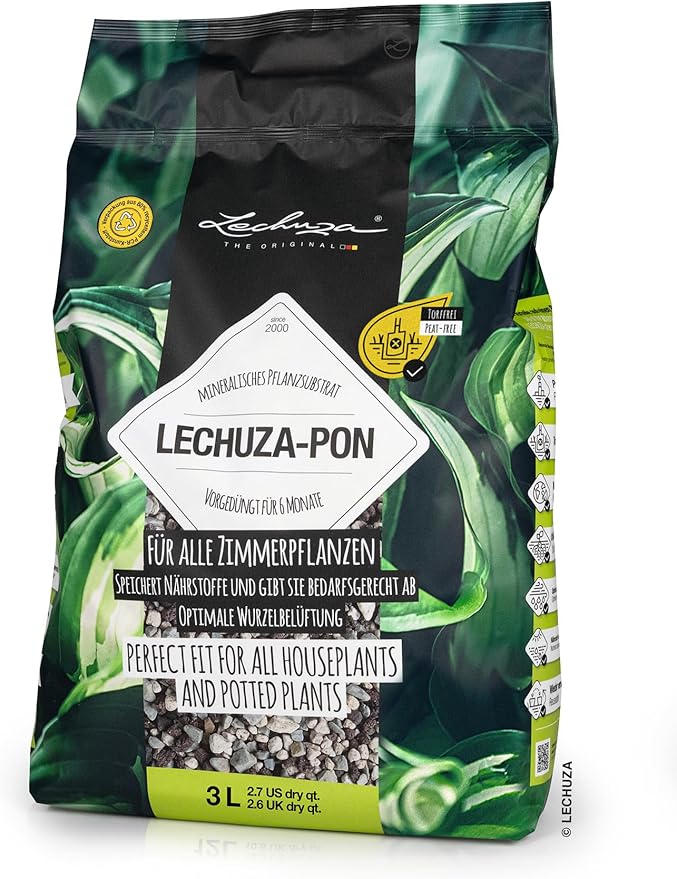
More experienced growers may wish to explore semi-hydroponic growing media. LECA (lightweight expanded clay aggregate) and pon, such as our own mix blended from the Soil Ninja range, both offer excellent drainage and aeration, and pair particularly well with self watering systems where sub-irrigation delivers moisture directly to the root zone. These approaches require an adjustment to your watering and feeding routine but can produce excellent results with established specimens.
Feeding: Getting Nutrition Right
Alocasia are heavy feeders during active growth, and consistent nutrition is one of the most reliable ways to push leaf size, stem strength, and variegation quality. The challenge is feeding effectively without causing the nutrient burn or root stress that comes from overfeeding, particularly in the slower growth periods of autumn and winter.
The approach we use at the nursery, and recommend to collectors, is a dilute, consistent feed programme applied with every watering during the growing season rather than a strong dose at infrequent intervals. This keeps nutrient levels steady, prevents the peaks and troughs that stress Alocasia roots, and ensures the plant has access to what it needs as it produces new growth.
A balanced liquid fertiliser diluted to roughly half the recommended strength and applied at every watering from spring through to early autumn provides a solid foundation. Alongside this, targeted nutrient supplementation addresses the specific requirements that general feeds often miss, magnesium for vibrant leaf colouration and variegation expression, calcium for cell wall integrity and root health, and silica for stem strength and resistance to pest pressure. Our full plant feed collection and nutrients range cover both the base feeding programme and the supplementary products we use and recommend. Superthrive is part of every feed we mix at the nursery, a vitamin B1 and kelp supplement that supports root development and helps plants settle after repotting or a change of conditions.
During winter, when growth slows significantly in UK conditions, reduce feed frequency and strength. Alocasia in low light with slower metabolic activity cannot process nutrients at the same rate as plants in active growth, and feeding at full summer strength through winter risks salt accumulation in the substrate and root damage.
One important note: if you are using a self watering system such as a Lechuza planter with reservoir sub-irrigation, adjust your feeding approach accordingly. Liquid feeds added to the reservoir can accumulate and concentrate over time, flush the system periodically to prevent salt build-up.
Temperature: What UK Growers Need to Know
Alocasia are tropical plants, and their temperature requirements reflect that origin. They perform best within a range of 18–27°C, with the optimal growth window sitting between 20–25°C for most species and cultivars. Below 15°C, growth slows significantly. Below 10°C, cold stress becomes a real risk, leaves will droop, roots will cease uptake, and the plant becomes vulnerable to rot and bacterial infection. Sustained temperatures below 4°C can cause permanent tissue damage.
For UK growers, the practical implication of this is that winter care requires attention. Most UK homes stay above the danger threshold during winter, but cold draughts from windows, unheated conservatories, and proximity to external walls can expose plants to temperatures well below what is comfortable for Alocasia. Position your plants away from cold glass, avoid windowsills that drop significantly in temperature overnight, and be particularly careful when ordering or transporting plants during cold months.
Root zone temperature is as important as air temperature, and often overlooked. Cold substrate inhibits root function even when air temperature is acceptable. Alocasia grown in semi-hydroponic media or near cold floors may struggle during winter despite appearing to be in an adequately warm room. A heat mat set to 24–27°C under propagation setups will significantly improve corm sprouting rates and early root establishment.
For corm propagation specifically, the temperature range of 24–27°C accelerates dormancy break and early root development. Our Corm Keeper propagation system is designed to maintain the warm, humid microclimate that corms need to establish successfully.
Humidity: Managing the UK's Biggest Challenge
UK homes present a consistent humidity challenge for Alocasia collectors. Central heating systems reduce ambient humidity significantly during winter, often dropping indoor relative humidity below 30%, well below the 60–80% that Alocasia perform best at. Even in summer, UK ambient humidity rarely reaches the levels these plants evolved in.
The practical consequences of low humidity show up in several ways. Leaf edge browning is the most common sign, the delicate margins of Alocasia leaves are the first tissue to desiccate when ambient humidity is insufficient. In severe cases, new leaves emerge stunted or damaged before they have fully unfurled. Spider mites, which thrive in hot, dry conditions, become significantly more problematic when humidity drops.
Supplementing humidity is therefore not optional for serious UK Alocasia growers, it is a fundamental part of the setup. The most effective approaches are a dedicated ultrasonic humidifier positioned near your plants, grouping plants together to create a more humid microclimate around the collection, or growing within an enclosed or semi-enclosed grow cabinet where humidity can be controlled more precisely.
Misting is widely recommended but largely ineffective as a primary humidity management strategy. It raises humidity momentarily but has no lasting impact on ambient conditions, and water sitting on foliage for extended periods can encourage bacterial and fungal issues on susceptible cultivars. If you mist, do so in the morning so leaves dry fully before temperatures drop overnight.
When ambient humidity drops below 40%, reduce feed strength slightly to lower the vapour pressure deficit that Alocasia roots are working against, this reduces the risk of nutrient burn and supports more efficient water uptake.
Watering: Consistency Over Frequency
The most common cause of Alocasia failure in home growing environments is not neglect, it is overwatering. More specifically, it is the combination of overwatering and a substrate that retains too much moisture, creating the anaerobic root conditions that lead to root rot. Understanding how to water correctly is one of the most important skills an Alocasia grower can develop.
The principle is straightforward: water thoroughly when the top 2–3cm of substrate is dry to the touch, allow excess water to drain freely, and never allow the plant to sit in standing water in its saucer. The substrate at depth should remain slightly moist between waterings, not wet, not bone dry. Think of the texture of a wrung-out cloth: damp enough to hold together, but not wet enough to drip.
In practice, watering frequency varies significantly with season, pot size, substrate composition, light levels, and temperature. An Alocasia in a terracotta pot in a bright, warm position may need watering every few days in summer. The same plant in a plastic pot in lower winter light may go two weeks between waterings. Rather than watering on a fixed schedule, assess the substrate directly each time and water only when the plant needs it.
Water temperature matters more than most guides acknowledge. Cold water applied to warm roots causes a temperature shock that temporarily inhibits water uptake and can stress root tissue. Use water that has been allowed to reach room temperature, and if you are in a hard water area, consider filtered or collected rainwater, Alocasia are sensitive to the calcium carbonate accumulation that hard water causes over time.
If you suspect your plant is suffering from root rot, our dedicated root rot recovery guide covers identification, treatment, and recovery in full detail. Early intervention and a move to Fluval Stratum or Rockwool Cubes gives affected plants the best chance of recovery.
Light: Bright, Indirect, and Consistent
Alocasia require bright, indirect light for healthy growth. In their native habitat they grow beneath a forest canopy that filters direct sunlight, enough light for active photosynthesis, but never the intensity of unfiltered sun. Direct sunlight, particularly the afternoon sun of a south-facing window in summer, will scorch Alocasia leaves and cause bleaching of variegation in sensitive cultivars.
The practical target for most Alocasia is a position that receives good ambient brightness throughout the day without direct sun exposure. An east or west-facing window, or a north-facing room with a reasonably large window, will work for most species. South-facing positions can work if the plant is set back from the window or screened with a light-diffusing blind during the brightest hours.
For UK collectors, the bigger challenge is insufficient light rather than too much, particularly during the short days of autumn and winter when natural light levels drop significantly and growth slows or stalls entirely. A quality LED grow light used as supplemental lighting through the darker months makes a measurable difference to growth rate, leaf size, and variegation quality. We use grow lights throughout our nursery and consider them essential equipment for anyone serious about growing rare Alocasia in the UK.
For variegated specimens in particular, adequate light is directly linked to variegation expression. Albo variegated Alocasia, aurea variegated, and particularly pink variegated cultivars all require good light levels to maintain their colour expression. Plants grown in insufficient light will revert toward greener growth over time as the photosynthetically active tissue compensates for the reduced light available.
A target light level of 10,000–20,000 lux (approximately 200–400 µmol) suits most Alocasia well. Compact species and jewel Alocasia such as Alocasia reginula and Alocasia cuprea can tolerate slightly lower levels, while larger, faster-growing species and hybrid forms typically benefit from the higher end of that range.
Pot Selection: Getting the Size Right
Pot size is one of the most frequently misunderstood aspects of Alocasia care. The instinct to give a plant room to grow by choosing a generously sized pot is understandable, but for Alocasia it is counterproductive. Too much substrate volume around the root system retains moisture for too long after watering, creating the damp conditions that encourage root rot.
The correct approach is to choose the smallest pot that comfortably accommodates the current root system, with no more than 20–30% additional space for substrate around it. As the plant grows and fills the pot, typically indicated by roots beginning to emerge from drainage holes or the plant becoming visibly top-heavy, move it up one pot size. Gradual, incremental repotting keeps the root-to-substrate ratio appropriate at every stage.
Pot material also matters. Terracotta pots are porous and allow moisture to evaporate through the sides, which reduces the risk of overwatering and improves aeration around the root zone. Plastic pots retain moisture for longer, which requires more careful watering management but can be advantageous in drier conditions or during winter when evaporation is slower. Self watering systems such as our Lechuza planters are effective for established specimens and remove much of the variability from watering management.
Drainage is non-negotiable. Every pot your Alocasia grows in must have adequate drainage holes. Water that cannot escape accumulates at the base of the substrate, creating permanently saturated conditions at the root zone, the most direct route to root rot regardless of how carefully you water from above.
Propagation: Growing Your Collection
Alocasia propagate through several routes, each suited to different situations and skill levels.
Corm Propagation
Corm propagation is the method we use most extensively at The Alocasia Company, and it is the approach that gives collectors access to rare and variegated cultivars at an earlier, and more accessible, stage of development. Alocasia corms are dormant underground storage organs that contain the genetic information and energy reserves needed to produce a new plant when given the right conditions.
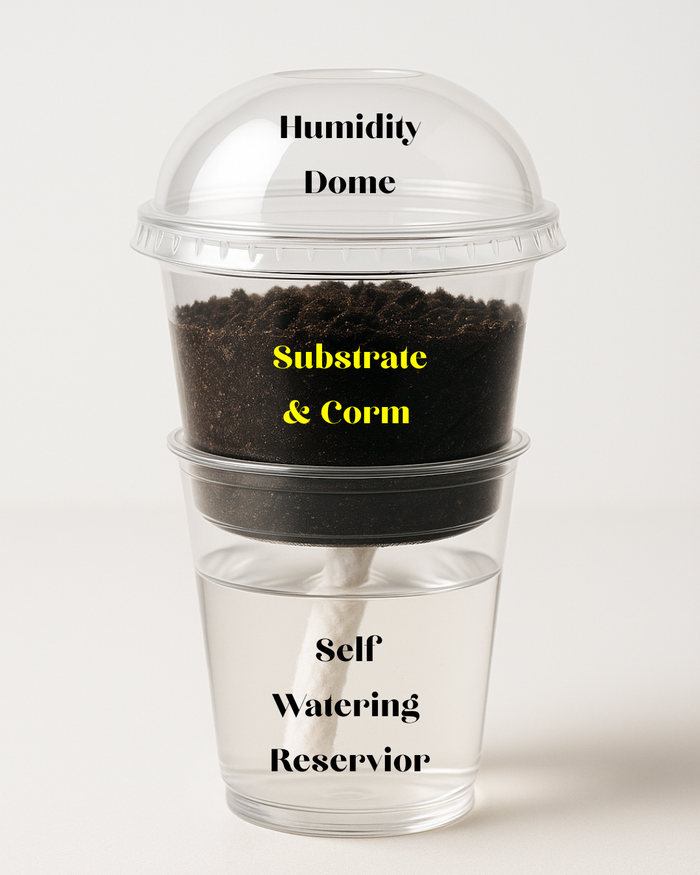
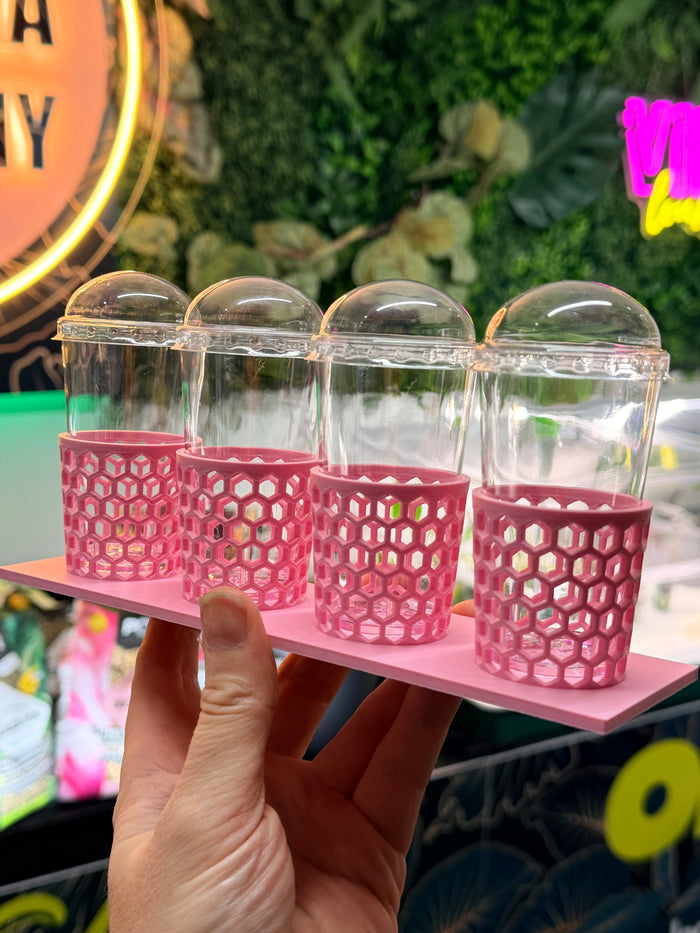
Successful corm propagation requires three things consistently: warmth (24–27°C at the root zone), humidity (above 70% in the immediate environment of the corm), and a well-aerated substrate that retains just enough moisture to prevent desiccation without becoming waterlogged. Our Corm Keeper system with Corm Crown is designed specifically to maintain these conditions, and our self watering corm pots with humidity dome provide a simple, effective setup for growers at every level.
Fluval Stratum is our preferred substrate for corm propagation, its granular structure maintains excellent aeration while retaining appropriate moisture levels, and its slightly acidic pH supports healthy root development from the earliest stages.
For a comprehensive walkthrough of the propagation process, our Corm Keeper and Corm Crown guide covers everything from corm selection and preparation through to potting on established juveniles.
Offset Division
Healthy, established Alocasia regularly produce offsets, smaller plants that develop from the base of the mother plant, sharing the same root system initially before developing their own. Once an offset has developed several leaves and visible independent root growth, it can be separated from the mother plant and established in its own pot.
Offset division is best carried out during the active growing season when the plant's recovery capacity is at its highest. Remove the plant from its pot, gently separate the offset from the mother rhizome with a clean blade if necessary, and pot each section into fresh, appropriate substrate. Keep both sections in warm, humid conditions during the recovery period.
Rhizome Division
Larger, well-established Alocasia can be divided at the rhizome level, splitting the underground stem system into sections, each with roots and growth points attached. This is a more invasive process than offset removal and carries a higher risk of stress to both sections, but it is an effective way to propagate species that do not regularly produce offsets and to manage plants that have outgrown their space.
Hybridisation
Alocasia hybridisation has a documented history stretching back to the 1850s, and the collector market today is driven in large part by the extraordinary cultivars produced through deliberate crossing of species. The Blood Bone hybrid, created by Wim Philtjens through crossing Alocasia species to combine the textural qualities of both parents, is a good example of the kind of result that careful hybridisation can produce. Hybridisation requires controlled pollination, patience across multiple growth cycles, and an understanding of the genetics involved, it is a long-term endeavour, but one with the potential to produce genuinely new and extraordinary plants.
Pest Management: Prevention First
Alocasia grown in the warm, humid conditions they prefer are relatively resilient to pest pressure, but several pests present consistent challenges for UK indoor growers and require active management.
Spider mites are the most prevalent problem, particularly during winter when central heating reduces ambient humidity and creates the hot, dry conditions these pests thrive in. Early infestations appear as fine stippling on the upper leaf surface and fine webbing on the undersides. Left untreated, spider mites spread rapidly and can defoliate a plant within weeks. Maintaining adequate humidity is the single most effective preventative measure, spider mites struggle to establish in consistently humid conditions. Our pest control range includes effective treatments for active infestations.
Thrips are particularly troublesome on Alocasia because they target new growth, feeding on unfurling leaves before they have hardened and causing distortion and silvering that persists on the mature leaf. Regular inspection during watering, particularly of new growth and the undersides of leaves, allows early detection before populations establish.
Scale insects and mealybugs present less frequently but are harder to eliminate once established. Both can be treated with appropriate insecticides or horticultural oils, but manual removal of visible insects alongside treatment significantly improves outcomes.
The consistent theme across all pest management is early detection and prompt action. A plant with a small, early-stage infestation is straightforward to treat. A plant with a well-established population across multiple leaves requires sustained effort and may suffer significant damage before recovery. Regular inspection is not optional for serious collectors, it is a fundamental part of the care routine.
Alocasia Species and Diversity
The Alocasia genus encompasses remarkable botanical diversity across its 100+ species. Primary distribution centres in tropical and subtropical Asia, with Southeast Asia representing the highest concentration of species diversity. Australian populations occur in Queensland and New South Wales, and Pacific Island distribution extends across Melanesia and the western Pacific.
Most species evolved in primary or secondary tropical forest environments, understory positions with filtered light, high ambient humidity, rich organic soils with excellent drainage, and consistent moisture availability year-round. The elevation range across the genus is considerable: while most species are lowland specialists, a significant number are adapted to highland conditions where persistent cloud cover maintains humidity at altitude.
Morphologically, Alocasia leaves are distinguished by their characteristic sagittate or hastate form, prominent primary venation with three main veins creating distinct anterior and posterior lobes, and the often strikingly textured or coloured surfaces that have made particular species so desirable to collectors. The hydrophobic quality of the leaf surface, which causes water to bead and roll off rather than spreading, is a functional adaptation to high-rainfall environments that has aesthetic appeal as well as practical implications for care.
Alocasia flowering follows the typical aroid pattern: a spadix bearing the flowers enclosed within a spathe, with the spathe divided into a persistent lower portion that protects the female flowers and a deciduous upper portion that falls after pollination. Several species are notable for thermogenesis during flowering, producing heat that volatilises scent compounds to attract pollinators, making them genuinely fascinating subjects for botanical observation beyond their ornamental appeal.
Caring for Rare and Variegated Alocasia
Variegated Alocasia require the same foundational care as their green counterparts, but with additional attention to several factors that directly influence variegation expression and stability.
Light levels are the most significant variable. All variegation types, whether albo, aurea, pink, or green-on-green, require adequate light to maintain expression. Plants grown in insufficient light will produce progressively greener growth as the plant compensates for reduced photosynthetic capacity. This is particularly pronounced in pink variegated cultivars, where anthocyanin expression is sensitive to both light intensity and temperature.
Temperature stability matters more for variegated specimens than for green forms. Fluctuating temperatures, cold draughts, and sudden environmental changes can trigger stress responses that affect the pattern and intensity of variegation on new growth. Consistent warmth within the optimal range promotes the most stable and well-expressed new leaves.
Feeding variegated Alocasia requires care. The reduced chlorophyll content of variegated tissue means these plants photosynthesise less efficiently than fully green specimens, they are producing energy from a smaller proportion of their leaf surface. This means they can be more susceptible to feed stress than green plants, and the dilute, consistent feeding approach is particularly important. Overfeeding variegated specimens carries a higher risk of tip burn and root damage than with standard green cultivars.
The Alocasia Company
The Alocasia Company exists because we could not find the plants we wanted anywhere else. Every plant we list has spent real time at our private UK nursery, so we know its growing history and how its variegation is expressing. We do not restock, we drop. Limited releases of rare Alocasia go to our collector subscriber list first, before they are promoted anywhere else.
Our full collection spans albo variegated, aurea variegated, pink variegated, and green-on-green variegated specimens alongside corms, juveniles, and mature plants across the full range. Every plant is guaranteed to arrive alive.
Questions about Alocasia care, specific cultivar requirements, or building your collection? Contact our team for guidance from specialists who grow rare Alocasia professionally at our UK nursery.