Alocasia Portodora Aurea × Antoro Velvet: The Complete Collector's Guide

Alocasia Portodora Aurea × Antoro Velvet is the trade name for a hybrid built from two documented plants: the very large Alocasia 'Portora' hybrid and the velvet-leaved Bornean aroid sold as Alocasia 'Antoro Velvet'. This guide sets out what is actually recorded about each parent, and is plain about how little is recorded for the cross itself.
What is Alocasia Portodora Aurea × Antoro Velvet?
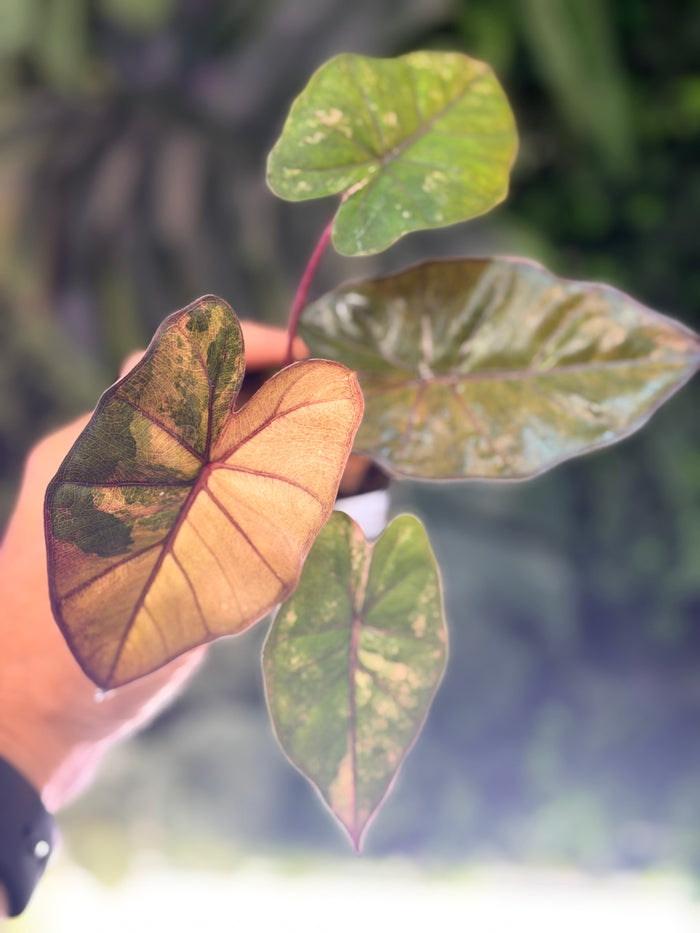
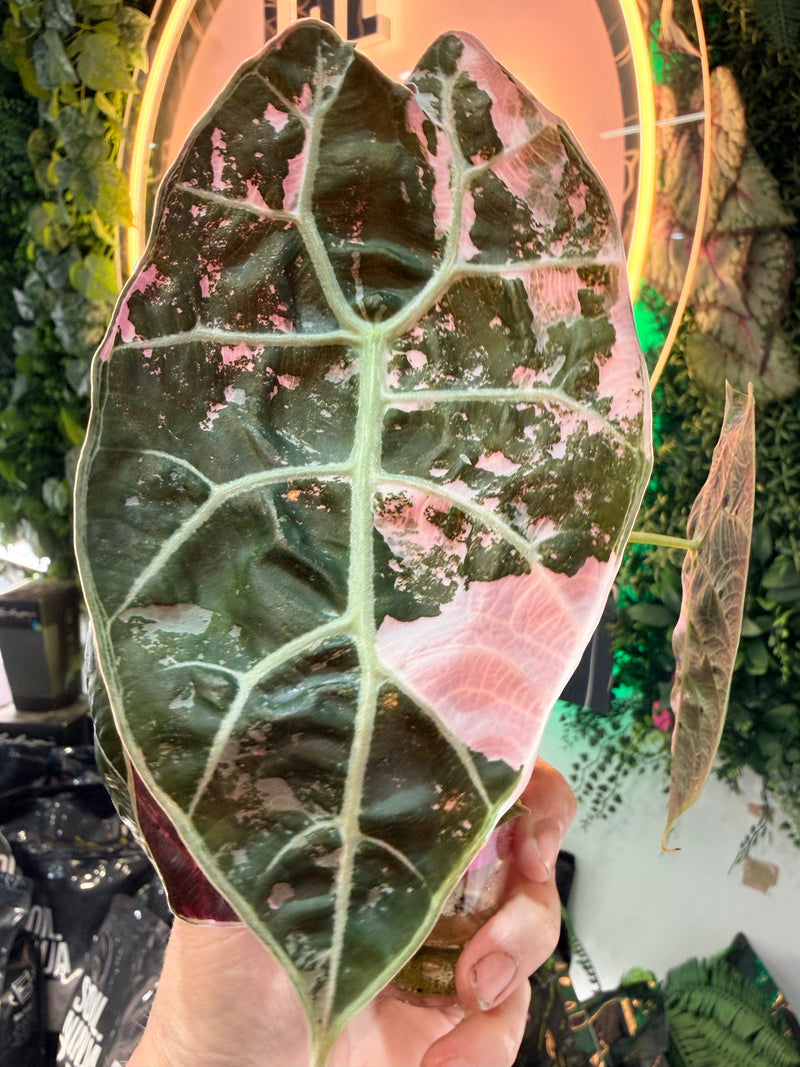
It is a cross between a golden (aurea) form of Portora and Antoro Velvet. It is among the more unusual hybrid offerings in our collection: a deliberate cross between a large, vigorous Portora hybrid and a compact, velvet-leaved collector plant, creating something genuinely different from either parent. Aroidpedia has no entry for this cross, and none for an aurea form of Portora, so cultivar-specific detail such as leaf shape, final size, growth habit or who first made the cross is not documented. Rather than guess, we describe the parents using their Aroidpedia entries and leave the rest open.
What can be said is general: when two quite different plants are crossed, the offspring do not all look alike, and individual plants can lean towards one parent or the other, some towards the Portora's scale and leaf division, others towards the Antoro Velvet's compactness and texture, a degree of variability that is inherent to this type of interspecific hybridisation. Treat any description of this plant as a range of possibilities, not a fixed specification.
Portodora or Portora? The naming explained
Aroidpedia treats Alocasia 'Portora' as the correct name and lists 'Portodora', 'Portadora', 'Portidora' and 'Portore' as incorrect synonyms. In other words, 'Portodora' is a misspelling of the same hybrid, not a separate plant. Aroidpedia credits the hybridiser as LariAnn Garner of Aroidia Research. It also records that a selection patented by Proven Winners under the name 'Emerald Isle' is treated as 'Portora', and notes that this renaming disregards botanical nomenclature.
The spelling 'Portodora' is retained in this plant's name because that is how it is listed, but the parent is the Portora hybrid described below. Our separate Alocasia Portora Aurea guide covers that parent in its own right.
The Portora parent: parentage and size
Aroidpedia records the parentage of 'Portora' as Alocasia odora as the ovule (seed) parent and Alocasia 'Portei' as the pollen parent. Its entry for the species Alocasia portei confirms that Portora is a hybrid of A. odora × A. portei. That species is endemic to Luzon in the Philippines and is one of the largest in the genus, reaching about 6 m with deeply pinnatifid, sagittate leaves. In this cross the Portora parent contributes the hybrid's scale, the deeply lobed leaf architecture inherited from the portei parent, and the vigour of the odora lineage.
Aroidpedia describes Portora as one of the largest hybrids ever created, and notes a specimen shown by Garner at about 12 feet tall. The initial cross produced two groups: 'Portora Green', with green petioles and main veins, which is the selection most often sold; and 'Portora Red', with reddish or maroon petioles, main veins and spathe, which Garner has said would be marketed as 'Thunder Waves' if released. Aroidpedia lists the variegation recorded for Portora as white and mint. An aurea form is not recorded there; the aurea form of this parent is described by the trade name as adding golden-yellow variegation across the dissected lobes.
Two further plants trace back to it: 'Tyrion', a dwarf mutation of Portora bred by Garner around 2017, and 'Sumo', a cross of Portora with Alocasia princeps.
The Antoro Velvet parent
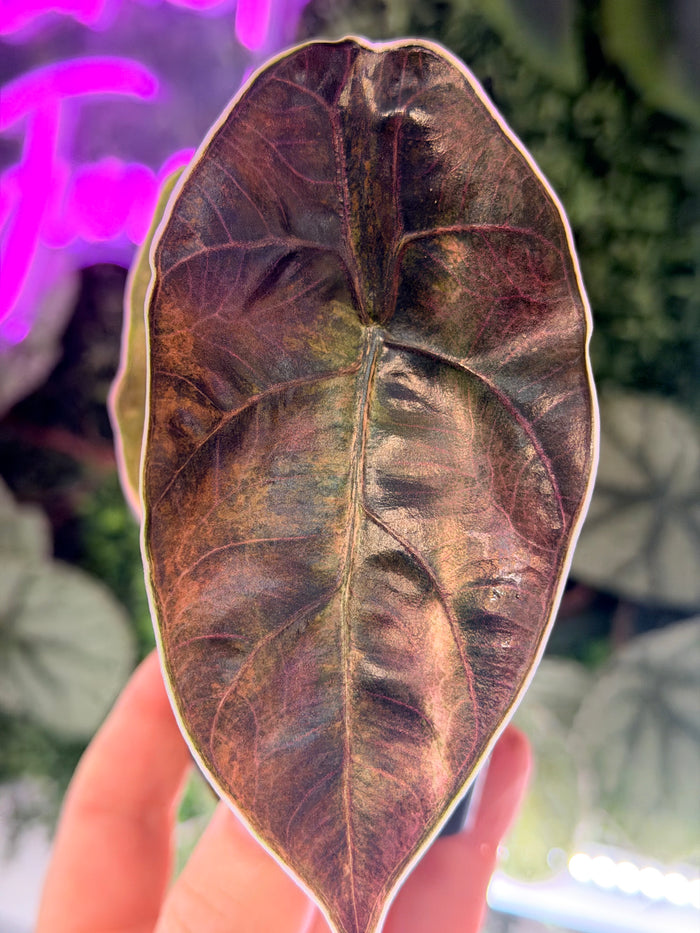
Aroidpedia files this plant under the provisional name Alocasia 'Chienleei', with the original description marked as not yet described. It gives the distribution as Borneo, Indonesia. 'Antoro Velvet' is the unofficial trade name: it honours Sahmantoro, an Indonesian grower with the Antoro Flora business, who found the plant in the rainforest, and it refers to the velvety texture of the leaves. Aroidpedia lists 'Antoro Velvet Green' and 'Green Antoro' as synonyms, notes 'Chienlii' as a misspelling, and records 'Mythic Into the Night' as an incorrect renaming by Proven Winners. It also notes the plant is not widely grown, and gives no size. Collectors describe it as having a tri-colour leaf character and an extraordinarily soft, suede-like surface texture.
It is therefore a Bornean plant, not a Vietnamese one, and not a formally described species. See our Antoro Velvet guide for more on that parent.
Understanding the aurea variegation
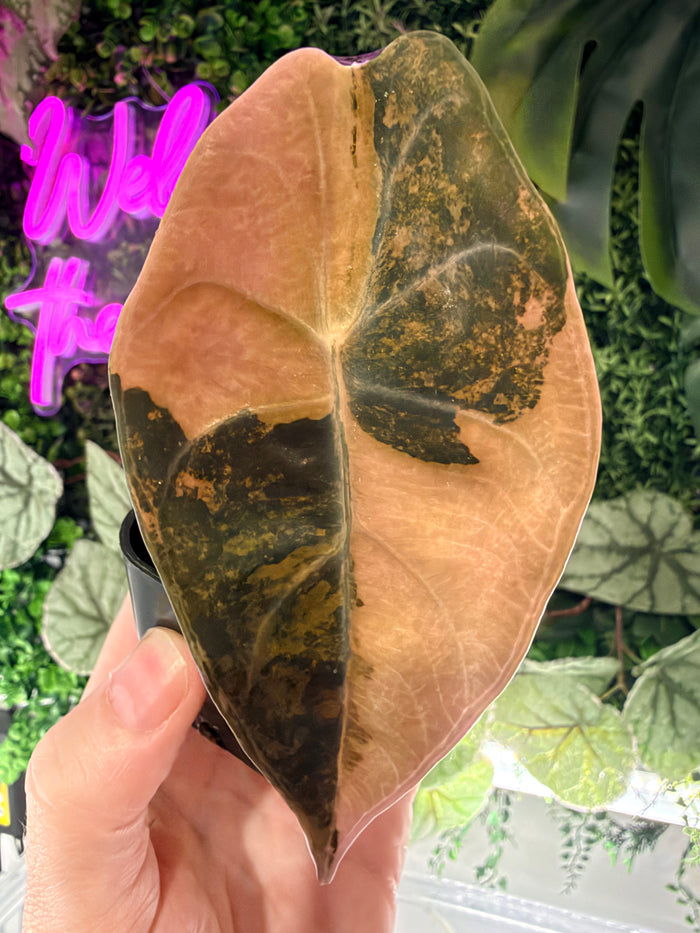
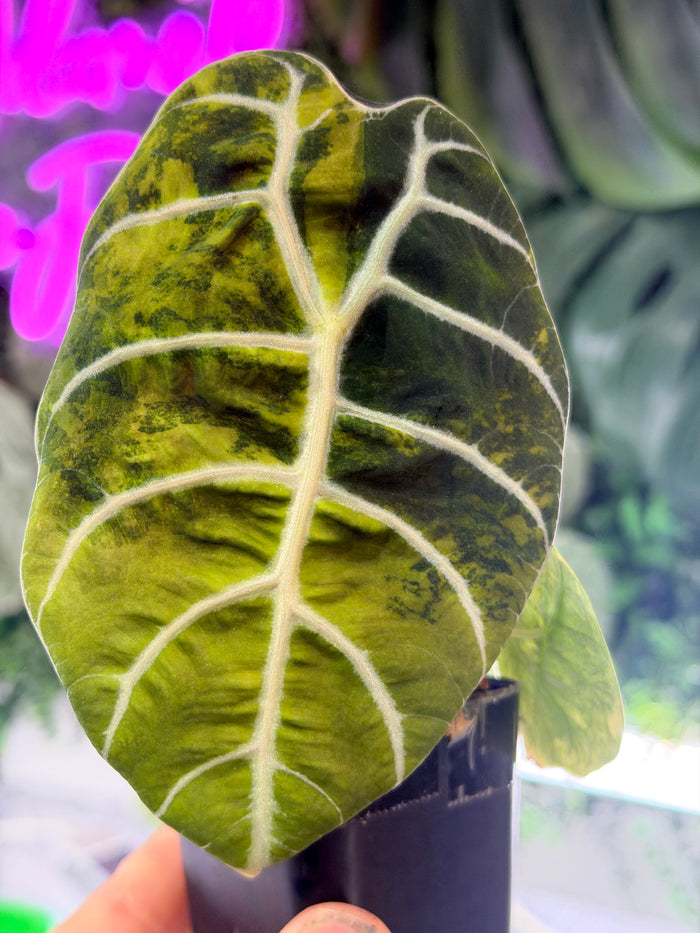
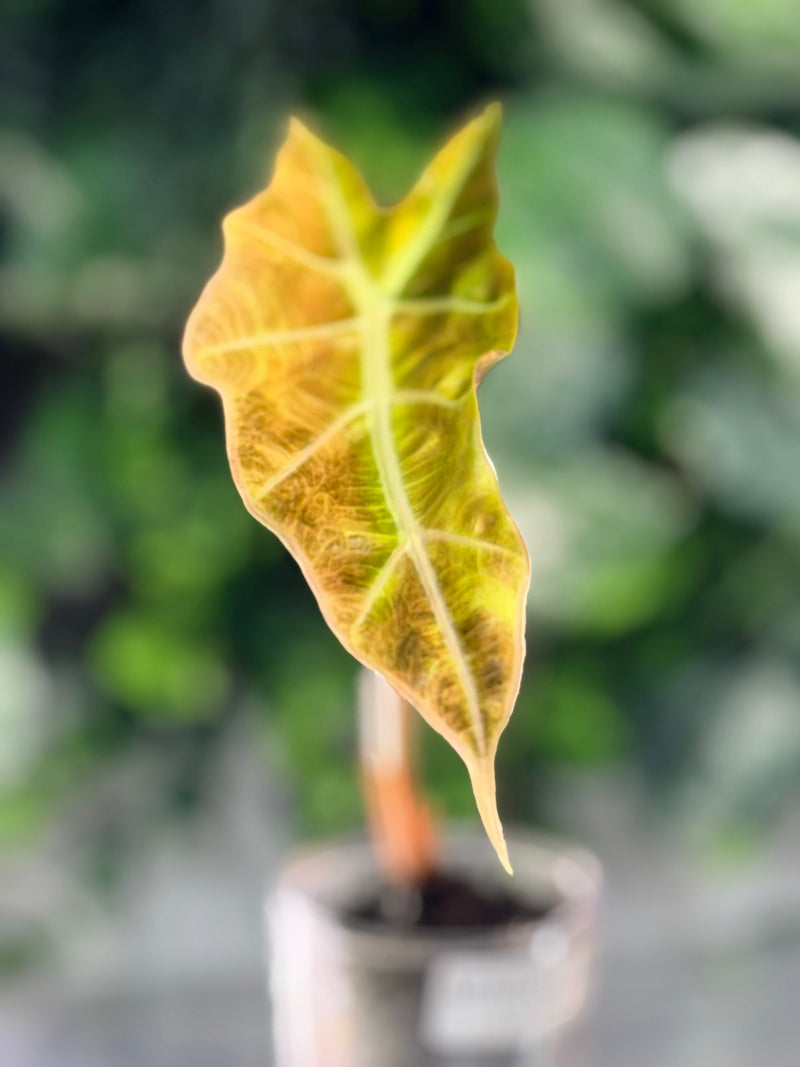
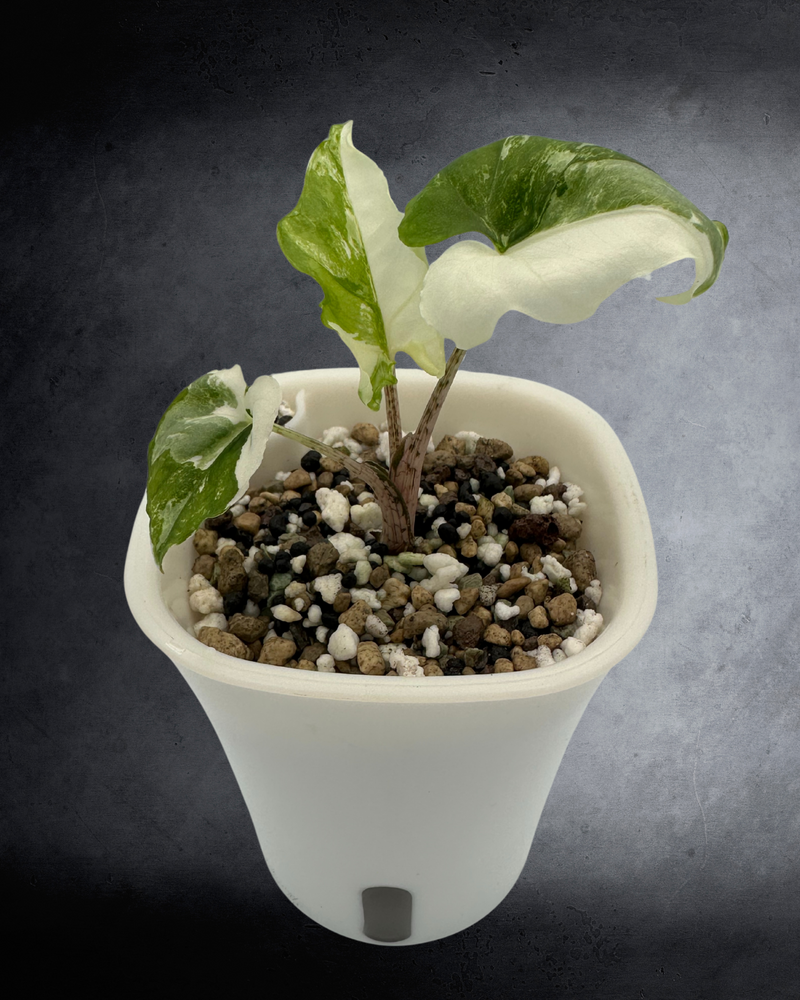
Aurea variegation is yellow to golden colour caused by reduced chlorophyll in the affected tissue, with carotenoid pigments retained. It differs from albo, where sectors are white and contain no chlorophyll, and from pink, which is anthocyanin-based. Our guide to aurea variegation and the complete guide to variegation types explain the differences. Variegation of this kind is often chimeric, so the pattern on a plant can shift between leaves and might not carry over to plants grown from a corm. Browse the aurea variegated Alocasia collection to compare.
How to identify this hybrid
Because the cross is undocumented, there is no authoritative identification list. The features recorded for the parents are the best guide: Portora's very large scale and its petiole and vein colour (green in the commonly sold selection), and the velvety leaf surface associated with Antoro Velvet. Golden sectors would point to the aurea parent. Leaf form, mature height and the degree of velvet texture in this hybrid are not documented, and we do not state them.
Care for Alocasia Portodora Aurea × Antoro Velvet
This is general Alocasia care, and it applies to this plant. Give bright indirect light with LED grow light supplementation, a temperature of 20-27°C and humidity of 60-80%. Water when the top 2-3cm of substrate has dried, and let excess drain freely. Fluval Stratum is our preferred substrate, and a heat mat helps if the room runs cool. Feed with our plant feed range at half strength, and check leaves regularly using our pest control range. The Antoro Velvet contribution may add some sensitivity to cold draughts, so protect the plant from temperature fluctuations. Our Alocasia care guide and plant care collection go further, and persistently soggy substrate is the main cause of problems, covered in our root rot guide.
We release this hybrid through our drop model. Join the collector list for access to drops.
Propagating from corms
Corms are one of the most economical ways to grow more Alocasia. Our Alocasia corm propagation guide sets out the self-wicking method: the corm sits in Fluval Stratum in the Corm Keeper, which draws moisture up to the corm without it sitting in water. See also growing Alocasia corms in Fluval Stratum and the corms collection. Bear in mind that chimeric variegation might not carry over to a corm-grown plant.
How it compares to similar plants
Next to its Portora parent, this hybrid adds the Antoro Velvet side of the cross; our Portora Aurea guide covers that parent. The Portora's own parent species is covered in our Portei Aurea guide. All of them sit within the wider Alocasia house plant range.
Frequently asked questions
Is Portodora the same as Portora?
Aroidpedia lists 'Portodora' as an incorrect synonym of 'Portora', so they refer to the same hybrid.
What are the parents of Portora?
Alocasia odora as the ovule parent and Alocasia 'Portei' (the species A. portei) as the pollen parent, bred by LariAnn Garner.
Where does Antoro Velvet come from?
Aroidpedia gives Borneo, Indonesia, and describes it as not yet formally described.
How big does it get?
The size of this cross is not documented. Portora itself is recorded as one of the largest hybrids ever created, with a specimen about 12 feet tall.
Is the variegation stable?
Not necessarily. Chimeric variegation can shift and might not pass to corm-grown plants.
Questions about this hybrid cross or unusual Alocasia combinations? Contact our team for guidance from specialists who grow rare Alocasia in our UK-based private nursery. We will tell you plainly what is and is not documented.
From the nursery