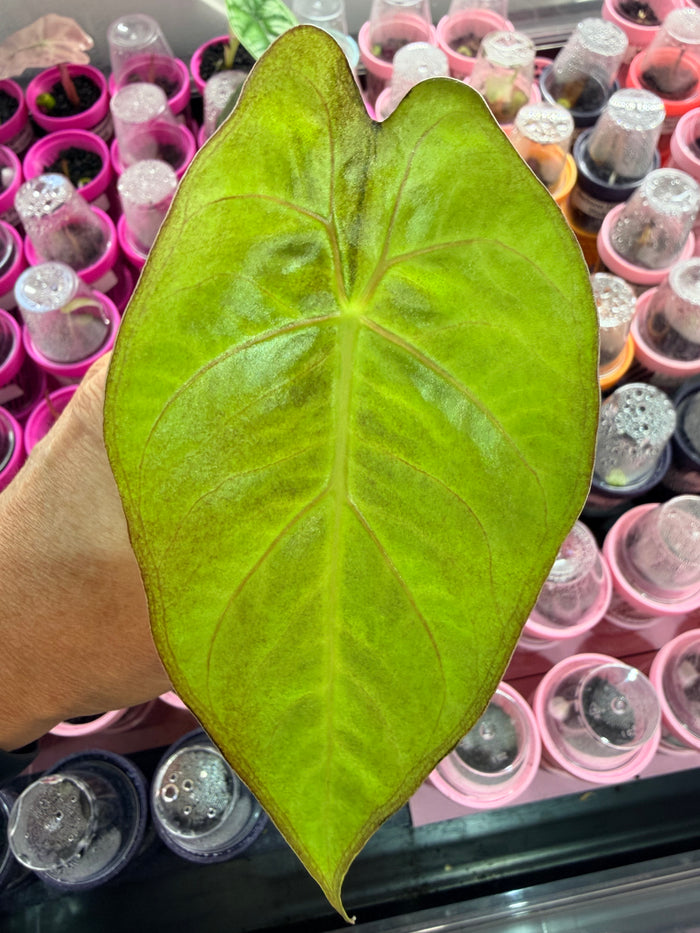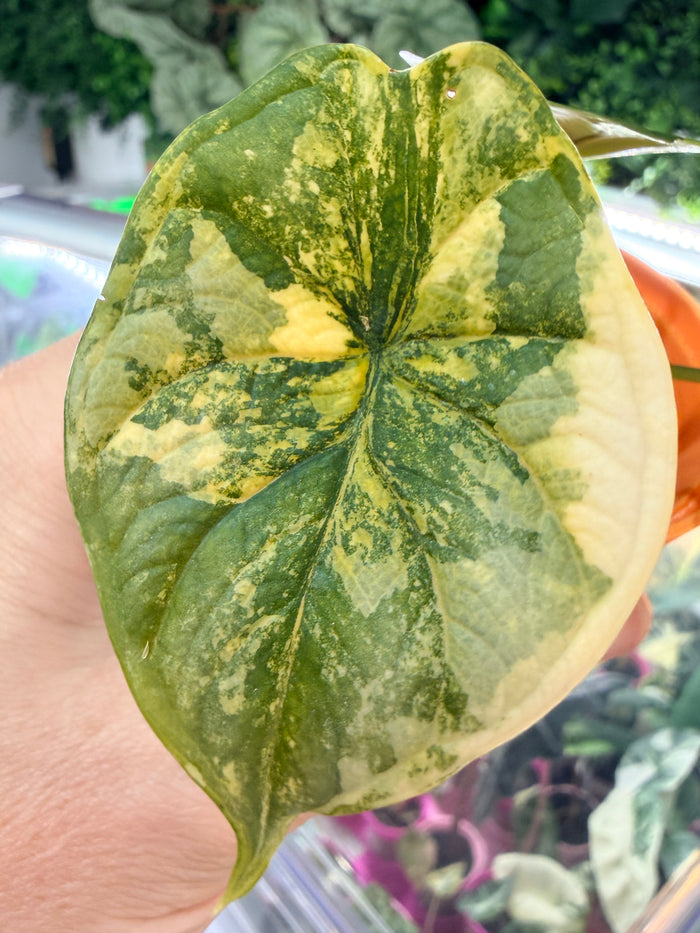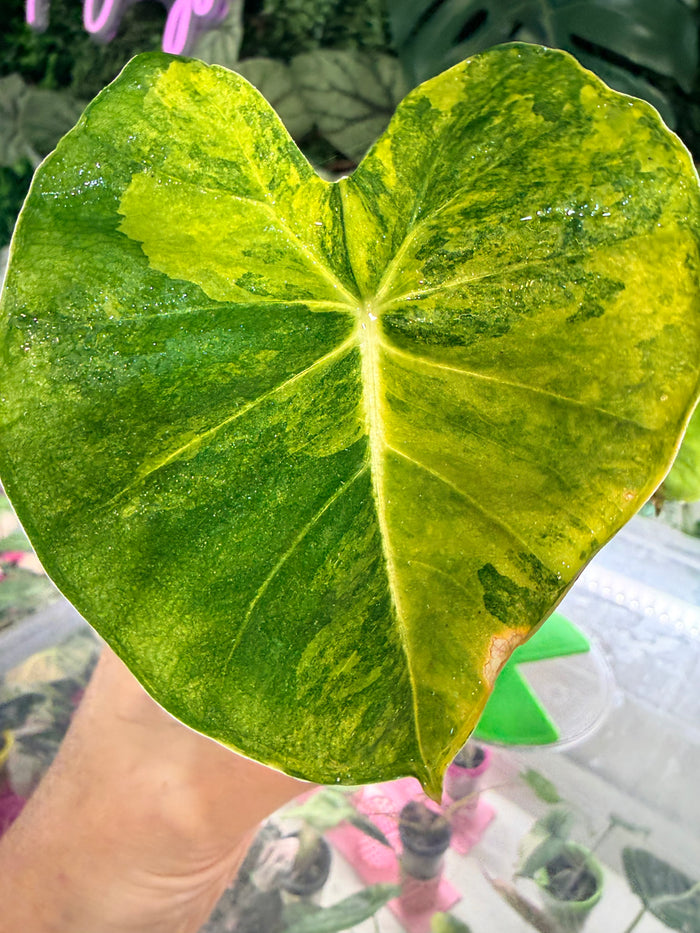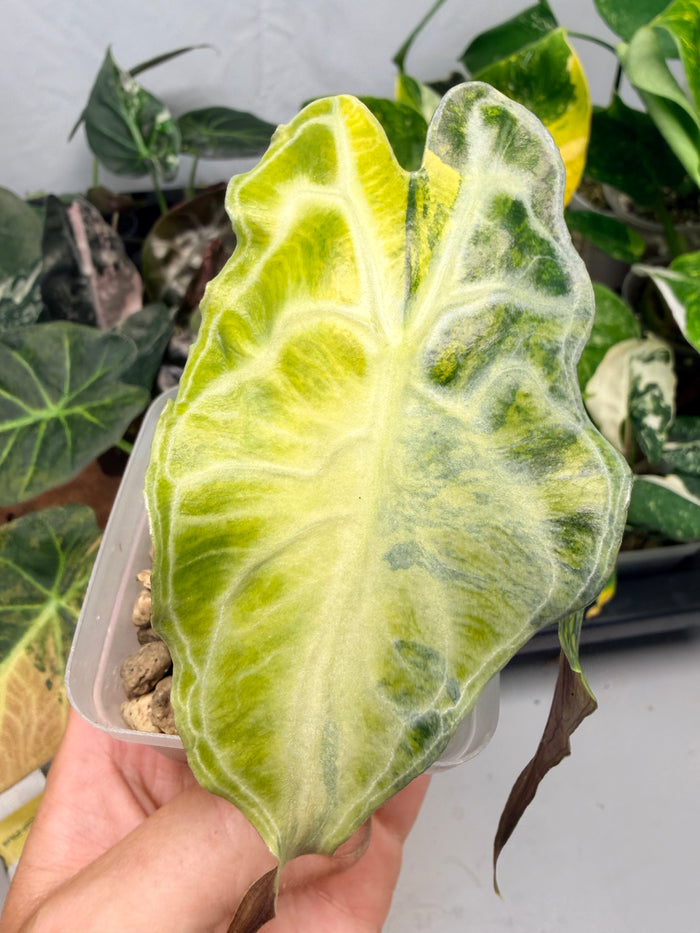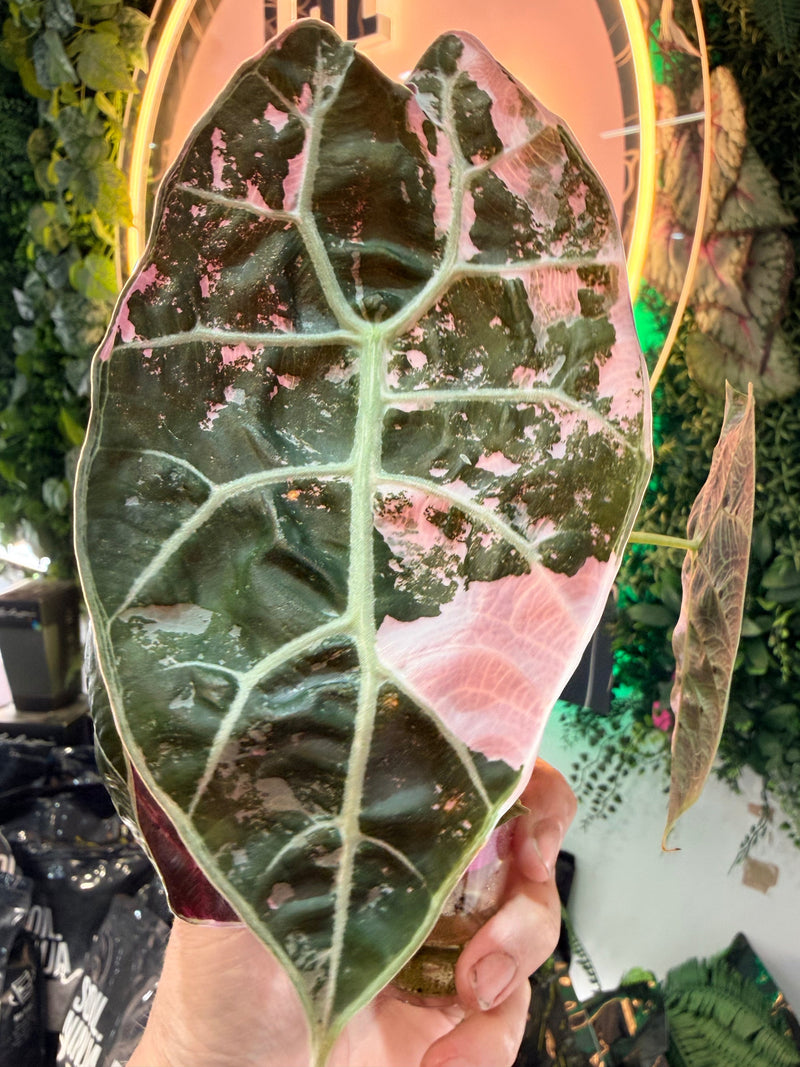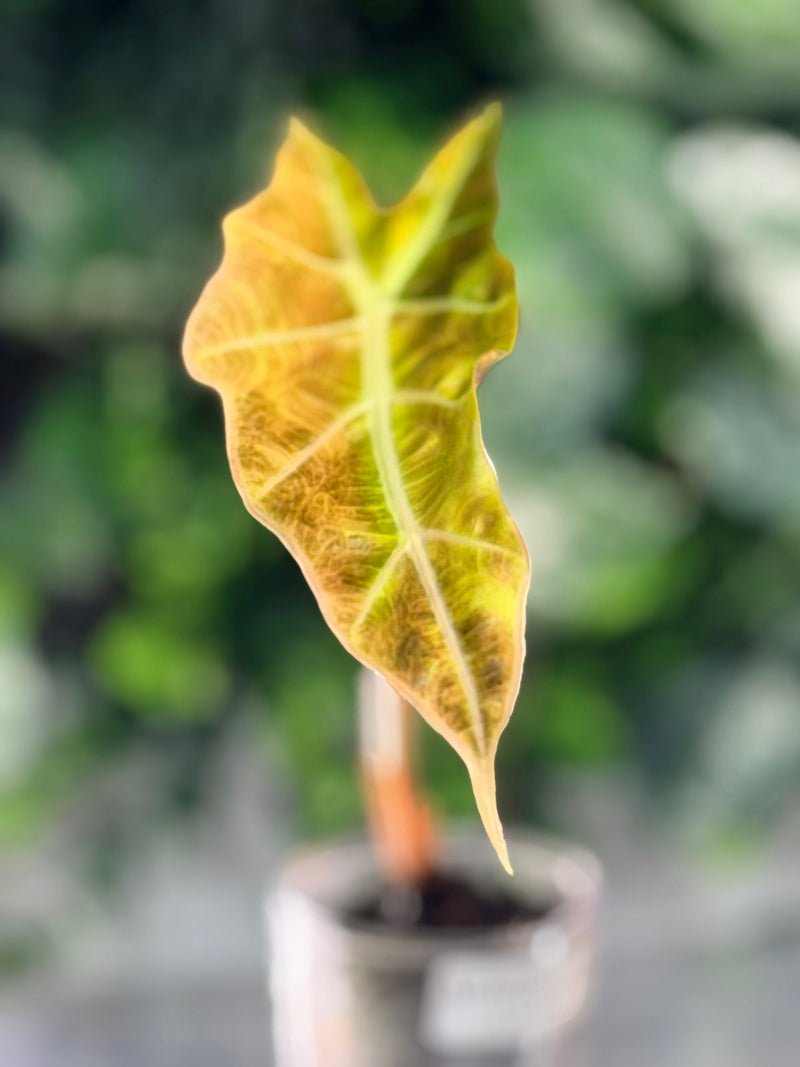

The Alocasia Brancifolia Aurea presents golden carotenoid-based variegation on Alocasia brancifolia, a species from the lowland forests of New Guinea and the Maluku (Moluccas) Islands of Indonesia whose deeply pinnatifid, dissected leaf form creates one of the most architecturally dramatic large Alocasia in cultivation. The species name comes from the Latin branca (paw) and folia (leaf), a reference to the paw-like quality of the deeply divided blade. Aurea variegation on these deeply divided leaves distributes across the individual segments of the dissected blade, creating golden sectors within each finger-like lobe of the paw-like leaf.
Alocasia brancifolia was first described in 1863 under the genus Xenophya, reclassified through several intermediate names over the following decades, and finally combined into its current accepted name by Alistair Hay in his landmark 1990 work 'Aroids of Papua New Guinea'. The species has a long history in botanical literature stretching back to the mid-19th century, and has accumulated a substantial list of synonyms, including Alocasia acuta, Alocasia magnifica, and several Schizocasia names, reflecting the taxonomic instability common to widely distributed, variable tropical species before modern systematic revision.
In cultivation, Alocasia brancifolia grows as a treelet with erect brown stems to approximately 1.2m, supporting around six leaves on petioles that range from plain green to bold zebra-striped chocolate brown markings, a petiole character similar to Alocasia zebrina and Alocasia 'Sarian'. The leaf blades are distinctly arrowhead-shaped in outline but deeply pinnatifid, dissected approximately halfway to the anterior costa in the most deeply divided specimens. This gives the leaf a compound, multi-fingered appearance that is immediately distinctive. The species grows naturally in lowland forest understorey in rather swampy conditions, somewhat more moisture-tolerant than many Alocasia, reflecting its forest floor understorey habitat.
Aurea variegation on the dissected brancifolia blade distributes across the individual segments, with golden sectors appearing on some lobes while adjacent lobes may remain green, the natural segmentation of the blade creating a framework for the colour distribution that reads differently from aurea on a simple broad leaf. The zebra-striped petioles of the brancifolia add additional visual interest alongside the golden aurea sectors. Our Brancifolia Pink Passion Albo Pink guide covers the albo pink variant of this species.
Care Requirements
Bright indirect light year-round, LED supplementation from October to March. Temperature 20-27°C, humidity 60-80%. Fluval Stratum substrate, thorough watering when top 2-3cm is dry, never standing water. Appropriate-strength feeding from our plant feed range during the growing season. Heat mat beneath the pot through UK winters.
We release Brancifolia Aurea through our drop model. Join the collector list and view our Alocasia Brancifolia Aurea listing.
Questions about Alocasia Brancifolia Aurea or New Guinea Alocasia? Contact our team for specialist guidance.
From the nursery