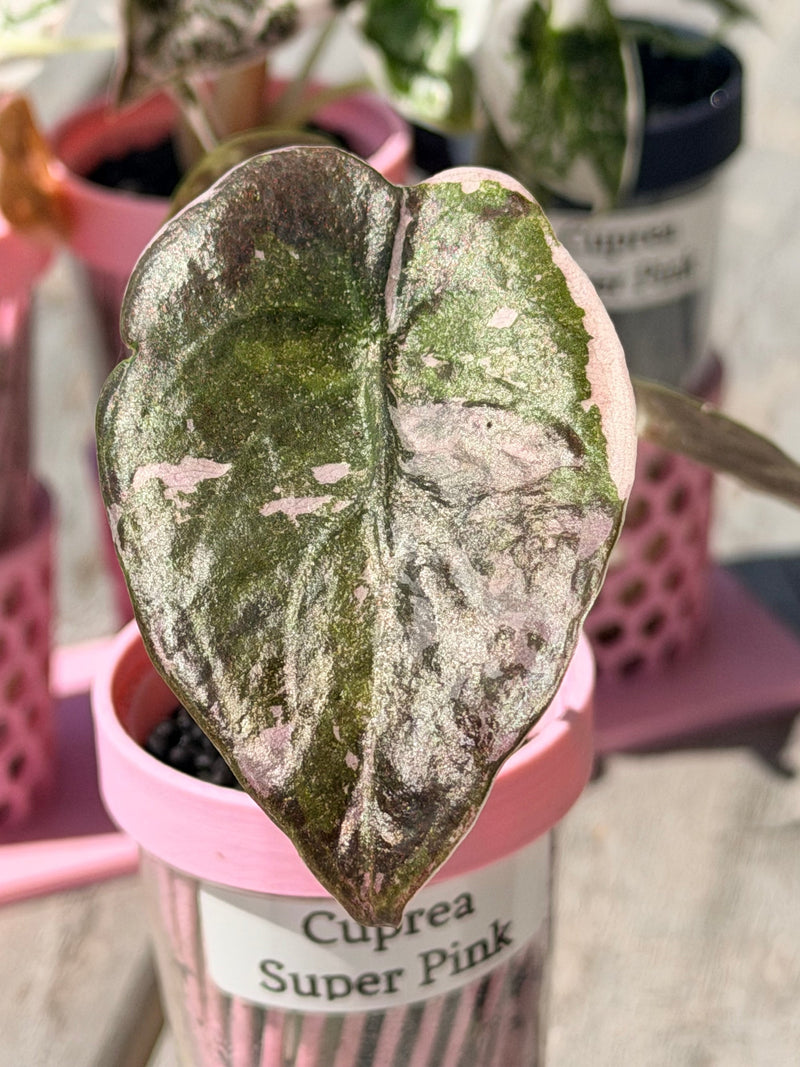

Alocasia cuprea is the plant most collectors picture when they hear the phrase "jewel Alocasia". It is compact, slow and heavy-leaved, and the upper surface of each leaf carries a metallic, copper-toned sheen that shifts as the light moves across it. It is also the parent species behind a small group of highly sought-after variegated forms, several of which we have covered in depth. This page brings them together: what defines the species, how its care differs from the larger Alocasia, and where to find each of our collector guides.
What defines Alocasia cuprea
Alocasia cuprea K.Koch is native to Borneo. It is recorded from Sabah and Sarawak in Malaysian Borneo, with a more recent record from North Kalimantan in Indonesia. Karl Koch published the name in 1861, a year after the plant appeared in English horticultural literature as Alocasia metallica, a name you will still occasionally see on older labels.
In the wild it grows in humid forest, including heath forest, and has been recorded on rocky slopes over sandstone, limestone and ultramafic rock. That tolerance of different substrates is part of the reason it has settled into cultivation more readily than some of its jewel Alocasia relatives.
Leaf characters
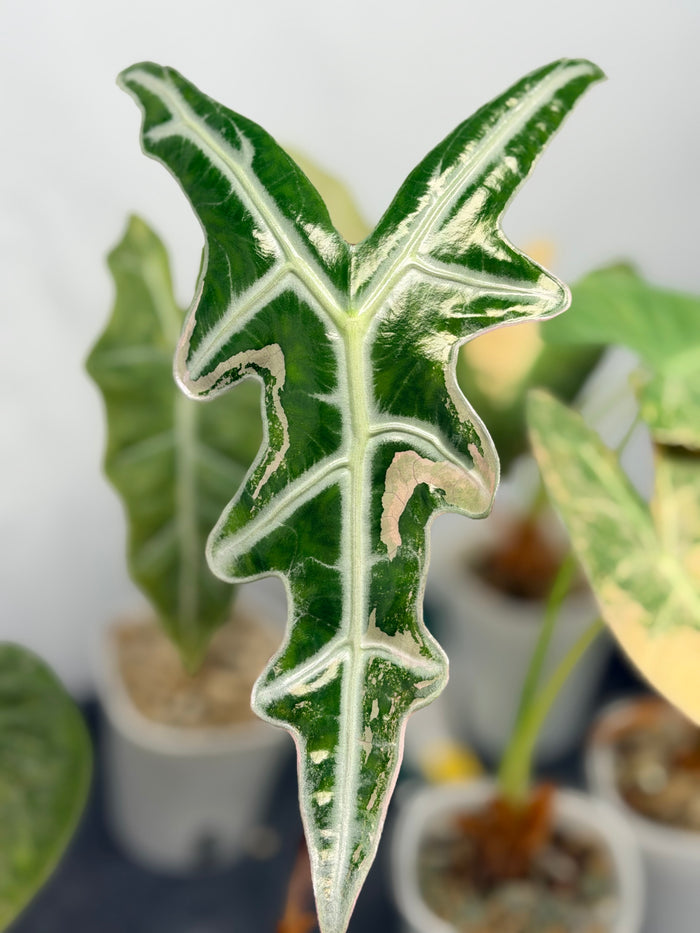
- Peltate blades: the leaf stalk joins the blade inside its margin rather than at the edge, so the leaf reads as a single, unbroken shield.
- Metallic upper surface: the leaves are thick and bullate, raised between the main veins, with a glossy copper to bronze-green sheen.
- Dark underside: in mature plants the lower surface is a deep purple.
- Compact habit: a small, slow species that usually carries only a few leaves at a time.
'Red Secret' and other trade names
'Red Secret' is a trade name, not a separate species. Plants sold under it are Alocasia cuprea. The same caution applies across this group: 'Latte', 'Nom Yen', 'Pink Mint' and 'Super Pink' are collector trade names attached to particular variegated forms rather than formally registered cultivars. We use them because they are how the plants are known and traded, and each of our guides explains what the name refers to.
Growing Alocasia cuprea: what is different
The fundamentals in our complete Alocasia care guide all apply. A few points matter more with cuprea than with the larger, faster species:
- Humidity: the thick leaves are forgiving, but new leaves open more cleanly in consistently high humidity. A cabinet or grow tent suits it well.
- Warmth: it dislikes cold and draughts. Keep it warm year-round and avoid sudden drops in temperature, particularly overnight in winter.
- Light: bright, indirect light. Harsh direct sun can scorch the metallic surface, while low light gives smaller, duller leaves. Our guide to LED grow lights covers the UK winter.
- Substrate and watering: the root system is modest, so an open, fast-draining mix matters more than pot size. We grow in our own pon mix, blended from the Soil Ninja range, and our substrate guide explains the blend.
- Feeding: little and often through the growing season, following our balanced feed programme.
- Pace: this is a slow species. Losing an old leaf as a new one opens is normal; losing several at once usually points to cold, overwatering or root trouble. Our root rot guide covers what to check.
Variegated forms carry less chlorophyll than the plain species, so they tend to grow more slowly again and do best towards the brighter end of the light range, short of direct sun.
Our Alocasia cuprea collector guides
| Name | Variegation type | Collector guide | Availability |
|---|---|---|---|
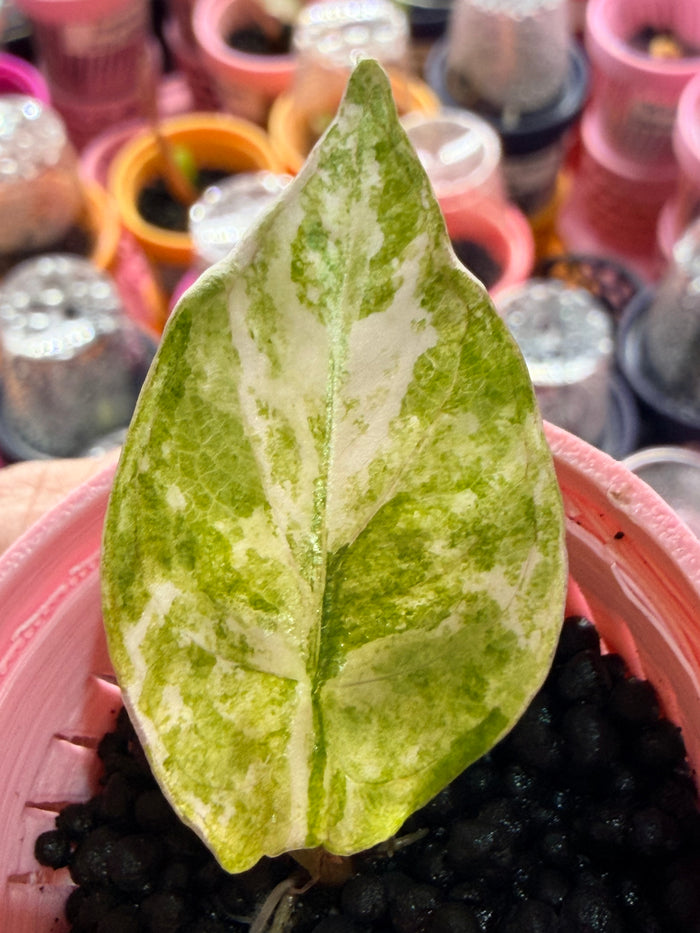
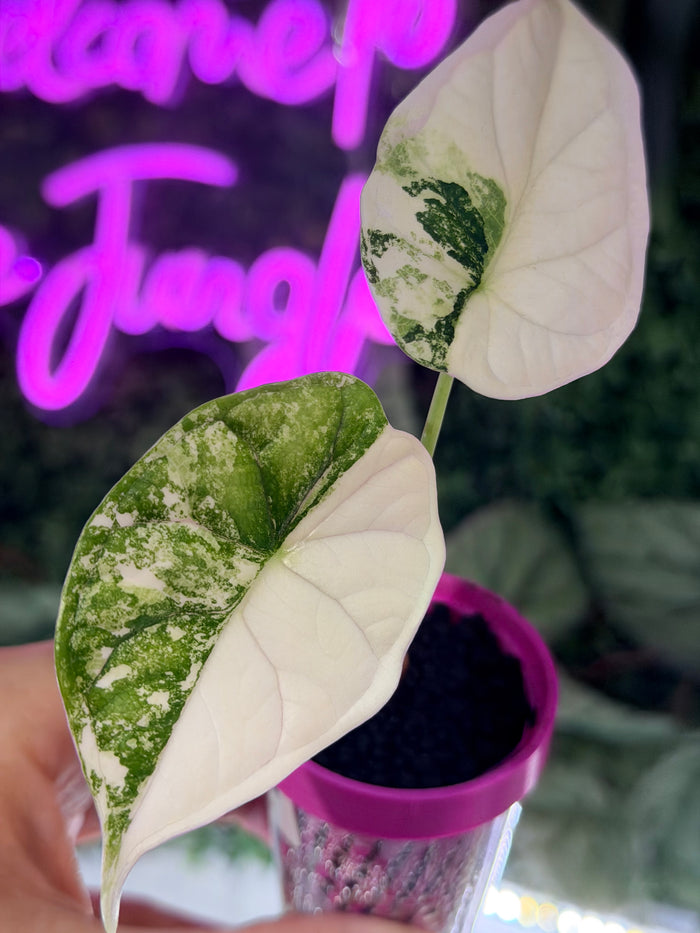
| Alocasia cuprea 'Latte' Variegated | Variegated | Read the guide | In stock |
| Alocasia cuprea 'Nom Yen' Variegated | Multi-toned | Read the guide | Not currently in stock |
| Alocasia cuprea Pink | Pink | Read the guide | Not currently in stock |
| Alocasia cuprea 'Pink Mint' | Pink and mint | Read the guide | Not currently in stock |
| Alocasia cuprea 'Super Pink' | Pink | Read the guide | Not currently in stock |
A note on variegation in cuprea
Most of the named cuprea forms above are defined by their variegation. Pink variegation in particular is typically unstable: the proportion of colour can change from leaf to leaf, and a plant may push greener or more heavily coloured growth over time. Our explainer on pink variegation covers why, and the complete guide to Alocasia variegation types sets out how pink, albo, aurea and mint patterns differ.
Frequently asked questions
Is Alocasia 'Red Secret' a different species from Alocasia cuprea?
No. 'Red Secret' is a trade name used for cultivated plants of Alocasia cuprea. Botanically they are the same species.
Where does Alocasia cuprea come from?
Borneo. It is recorded from Sabah and Sarawak, with a more recent record from North Kalimantan, growing in humid forest on a range of rock types including sandstone, limestone and ultramafic rock.
Why is my Alocasia cuprea dropping leaves?
Cuprea only holds a few leaves at a time, so losing the oldest as a new one opens is normal. Several leaves going at once usually points to cold, overwatering or root problems. Check the roots first and see our root rot guide if they are soft or discoloured.
Is the colour on a variegated cuprea permanent?
Not guaranteed. Pink variegation is typically unstable, so each new leaf can carry more or less colour than the last. Good, bright indirect light and steady conditions give a variegated plant the best chance of producing well-balanced leaves.
If you are looking for a particular cuprea form, or would like advice on one already in your collection, get in touch. We are always happy to talk jewel Alocasia.
From the nursery