Alocasia Sanderiana 'Bully' Pink Albo: The Complete Collector's Guide

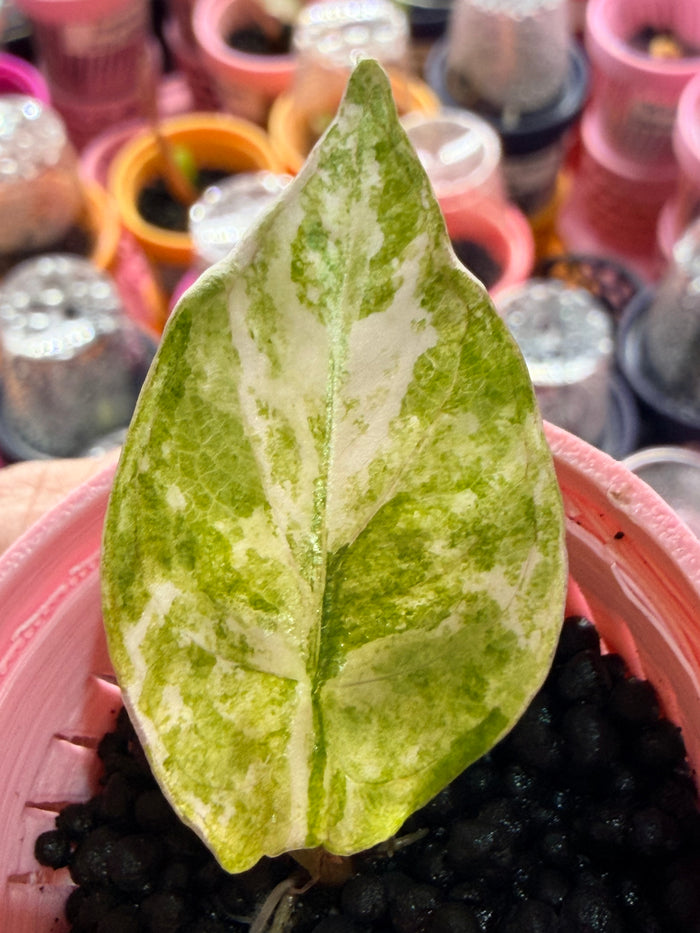
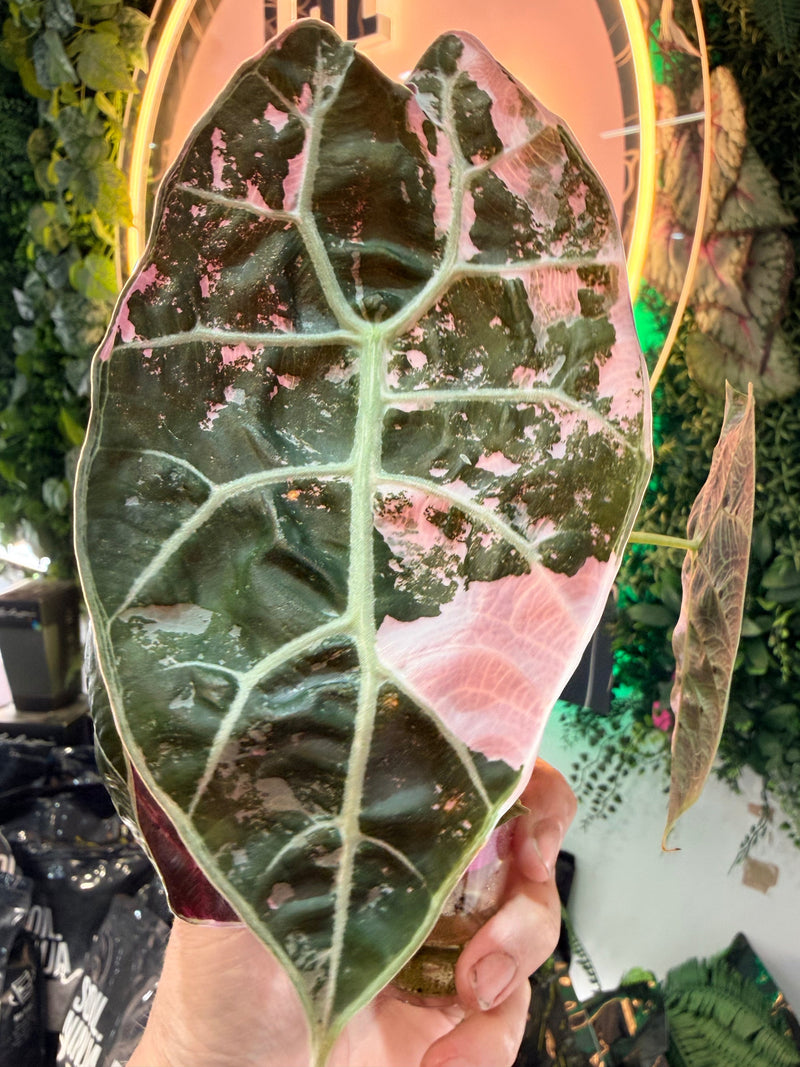
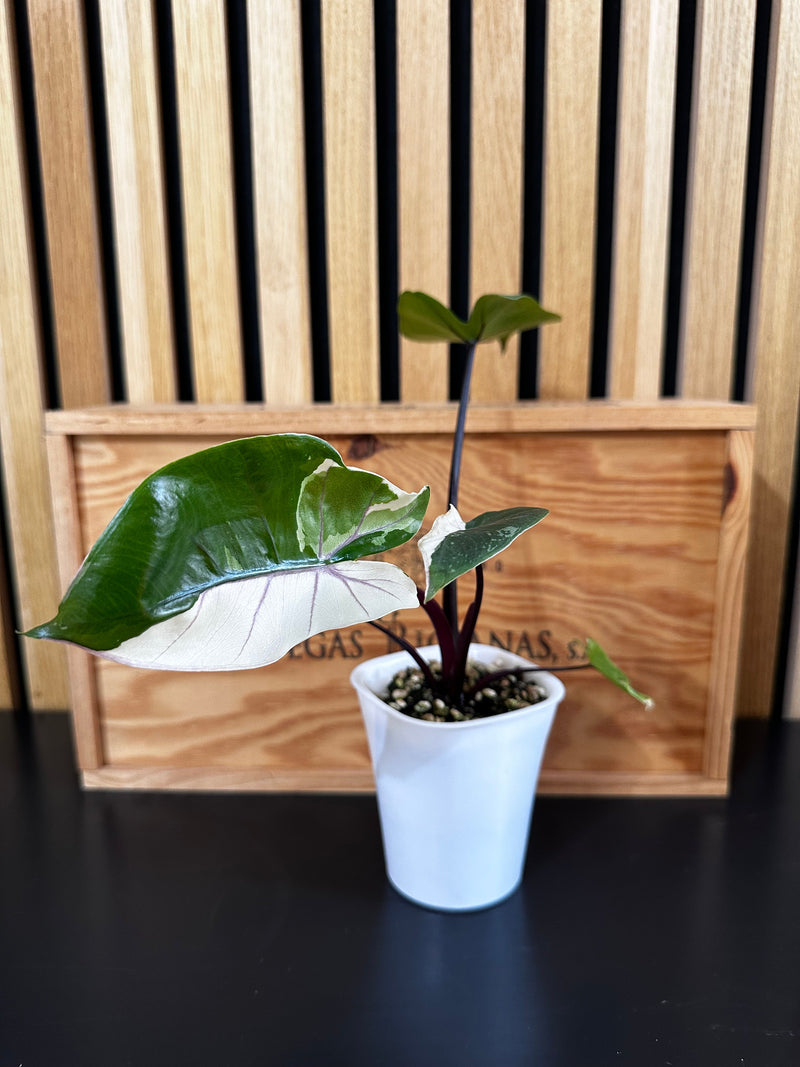
The Alocasia Sanderiana 'Bully' Pink Albo represents one of the most complex and collectible expressions within the sanderiana family, a large-form selection of Alocasia sanderiana carrying both chimeric pink variegation and chimeric albo variegation simultaneously, on a species whose standard form is already among the most architecturally compelling in the genus. The sanderiana's deeply undulate leaf margins, bold white-to-yellowish primary venation, and deep glossy dark green to near-black blade create a base of considerable visual authority. The 'Bully' selection emphasises this authority through bolder scale. The dual pink-albo variegation adds two further colour dimensions to that already complex foundation.
Species Background: Alocasia sanderiana
The species beneath this dual variegation is one of the most celebrated and botanically significant in the Philippine Alocasia flora, and one of its most endangered. Alocasia sanderiana is endemic to Northern Mindanao in the Philippines, is classified as critically endangered by the IUCN, and harvesting wild specimens there carries criminal penalties of six to ten years imprisonment. Its survival in cultivation, where it is now widely propagated, represents a genuinely important ex-situ conservation outcome for a plant whose wild population is severely threatened.
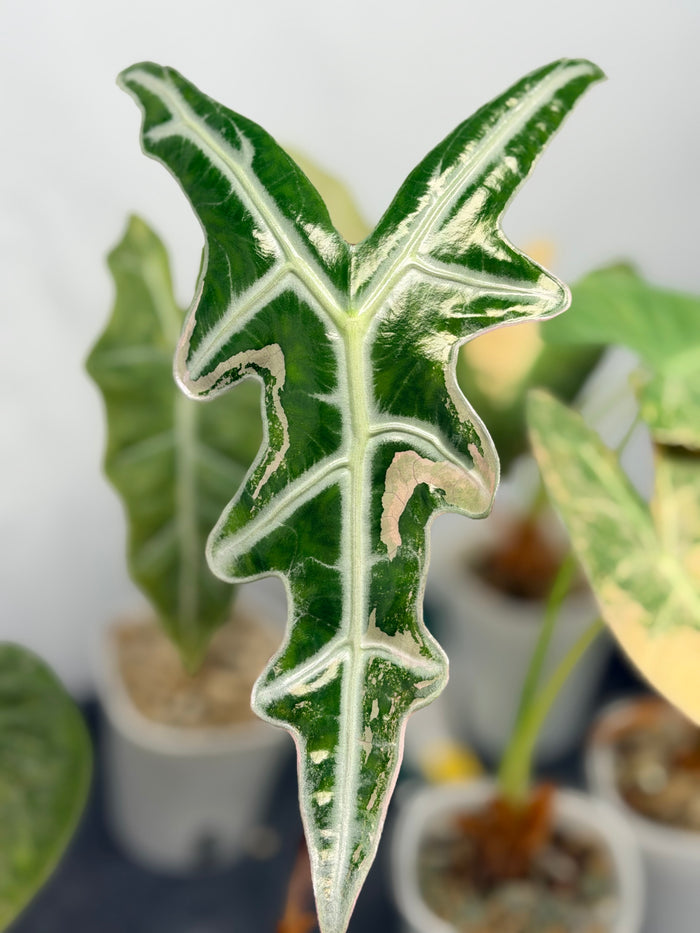
The species was named after Henry Frederick Conrad Sander, a British nurseryman and orchid specialist of the Victorian era, and entered European cultivation in the 1880s. It is also known as the "Kris plant", after the deeply undulate leaf margins that recall the wavy blade of the Indonesian kalis sword (also known as kris or keris). That architecture, a dark glossy green to near-black blade, deeply sinuate margins, bold white to yellowish primary venation and peltate petiole attachment, is the ground against which any variegation on this species is read, and it set the visual template for decades of Alocasia hybridisation: Alocasia sanderiana is a parent or indirect ancestor of some of the most widely grown decorative Alocasia in the world, the iconic "African Mask" line among them.
'Bully' is a selection name rather than a botanical distinction. It refers to a form of sanderiana/nobilis chosen for bolder, larger growth habit and more emphatic leaf architecture than the compact standard form, which is why the pink and albo sectors are displayed here at generous scale. The related name 'Nobilis' appeared in horticultural literature in 1893 and describes a particularly deep-lobed, architecturally pronounced expression of the species that has been maintained in cultivation ever since, though Aroidpedia records it as not a formally accepted cultivar name. 'Bully' selections take that emphasis further still, prioritising substantial leaf scale and strong venation contrast.
Dual Pink Albo Variegation on Sanderiana 'Bully'
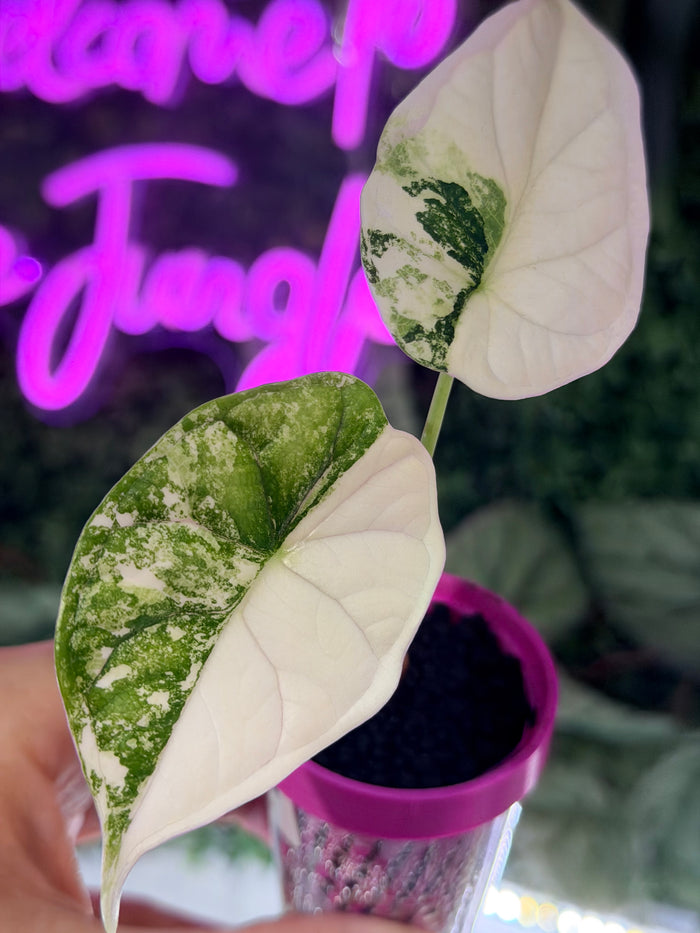
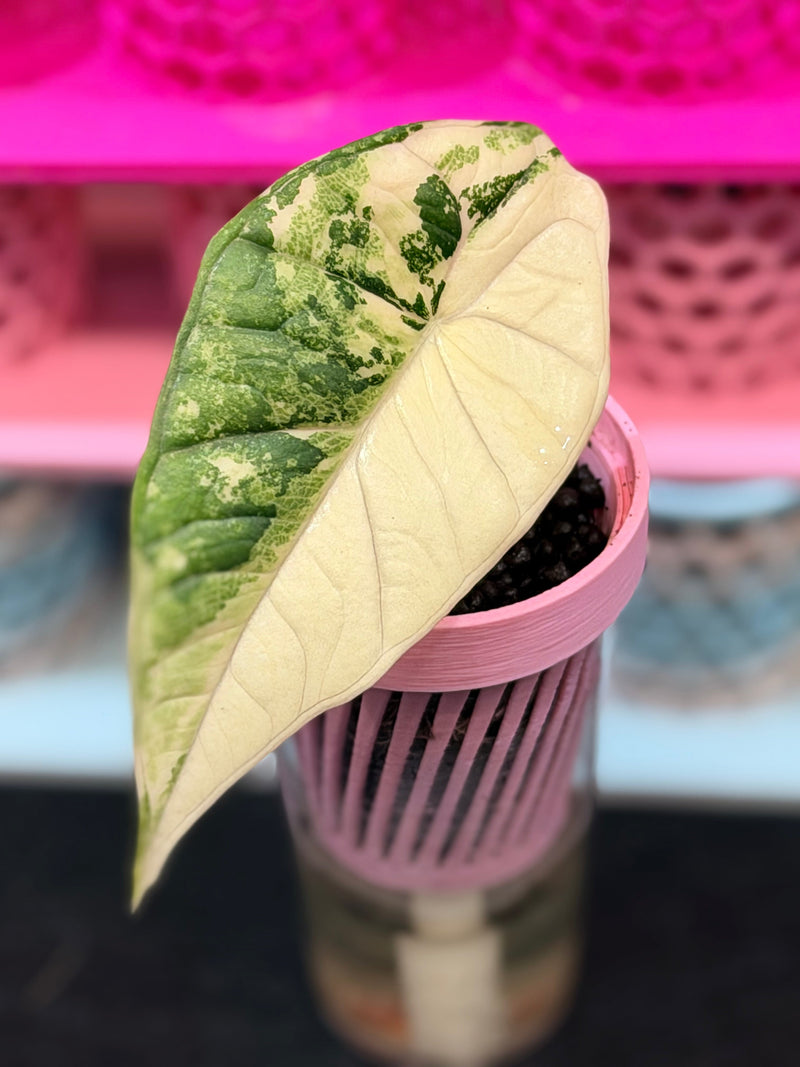
The Pink Albo combination on sanderiana 'Bully' carries two independent chimeric variegation mechanisms simultaneously. The albo sectors, white or cream tissue, arise from plastid genome mutation causing chlorophyll absence. The pink sectors arise from elevated anthocyanin expression in specific cell lineages, tinting those sectors pink through the filter-like mechanism common to all chimeric pink Alocasia. Both are chimeric; both are unstable and variable in distribution between leaves; and both are expressed on the species' characteristic dark, glossy base.
On Alocasia sanderiana, the white albo sectors and pink chimeric sectors appear against a near-black deep green blade that already carries bold white-to-cream primary venation. The three-element white composition, the structural white venation, the broader irregular albo sectors, and the pink sectors, operates against the very dark base in a way that emphasises the contrast of all lighter elements simultaneously. The deeply undulate leaf margins, the kris sword edges, follow all of this colour variation, creating a dynamic, complex boundary around a leaf that is already visually exceptional by any measure.
The albo sectors are non-photosynthetic; the pink sectors retain chlorophyll. The combined metabolic load requires consistent bright indirect light with LED supplementation from October to March. Our complete variegation guide covers both mechanisms. The conservation context of sanderiana, critically endangered in the wild, IUCN listed, all plants in UK cultivation propagated from cultivated sources, adds meaning to collecting this species in any form.
Care Requirements
Temperature 20-27°C, humidity 60-80%, bright indirect light year-round. Fluval Stratum substrate, thorough watering when top 2-3cm is dry. Feed conservatively at quarter to half strength from our plant feed range every 2-3 weeks during the growing season, the dual chimeric variegation makes this the most metabolically demanding of the sanderiana forms. A heat mat beneath the pot supports root health in winter.
We release Sanderiana Bully Pink Albo through our drop model. Join the collector list for early access and view our Alocasia Sanderiana Bully Pink Albo listing.
Questions about the Sanderiana Bully Pink Albo, sanderiana conservation, or dual-expression variegation? Contact our team for specialist guidance.
From the nursery