Alocasia × amazonica: The Group Guide to 'Amazonica', 'Polly', 'Bambino' and Their Forms
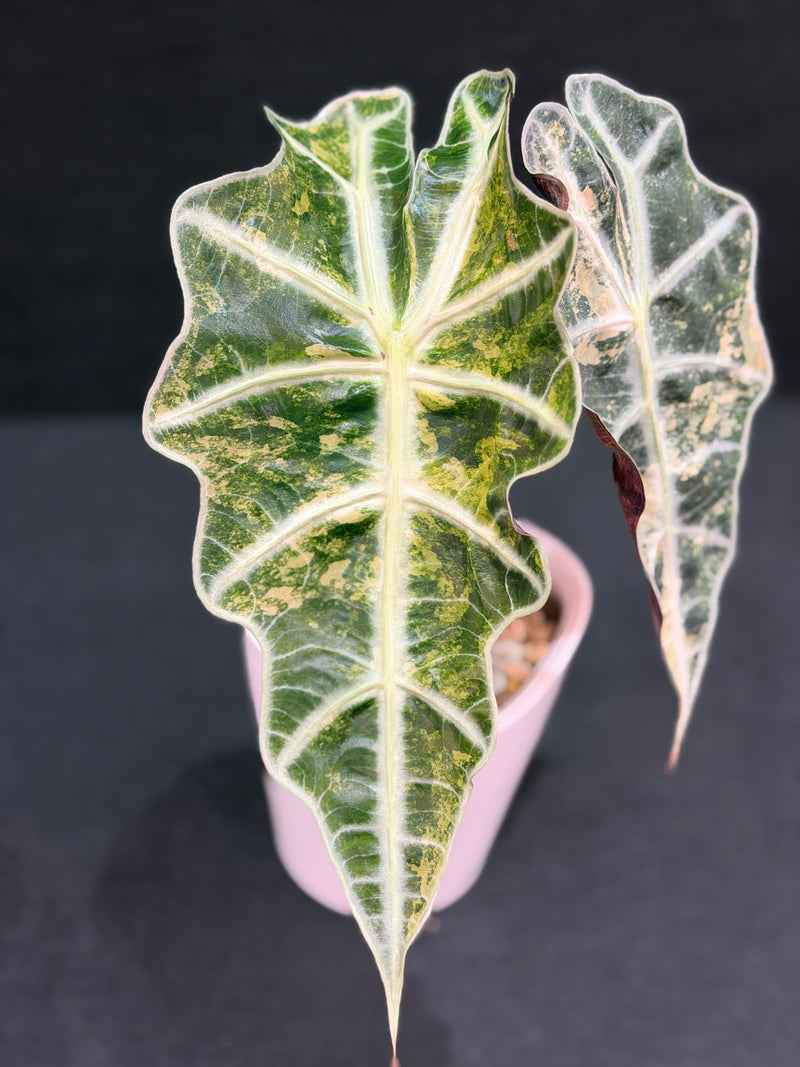
Few Alocasia are as widely recognised as Alocasia × amazonica. The arrow-shaped, near-black leaves with their bright white veins have been a houseplant staple for decades, and the plant has gone on to become the starting point for a whole family of compact selections and variegated forms. Unlike our other hubs, this page does not describe a wild species. It describes a group: the original hybrid, the smaller plants selected from it, and the named forms that collectors trade under its umbrella. Below: where the hybrid came from, how its care differs, and links to each of our collector guides.
What defines the Alocasia × amazonica group
Alocasia × amazonica is a horticultural hybrid, not a wild plant. Its parents are usually given as Alocasia sanderiana and Alocasia longiloba in the form grown as 'Watsoniana'. The name is generally traced to the 1950s and to Salvadore Mauro, who is reported to have bred the plant at his Amazon Nursery in Miami, Florida. The hybrid name was never validly published, which is why you will now often see the plant written as Alocasia 'Amazonica', treated as a cultivar name rather than a botanical one.
Both parents are Asian. Alocasia sanderiana is endemic to Mindanao in the Philippines, and Alocasia longiloba is a widespread and variable Southeast Asian species covered in our longiloba species guide. From sanderiana the hybrid takes its deeply lobed, scalloped margins; from longiloba, its arrow shape and strong silver-white venation.
Not from the Amazon
The name causes more confusion than any other in the genus. Alocasia is an entirely Asian and Australasian genus, and there are no Alocasia native to South America. The "amazonica" refers to the nursery where the plant is reported to have been raised, not to the Amazon basin.
'Polly', 'Bambino' and other names
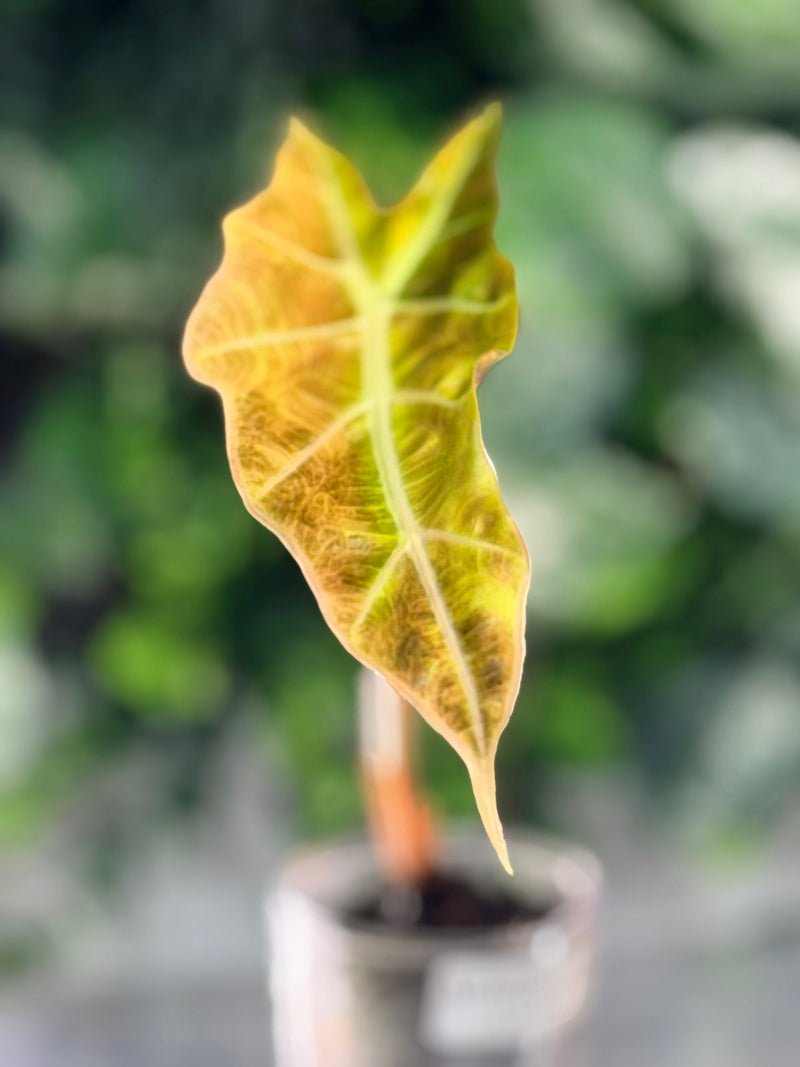
- 'Polly': a more compact plant that arose as a mutation of 'Amazonica' at Silver Krome Gardens in Florida in the early 2000s. It has thicker leaves, more pronounced scalloping and a more oval blade. It is now so common that the two names are often used interchangeably, although they are distinct plants.
- 'Bambino': a smaller selection again, usually sold as a dwarf 'Amazonica'. The RHS lists it as Alocasia × amazonica 'Polly Bambino'. Its exact origin is not well documented.
- 'Curly Bambino' and 'Balloon Heart': collector trade names for forms with distinctive leaf shapes. They are grouped here because of their resemblance to the Bambino line, not because their parentage is recorded.
- 'Pink Dragon': the name is used loosely in the trade. Aroidpedia treats it as a trade name for 'Morocco', a hybrid of Alocasia 'Aurora' and 'Polly', which would give it × amazonica ancestry through 'Polly'. Not every plant sold as 'Pink Dragon' can be traced to that cross, so we group it here with that caution.
As with other groups on this site, many of these are trade names rather than formally registered cultivars. We use them because they are how the plants are known and traded, and each guide explains what the name refers to.
Growing the × amazonica group: what is different
The fundamentals in our complete Alocasia care guide all apply. A few points matter more with this group than with the larger species:
- Compact habit: most plants in the group, and 'Bambino' in particular, stay small and carry only a handful of leaves. Pot size should follow the root system, not the eventual height you hope for.
- Winter dormancy: this group is among the most likely to slow down or shed leaves during a UK winter, when light levels and temperatures drop. A plant that loses its leaves may simply be resting on its corm. Reduce watering, keep it warm and see our winter care and dormancy guide before assuming the worst.
- Spider mite: the thin-textured leaves of 'Amazonica' and 'Bambino' are a favourite of spider mite, especially in warm, dry indoor air. Check the undersides regularly, keep humidity up and see our pest patrol guide.
- Light: bright, indirect light keeps growth compact and the venation crisp. Supplementary lighting through the darker months helps a great deal; our guide to LED grow lights covers the options.
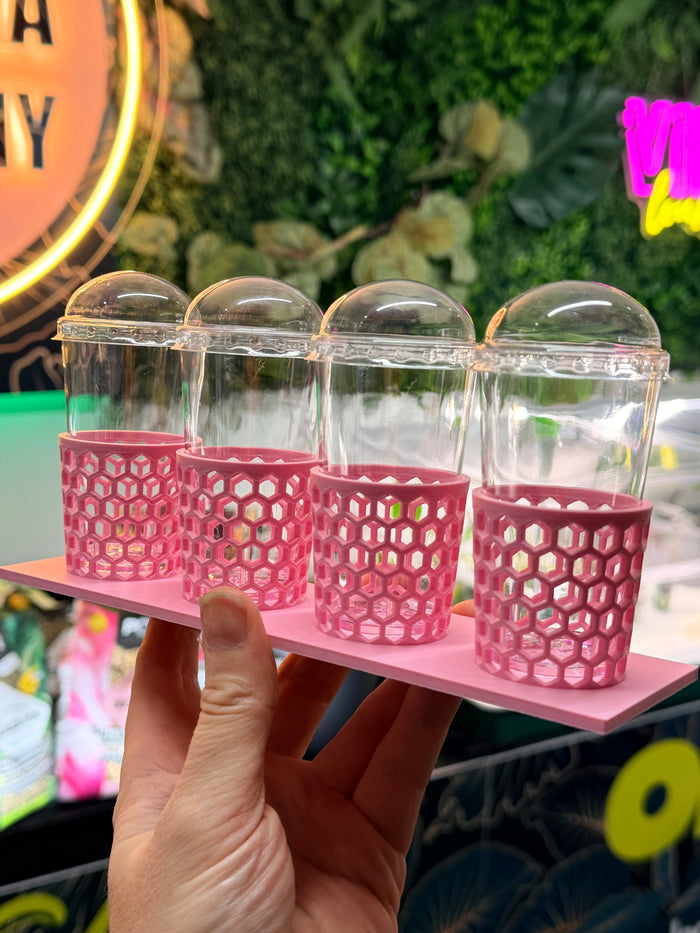
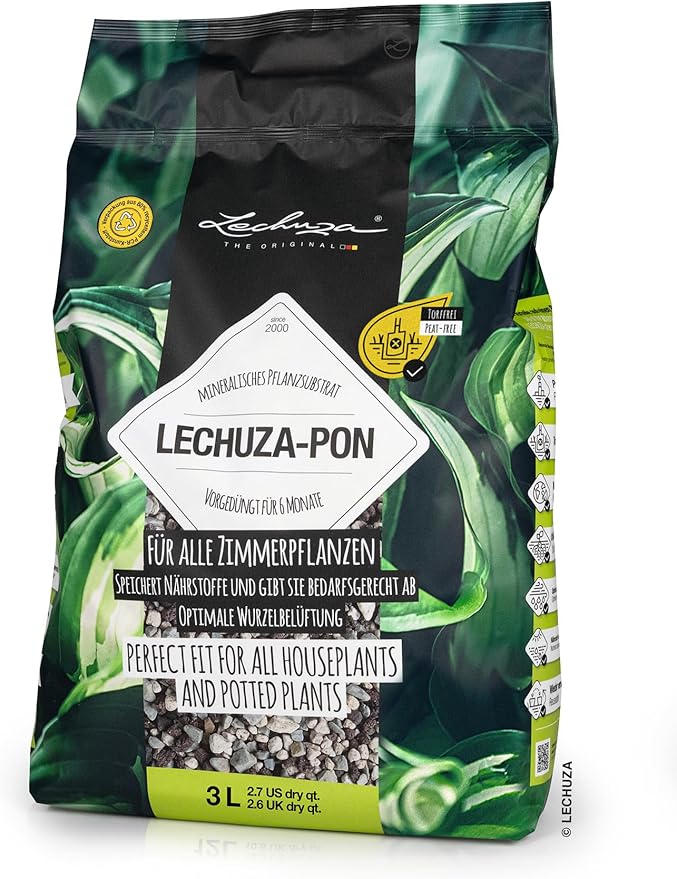
- Substrate and watering: an open, fast-draining mix suits the modest root system. We grow in our own pon mix, blended from the Soil Ninja range, and our substrate guide explains the blend. Persistent wet roots in a cool room are the usual route to trouble, covered in our root rot guide.
- Feeding: little and often through the growing season, following our balanced feed programme, and eased right back while a plant is resting.
Variegated forms carry less chlorophyll than the plain plants, so they grow more slowly and do best towards the brighter end of the light range, short of direct sun. Steady warmth through winter matters more with them.
Our × amazonica group collector guides
| Name | Variegation type | Collector guide | Availability |
|---|---|---|---|
| Alocasia × amazonica | None (plain) | Read the guide | Join the drop list |
| Alocasia × amazonica Aurea | Aurea | Read the guide | View the plant |
| Alocasia × amazonica Pink Variegated | Pink | Read the guide | View the plant |
| Alocasia × amazonica Pink Variegated (Thai line) | Pink | Read the guide | View the plant |
| Alocasia 'Polly' | None, plus a tri colour form | Read the guide | Join the drop list |
| Alocasia 'Bambino' | None (plain) | Read the guide | Join the drop list |
| Alocasia 'Bambino' Pink Variegated | Pink | Read the guide | View the plant |
| Alocasia 'Curly Bambino' | None (plain) | Read the guide | Join the drop list |
| Alocasia 'Pink Dragon' Albo | Albo and pink | Read the guide | View the plant |
| Alocasia 'Pink Dragon' Aurea | Aurea | Read the guide | View the plant |
| Alocasia 'Pink Dragon' Lime Aurea | Lime aurea | Read the guide | View the plant |
| Alocasia 'Balloon Heart' Pink Variegated | Pink | Read the guide | View the plant |
For every other group and species we cover, see our rare Alocasia A to Z.
A note on variegation in the × amazonica group
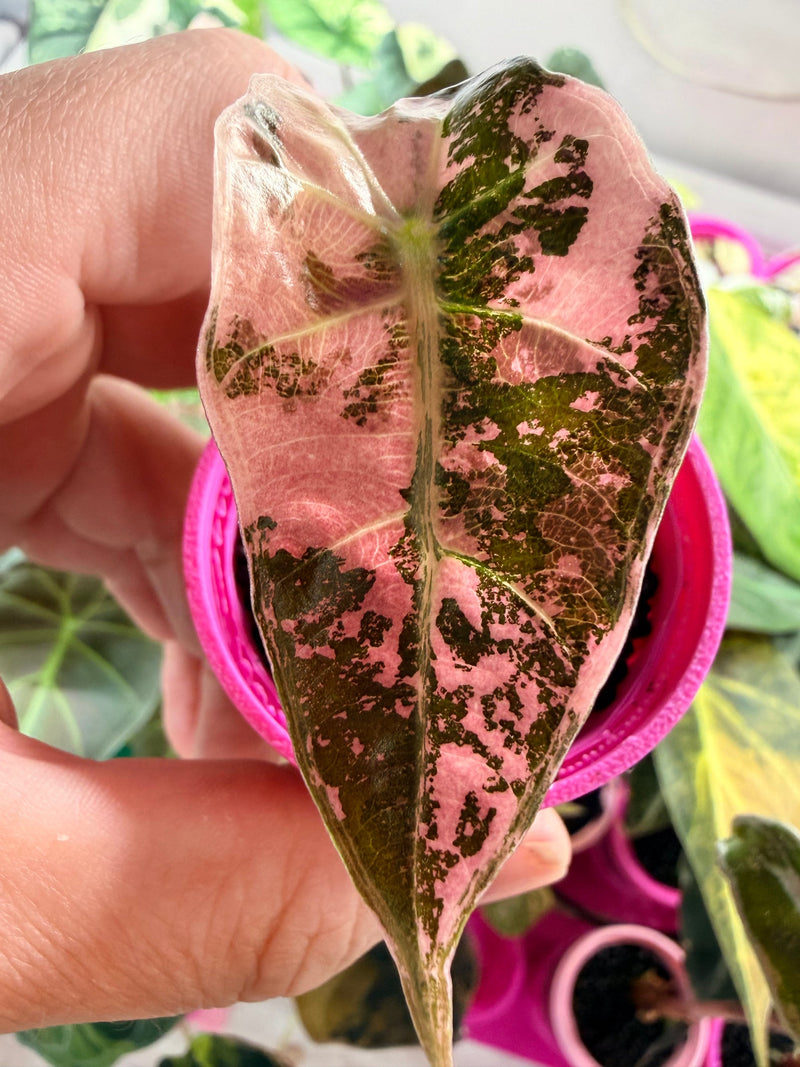
This group carries all three of the main variegation types: pink, aurea and albo. Each behaves differently. Pink variegation is typically unstable, so the amount of colour can shift from leaf to leaf, as our explainer on pink variegation sets out. Aurea gives yellow to lime tones and is covered in our guide to aurea variegation, whilst the white sectors of albo forms are explained in our albo variegation guide. The complete guide to Alocasia variegation types compares them side by side.
Frequently asked questions
Is Alocasia × amazonica from the Amazon?
No. It is a hybrid raised in cultivation, reportedly at a Miami nursery called Amazon Nursery, which gave the plant its name. Both parents, Alocasia sanderiana and Alocasia longiloba, are Asian, and no Alocasia grow wild in South America.
Are 'Polly' and 'Amazonica' the same plant?
They are closely related but not the same. 'Polly' arose from 'Amazonica' as a more compact plant with thicker, more scalloped and more oval leaves. The two names are often mixed up on labels, so it is worth looking at the leaf shape rather than relying on the tag.
Why has my amazonica lost all its leaves in winter?
This group is prone to going dormant when UK light levels and temperatures fall. If the corm is firm, the plant is most likely resting. Keep it warm, water sparingly and wait for spring. Our dormancy guide explains how to tell rest from rot.
How do I keep spider mite off an amazonica?
Check the undersides of the leaves regularly for fine speckling or webbing, keep humidity up and avoid placing plants near radiators. See our pest patrol guide for what to use.
Is 'Pink Dragon' part of the amazonica group?
Loosely. The best-documented plant traded under that name is a hybrid of 'Aurora' and 'Polly', so it carries × amazonica ancestry. The name is not applied consistently in the trade, which is why we describe the grouping with some caution.
If you are looking for a particular form within the × amazonica group, or would like advice on one already in your collection, get in touch through our contact page. We are always happy to help.