Alocasia Amazonica Pink Variegated: Hybrid History, Thai Line and Care Guide

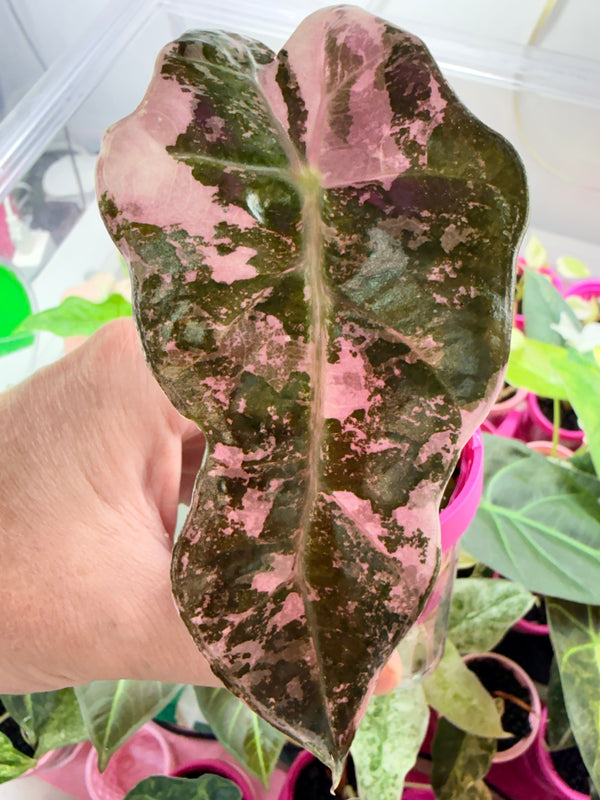
The Alocasia Amazonica Pink Variegated brings chimeric pink variegation to Alocasia × amazonica, the iconic Miami-bred hybrid whose near-black glossy leaves and bold white venation have made it the world's most recognised Alocasia. Pink chimeric sectors on this already high-contrast leaf, dark blade, white veins, deeply undulate margins, create a warm counterpoint to the cool white venation and the dark base, adding a third colour element in a composition that was already exceptional before the pink variegation was introduced.
This guide covers the hybrid's history and naming, the pink variegation itself, our Thai line of the same plant, and how to care for it. We list the standard form and the Thai version as separate plants, and both are described here so you can see how they relate.
Hybrid Background: Alocasia × amazonica
The plant beneath the pink is a made thing, not a wild species. Alocasia × amazonica was raised in Miami, Florida, in the 1950s by Salvadore Mauro, a postman and plant enthusiast who ran a nursery called Amazon Nursery, and it was named for the nursery rather than for any South American connection. Aroidpedia records that Mauro named the parents himself: Alocasia sanderiana, the critically endangered Philippine kris plant, crossed with Alocasia longiloba 'Watsoniana', the historic Bornean cultivar, and that John Banta later reproduced the hybrid from those parents. Its foliage looks the part of an Amazonian plant, which is why the misunderstanding has lasted, but the parentage is wholly South-East Asian: the Philippines on one side, Borneo on the other.
Few Alocasia have sold in such numbers, and the hybrid's descendants account for much of the African Mask group. Alocasia 'Polly', a smaller mutant selected by Bill Rotolante at Silver Krome Gardens in Florida, is the best known of them and probably the most widely sold Alocasia anywhere. 'Purpley' also comes from Rotolante, 'Venom' from Mason Lee, and 'Balloon Heart' from South Korea, while 'Mandalay' and 'Loco' sit in the 'Polly' line. 'Mayan Mask' is a cross of Alocasia odora with 'Amazonica'.
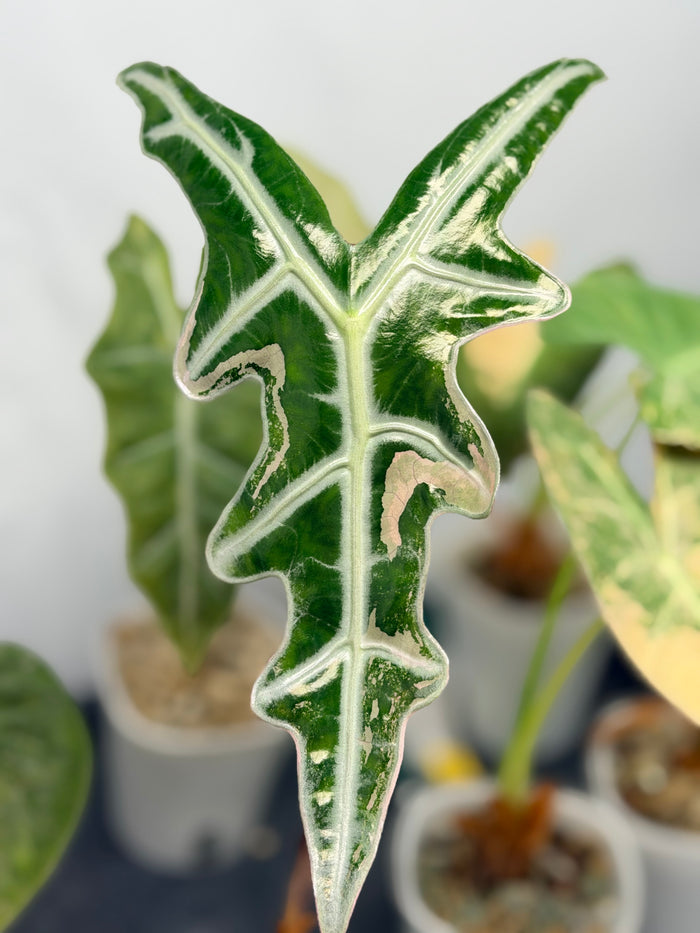
The standard leaf is arrow-shaped and dark glossy green to near-black, with bold white to yellowish primary venation and the deeply undulate margin that comes from the sanderiana parent's kris-plant edge. Alocasia longiloba 'Watsoniana' contributes scale, vigour and part of the extended venation that tells the hybrid apart from sanderiana on its own.
Naming and Synonymy
Trade names and botanical names have never quite matched in this group. 'Amazonica' was never validly registered as a botanical name. The USDA's GRIN database relegated Alocasia × amazonica to horticultural status in 2009, and Kew lists it as a horticultural synonym of Alocasia × mortfontanensis André, 1891. Alistair Hay has supported publishing it as a cultivar name, 'Amazonica'. Whatever the formal position, "Amazonica" is the name the trade uses almost universally, and it is the name you will find on a plant label.
Pink Variegation on the Amazonica Lineage
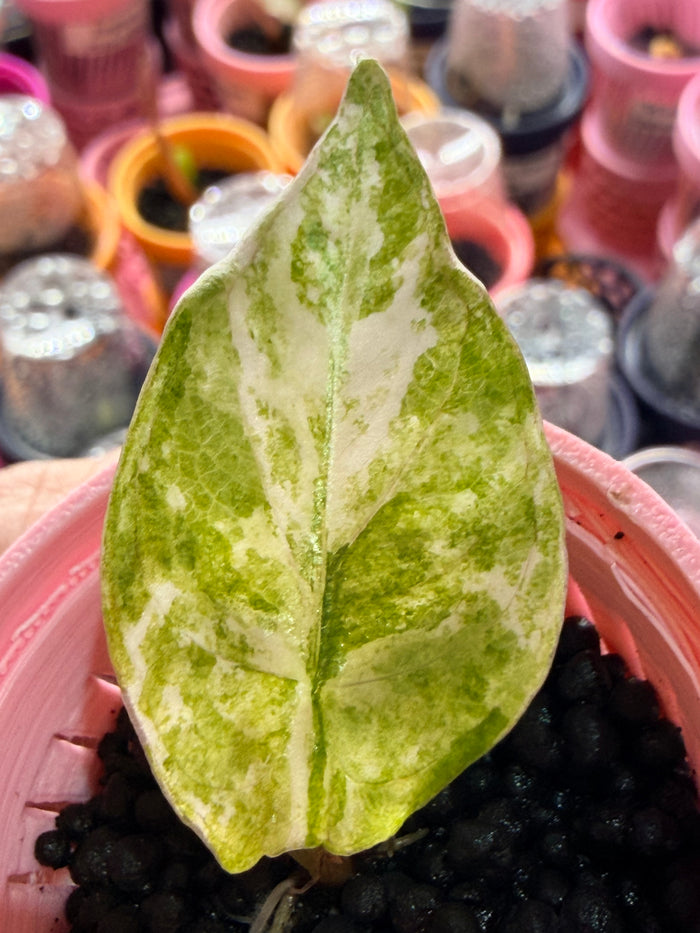
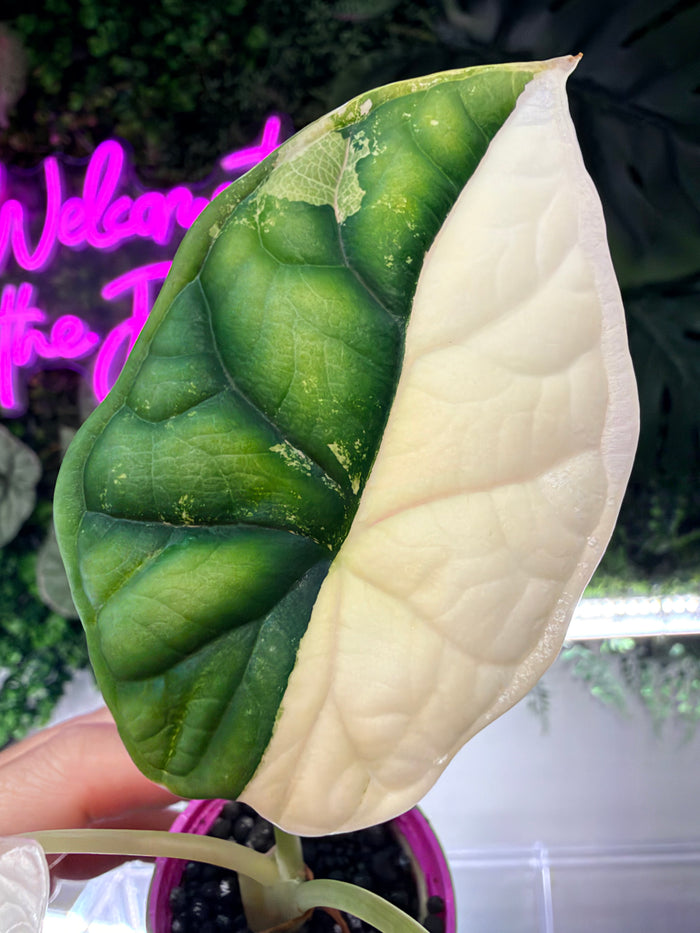
Chimeric pink sectors on the near-black amazonica blade appear as warm rose-pink areas distributed irregularly across the glossy dark surface. The contrast between warm pink and near-black is one of the highest-contrast combinations in the pink variegated Alocasia world, the warmth of the pink intensified by the very dark surrounding tissue in the same way that the aurea form's golden sectors appear luminous against the dark base.
The white primary venation continues through the pink sectors, providing the bold structural lines that define the amazonica leaf character regardless of the variegation overlay. The combination of white venation, pink chimeric sectors and dark blade creates a three-colour composition where cool white, warm pink and deep dark green-black all operate simultaneously, with the deeply undulate kris-like margins following the pink sector boundaries at the leaf edge. Pink sectors retain chlorophyll, giving this form meaningful metabolic capacity.
Pink variegation is chimeric, which means expression is not guaranteed to be the same from leaf to leaf or plant to plant. Our guide to the mystery of pink variegation in Alocasia explains the mechanism, and the complete guide to Alocasia variegation types places it alongside albo and aurea.
Aroidpedia records white and yellow forms of 'Amazonica' but not pink. Aroidpedia concentrates on registered plants, and many newer forms reach collectors before any registration exists, which is why we grow rare and new to market forms like this one.
The Thai Collector Line
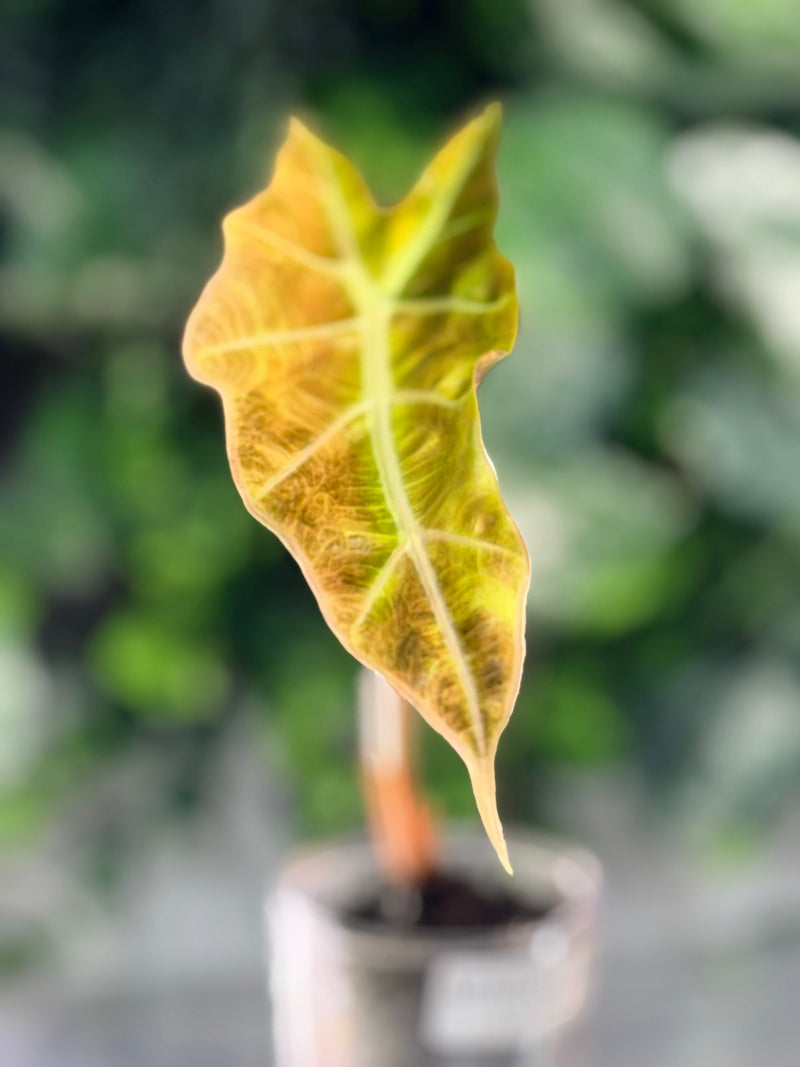
The Thai version is a trade line, not a separately named cultivar: pink variegated Alocasia × amazonica that has reached collectors through the Thai aroid trade, circulating first in South-East Asian collector markets and later in European ones. Collectors seek Thai material for the reputation of its pink expression, how that pink distributes across the blade and how consistently it holds from leaf to leaf.
Those are trade observations and not a formal distinction, and we would not present the Thai line as a verified cultivar separate from the standard pink variegated form. Underneath it is the same cross, Alocasia sanderiana with Alocasia longiloba 'Watsoniana', carrying chimeric pink on the near-black blade alongside bold white venation and the deeply undulate kris-plant margin. We offer it as its own listing so collectors who specifically want the Thai line can find it.
Amazonica Pink Variegated Care Guide
Care is the same for the standard form and the Thai line, and follows general Alocasia care.
Light and Temperature
Bright indirect light, with LED supplementation where natural light is limited. Keep temperatures between 20 and 27°C, and use a heat mat under the pot if the room runs cool. Pink sectors are sensitive to scorching in direct sun.
Substrate, Watering and Humidity
Fluval Stratum is our recommended substrate. Water when the top 2 to 3cm has dried, let excess drain, and never leave the pot standing in water. Aim for humidity of 60 to 80 per cent, using a humidifier or grouping plants if the air is dry.
Feeding
Feed at half strength from our plant feed range, little and often, and ease off if growth slows.
Propagating from Corms
Corms are the way to make more plants. We start them in Fluval Stratum in the Corm Keeper, using a self-wicking reservoir and a dome, as set out in our Alocasia corm propagation guide. The Corm Keeper and Corm Crown Set is made for it. Because pink is chimeric, a plant grown from a corm may not carry the same pink as its parent.
Collecting Amazonica Pink Variegated
We release Amazonica Pink Variegated through our drop model. Join the collector list and view our Alocasia Amazonica Pink Variegated listing, or the Alocasia Amazonica Pink Variegated (Thai Version) listing. Our pink variegated collection includes related specimens.
Questions about Alocasia Amazonica Pink Variegated, the Thai line or the Amazonica family? Contact our team for specialist guidance.
From the nursery