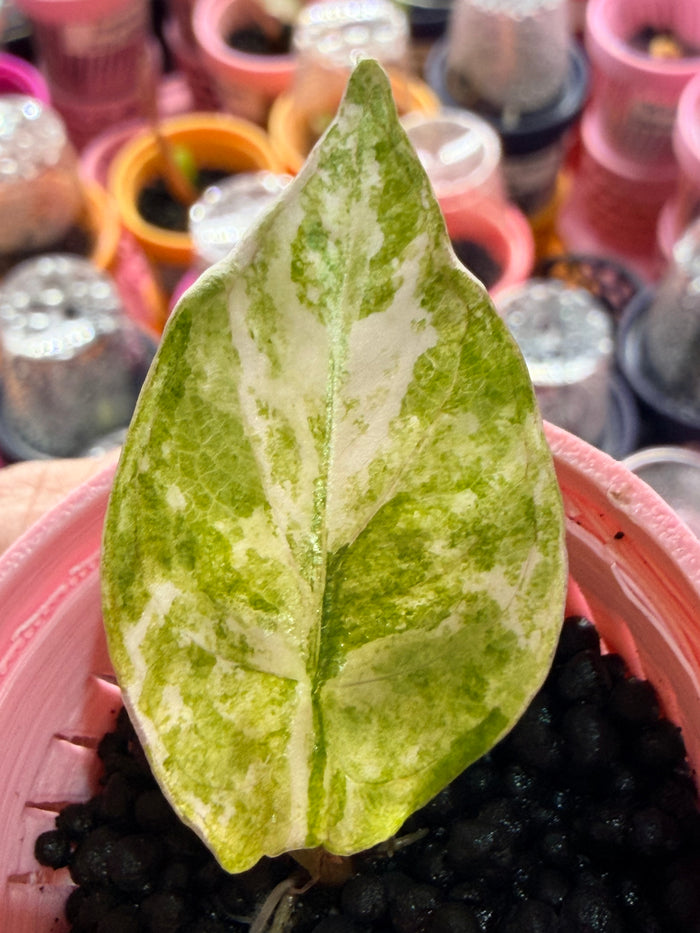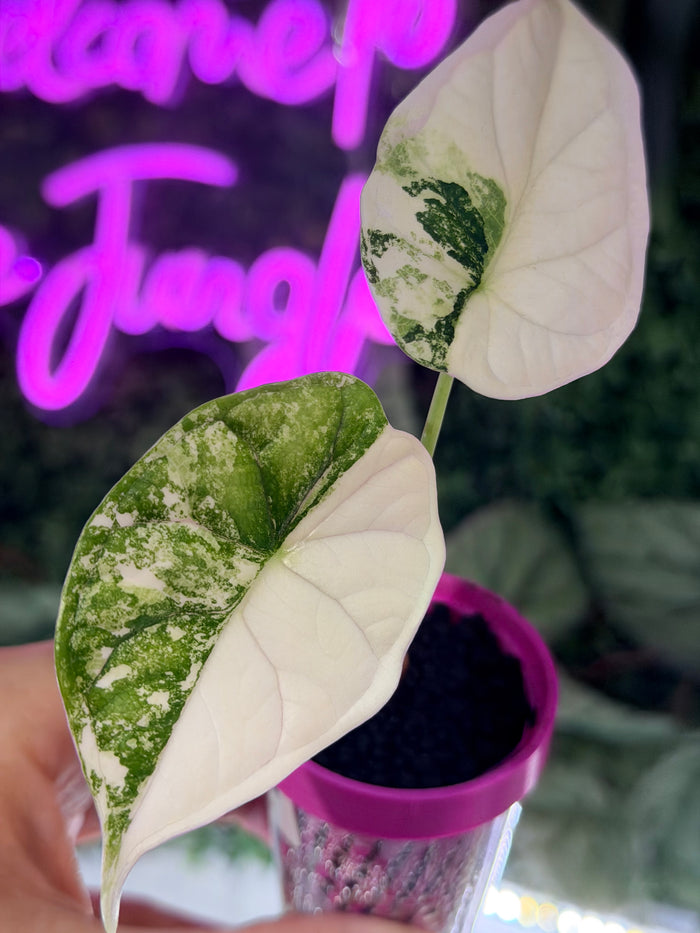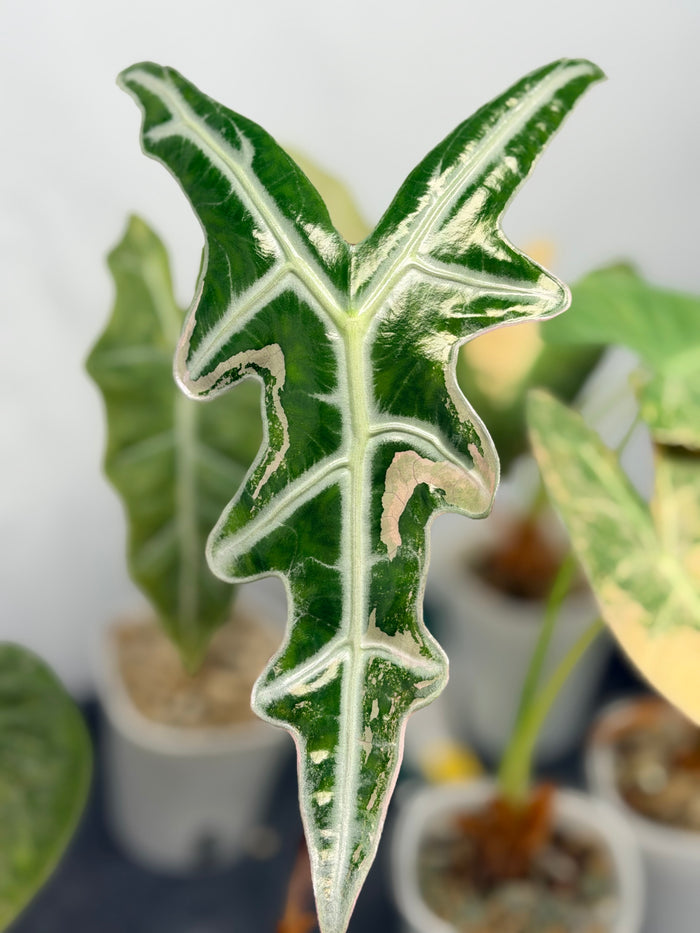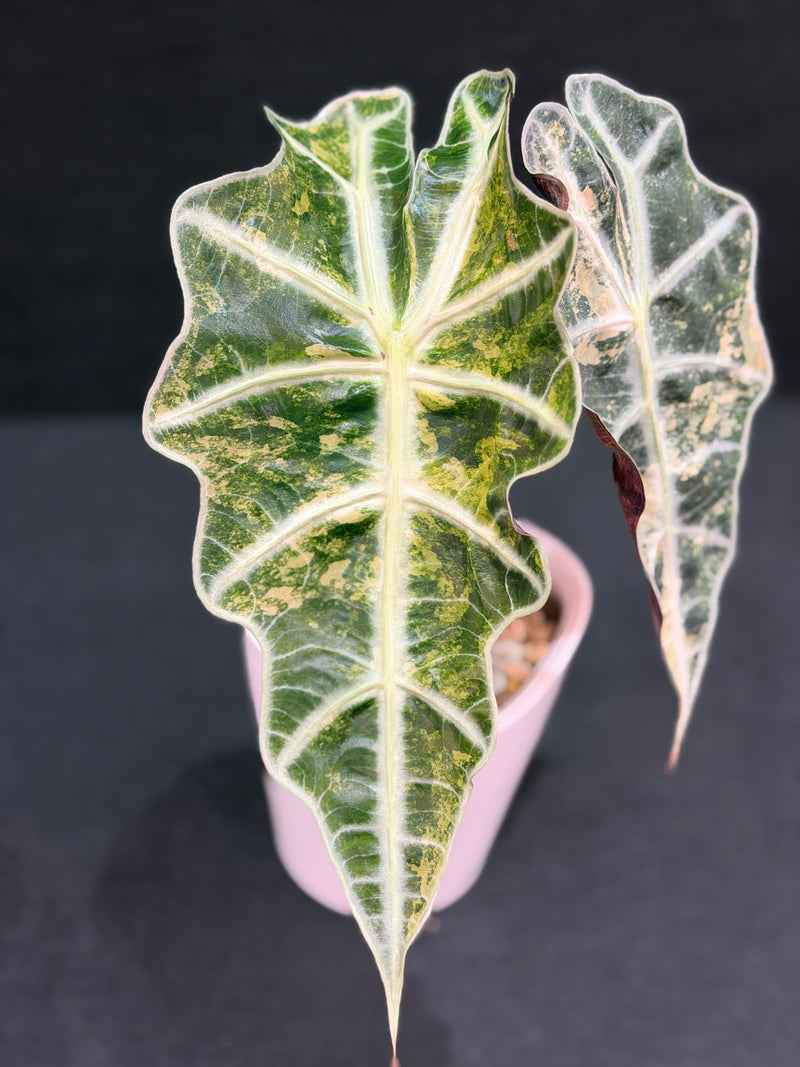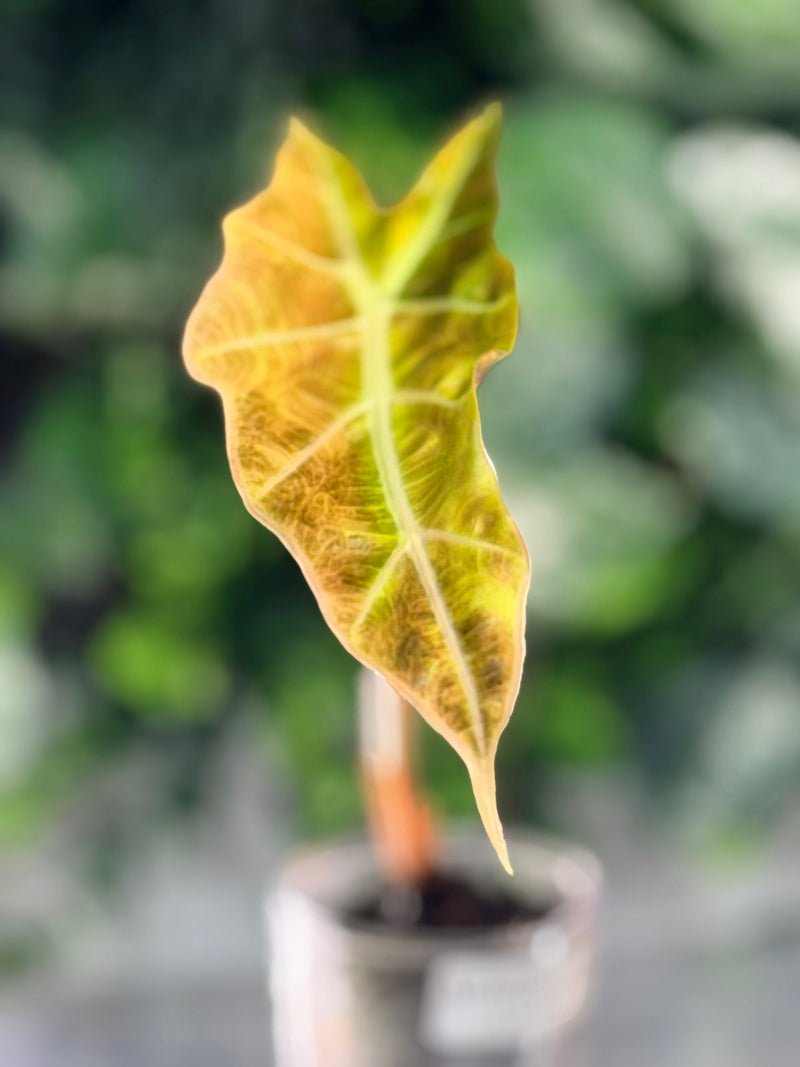

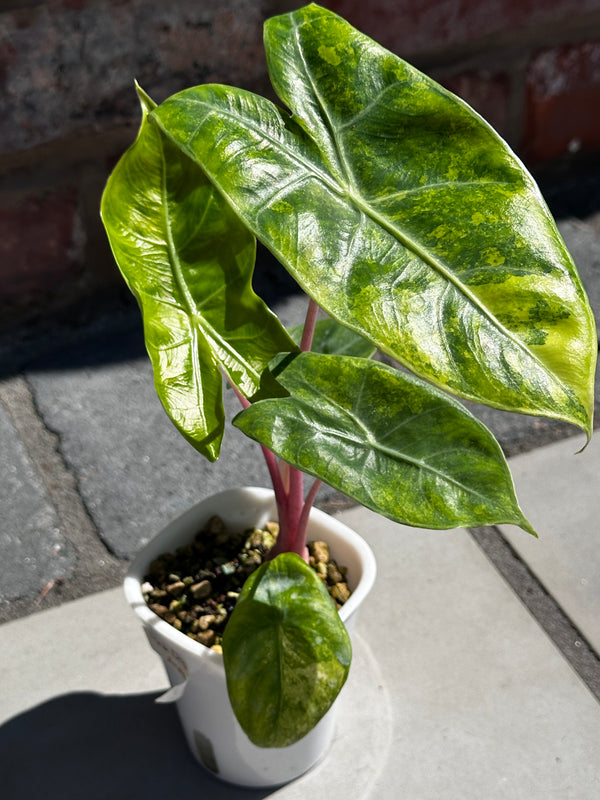
The Alocasia Pink Dragon is already a plant of considerable visual complexity, vivid pink petioles, deep glossy green foliage, prominent silver venation, and distinctive burgundy leaf undersides combine to create a specimen that stands apart from most of the Alocasia genus. The aurea form of the Pink Dragon adds another layer to this complexity: golden-yellow sectors appearing across the blade, created by a carotenoid-based variegation mechanism that is fundamentally different in origin and appearance from the albo form, and no less remarkable in its collector appeal.
This guide covers the Pink Dragon Aurea specifically, its variegation science, the characteristics that distinguish it from other aurea and Pink Dragon cultivars, and the particular care considerations that apply to maintaining this exceptional specimen in a UK growing environment. Those who have read our guide to the Pink Dragon Albo will find much of the species background familiar; the focus here is on what makes the aurea form distinctive.
Aurea Variegation: The Science Behind the Gold
Aurea variegation in Alocasia is fundamentally different from albo variegation at a cellular and biochemical level, and understanding this difference matters for how you grow and assess the plant. Where albo variegation results from a chimeric mutation causing chlorophyll absence in affected cells, producing white or cream sectors, aurea variegation arises from an excess or accumulation of carotenoid pigments, particularly xanthophylls, alongside a relative reduction in chlorophyll synthesis in the affected tissue.
The result is golden-yellow tissue that retains some photosynthetic capacity, unlike the entirely non-photosynthetic white sectors of albo variegation. This has an important practical implication: aurea plants are generally more vigorous than their albo counterparts, because the golden sectors can still contribute some energy production to the plant's overall metabolism. The golden tissue is not as efficient as green tissue, but it is not metabolically inert. This makes the Pink Dragon Aurea somewhat more forgiving to grow than the Pink Dragon Albo, and it tends to produce more consistent growth across a range of conditions.
The appearance of aurea sectors on the Pink Dragon is visually striking in a different way from the albo expression. Where white sectors on the Albo form create sharp, high-contrast boundaries against the deep green blade, the golden-yellow of the aurea expression reads as a warmer, more luminous effect, the yellow sectors appear to glow against the deep green background, particularly in good light. Combined with the pink petioles and silver venation, the colour palette of the Pink Dragon Aurea is genuinely unusual in the Alocasia genus: warm yellows, vivid pinks, cool silvers, and deep greens in a single plant.
Our dedicated guide to aurea variegation in Alocasia covers the biochemistry in more depth and discusses how aurea expression compares across different cultivars in the genus. For collectors interested in the broader picture of Alocasia variegation types, our complete variegation guide provides a comprehensive overview of albo, aurea, pink and green-on-green expression.
The Pink Dragon: Species Background
The Pink Dragon originated as Alocasia 'Aurora', introduced first to the Thai and US markets, before being rebranded for European collectors as 'Pink Dragon', a name that better captures both its vivid stem colouration and the structured, architectural quality of its foliage. The cultivar is linked to the Alocasia longiloba complex, a group of species native to tropical South-East Asia, principally Malaysia, Borneo, and the Philippines.
This longiloba lineage explains the Pink Dragon's characteristic leaf form: broadly ovate, with well-defined anterior lobes, prominent primary venation, and a relatively compact growth habit compared to the larger Alocasia species. The typical specimen reaches 50-80cm in height with a 30-50cm spread, a scale well suited to UK indoor collections. The bold pink petioles and burgundy undersides that give the cultivar its common name are consistent across all colour forms, including the aurea.
The aurea form is not a separate species or a natural mutation discovered in the wild. It is a horticultural selection, a specimen displaying spontaneous carotenoid-based variegation that has been propagated vegetatively to maintain the trait. This means that all Pink Dragon Aurea plants in cultivation descend from variegated material that was identified and selected at some point in the plant's horticultural history. As with all such selections, the stability and quality of variegation varies between propagated specimens.
Variegation Stability and What to Expect
Aurea variegation tends to be more stable than chimeric albo variegation in Alocasia, but it is not unconditional. The carotenoid accumulation that creates golden-yellow sectors is influenced by environmental conditions, most significantly, light levels. Under optimal light conditions, aurea expression is typically vivid and well-distributed across the blade. Under insufficient light, the plant may reduce carotenoid production as it prioritises whatever chlorophyll synthesis it can manage, and golden sectors can become paler, greener, or less extensive.
This light-dependency of aurea expression is one of the most important practical considerations for collectors. A Pink Dragon Aurea grown under insufficient light will not necessarily lose its aurea sectors entirely, but the golden colouration will tend to be muted and less saturated. Moved to better light, the plant typically responds with more vivid aurea expression in subsequent new growth. This responsiveness to light is both a useful diagnostic tool, if your aurea expression is fading, check your light levels first, and an argument for consistently maintaining good light conditions throughout the year.
Unlike albo variegation, aurea expression does not create the same degree of metabolic imbalance between sectors. The golden tissue can still photosynthesise, albeit less efficiently than green tissue, which means the aurea plant does not face the same trade-off between variegation and vigour that chimeric albo plants navigate. Growth rates in Pink Dragon Aurea are typically faster than in the Albo form, and the plant is generally more forgiving of brief periods of suboptimal light.
Light: The Critical Factor for Aurea Expression
Because light directly influences aurea expression quality, getting the light environment right is the single most important care consideration for the Pink Dragon Aurea. The target is bright, filtered indirect light, in UK practical terms, a position within one to two metres of an east- or west-facing window, or slightly further from a south-facing window with the direct sun path filtered.
For UK collectors, natural light levels are a significant challenge, and supplementary LED grow lighting becomes important, not just for maintaining growth rate, but for maintaining the quality of aurea expression. A full-spectrum LED providing 10,000-15,000 lux for 12-14 hours per day will sustain vivid aurea colouration.
Direct sunlight should be avoided. Unlike albo tissue, which risks immediate scorching, aurea tissue is somewhat more resilient to higher light intensities, but prolonged direct sun exposure will still cause leaf damage, particularly on younger leaves. The goal is bright without direct, sustained year-round.
Temperature, Humidity and Environmental Stability
The temperature and humidity requirements of the Pink Dragon Aurea are essentially identical to those of the base cultivar and the albo form: optimal temperatures of 18-27°C, a minimum of 15°C, and ambient humidity maintained at 60-80%. The Pink Dragon's longiloba-complex ancestry reflects its origins in the consistently warm, humid forests of South-East Asia, and replicating those conditions in a UK home requires deliberate management.
Humidity management deserves particular attention with central heating, which significantly reduces indoor humidity. A dedicated humidifier maintaining 60%+ ambient humidity around your collection is the most reliable approach. Grouping the Pink Dragon Aurea with other moisture-loving plants creates a more humid microclimate, and a pebble tray beneath the pot provides additional localised humidity without the risk of root contact with standing water.
Cold draughts are the Pink Dragon's most acute environmental vulnerability. Positioning near external walls, uninsulated windows, or frequently opened doors exposes the plant to temperature drops that can cause immediate leaf damage, manifesting as soft, translucent patches that quickly turn dark and collapse. A heat mat beneath the pot maintains substrate temperature during cold periods and protects the root zone from temperature-related stress.
Substrate, Watering and Feeding
The Pink Dragon Aurea requires the same well-aerated, free-draining substrate as all Pink Dragon variants. Fluval Stratum remains our primary recommendation, its volcanic mineral composition provides the aeration, drainage and mild acidity (pH 5.5-6.5) that Alocasia roots prefer. Never use dense, peat-heavy compost mixes, which compact over time and retain moisture in ways that set the stage for root rot.
Watering follows the same principle as all Alocasia: thoroughly when the top 2-3cm of substrate is dry, then allow the substrate to partially dry before watering again. The aurea form is no more drought-tolerant than the base cultivar, but it is somewhat more forgiving of brief moisture inconsistency than the albo form, given its retained photosynthetic capacity in the golden sectors.
Feeding at half-strength balanced liquid fertiliser every 2-3 weeks is appropriate. The aurea form's greater vigour compared to the albo means it can sustain slightly more feeding, but the same caution about over-feeding applies: high nitrogen inputs promote rapid growth at the expense of colour quality. A measured approach maintains both health and variegation expression. Our plant feed collection includes balanced formulations suited to Alocasia's nutritional requirements.
Comparing Pink Dragon Aurea With Other Aurea Alocasia
Collectors building an aurea Alocasia collection will encounter a range of cultivars offering golden-yellow variegation, and understanding where the Pink Dragon Aurea sits within that group is useful context. Our aurea variegated Alocasia collection includes specimens from diverse lineages, and the Pink Dragon Aurea's distinctive character becomes clearer when considered alongside them.
The baginda-complex aurea cultivars, such as the Silver Dragon Aurea and Dragon Scale Aurea, display their golden variegation against the distinctive textured, armour-like foliage of the baginda species. The effect is dramatic and sculptural. The Pink Dragon Aurea operates in an entirely different register: its golden sectors appear on broader, glossier foliage, accompanied by the vivid pink petioles and silver venation that the baginda cultivars do not share. The two groups complement each other beautifully in a collection precisely because they represent such different aesthetic approaches to aurea expression.
The Zebrina Aurea and Portei Aurea, which also feature golden variegation, come from different species lineages again, the Zebrina with its characteristic striped stems, the Portei with its enormous, deeply lobed tropical foliage. Against these, the Pink Dragon Aurea's compact scale and multi-characteristic visual complexity, pink stems, golden sectors, silver venation, establishes it as a highly distinctive representative of aurea Alocasia.
Availability and Acquisition
Pink Dragon Aurea specimens are available through our drop model at The Alocasia Company. Like all of our rare variegated releases, these are made available first to subscribers on our collector list, with quantities limited to genuine collector-grade specimens that meet our quality standards for variegation expression and root health. If you are not yet subscribed, join the collector drop list to receive advance notice of upcoming releases.
You can view our current Alocasia Pink Dragon Aurea listing for availability information, and explore our broader aurea variegated Alocasia collection for related specimens that complement the Pink Dragon Aurea in a collection context.
If you would like to grow more plants of your own, our Alocasia corm propagation guide explains how to propagate Alocasia corms using the self-wicking method, including how to choose a healthy corm and what to expect while it sprouts.
Questions about Alocasia Pink Dragon Aurea, aurea variegation management, or our collector drop system? Contact our team, we grow and assess aurea variegated Alocasia regularly at our UK-based nursery and are happy to advise collectors at every level of experience.
From the nursery