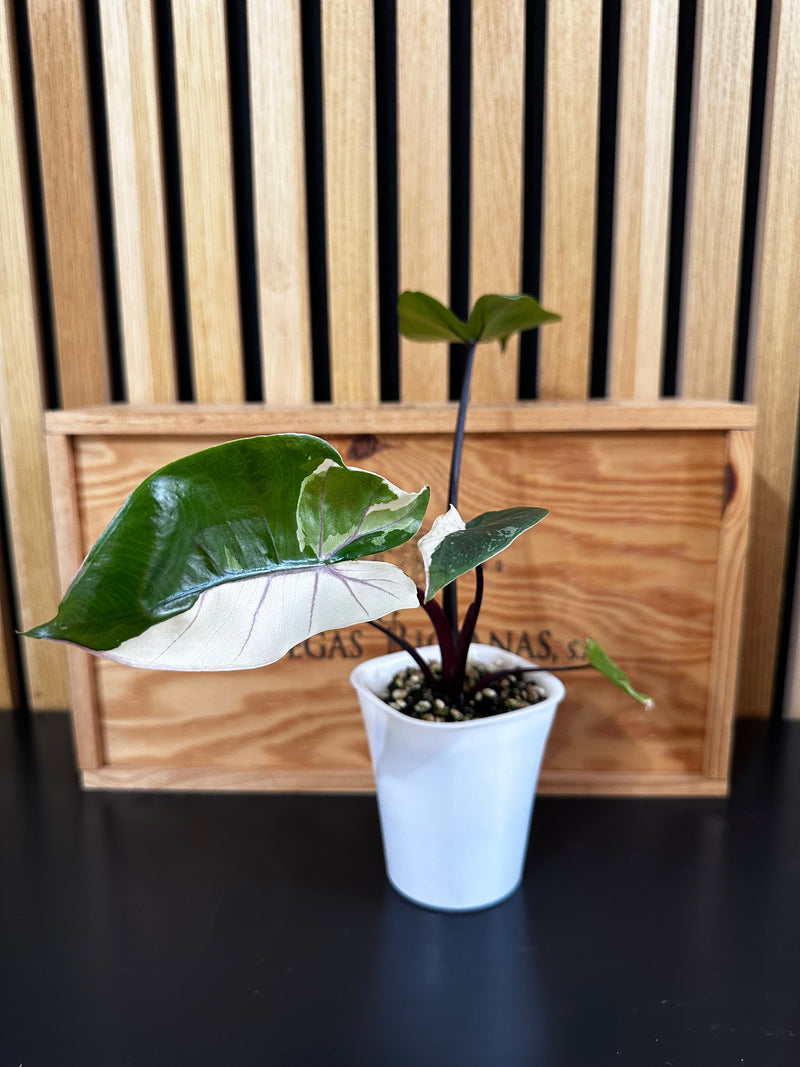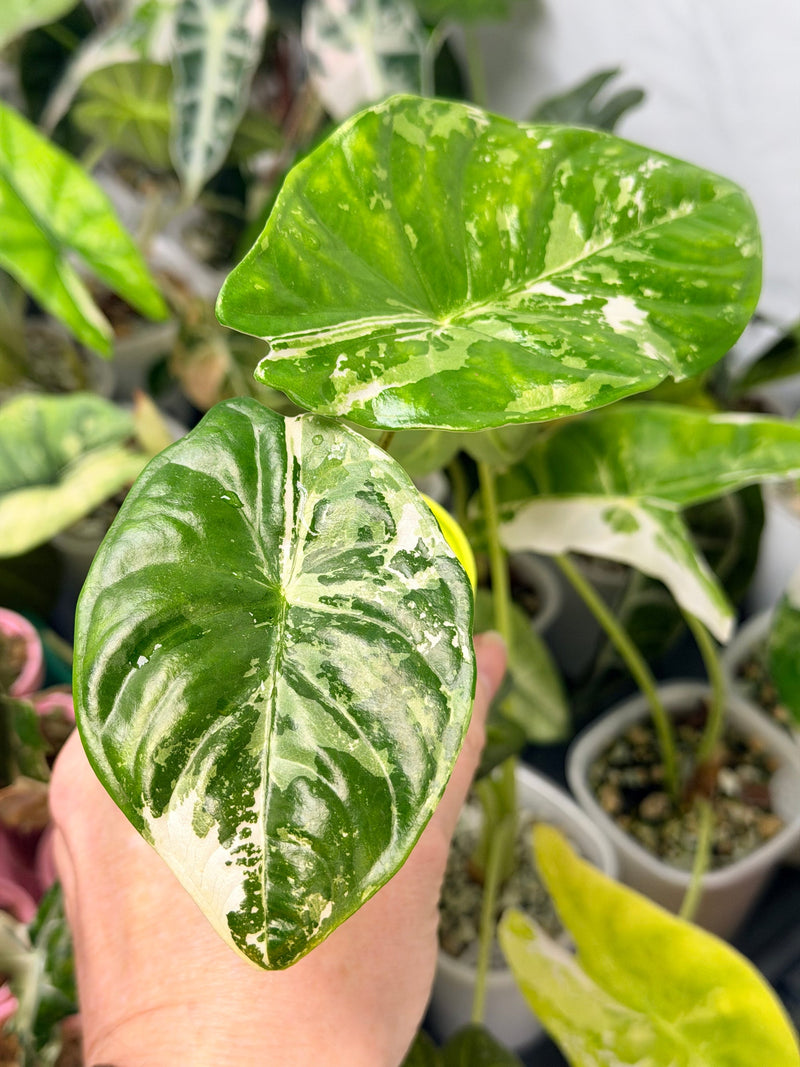
Alocasia Bisma Platinum Albo Variegated: The Complete Collector's Guide

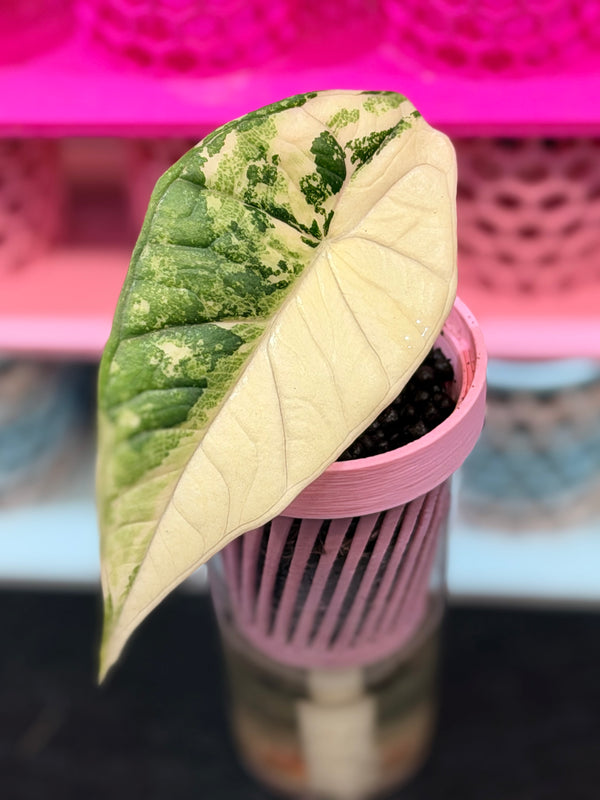
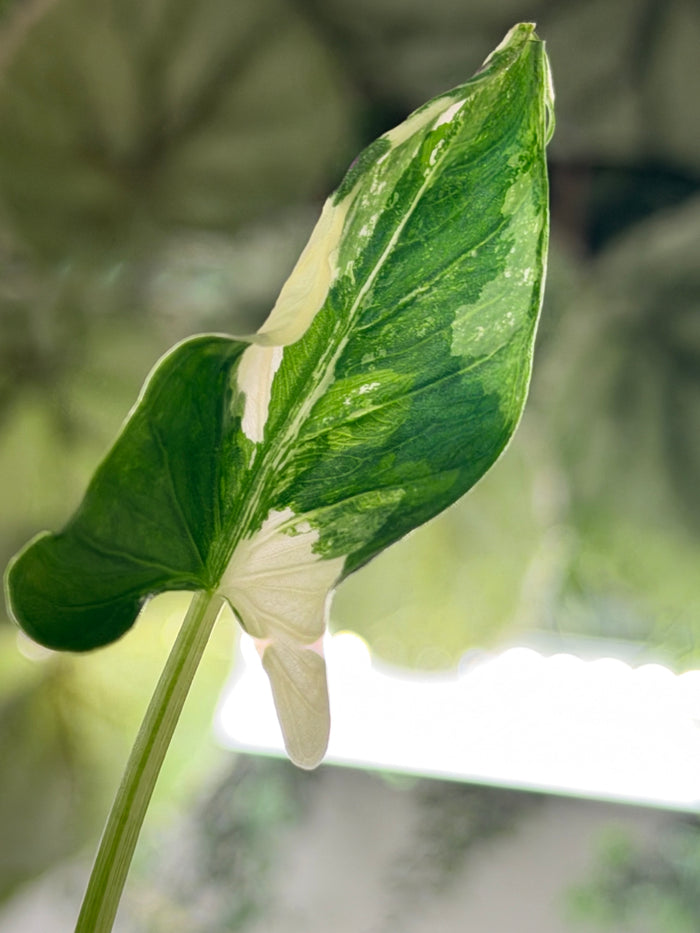
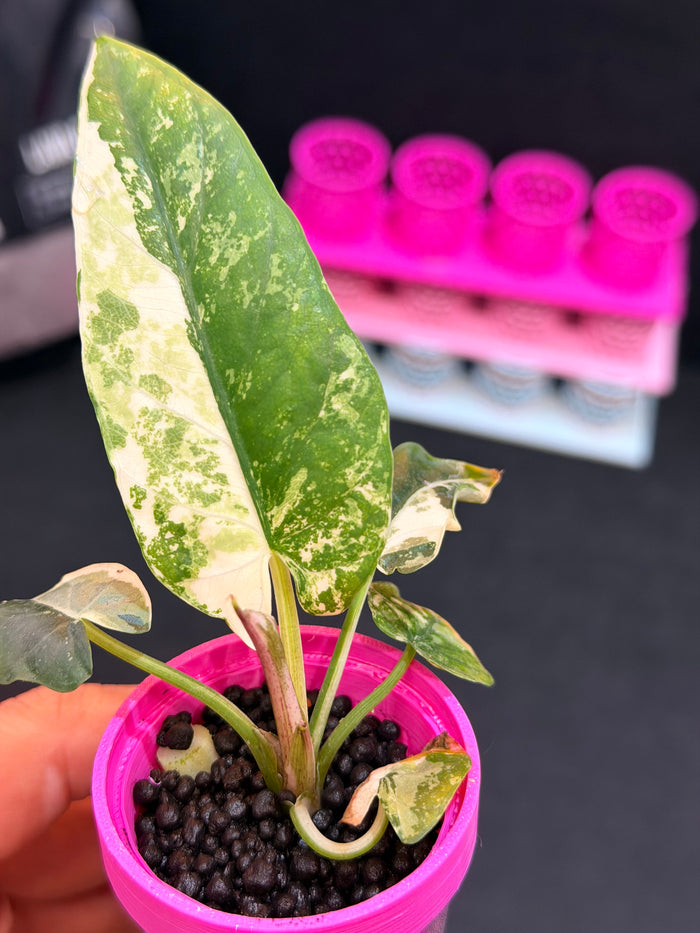
Alocasia Bisma Platinum Albo Variegated is a white-variegated form of the plant sold as Alocasia 'Bisma', a Bornean jewel Alocasia whose exact status is still unsettled. It is a collector specimen of genuine rarity, a chimeric white variegation that is among the least commonly encountered in mainstream cultivation. This guide sets out what is documented about Bisma, what the 'Platinum' name means, and how to care for it in the UK.
Aroidpedia, our main reference for aroid naming, has an entry for 'Bisma' but none for a 'Platinum Albo' cultivar. It lists 'Platinum' only as a synonym of Bisma and does not mention albo at all, so the albo detail below is described in general terms.
What is Alocasia 'Bisma'?
Aroidpedia files 'Bisma' under species but marks it as not yet formally described, so there is no author or year. It states that many plants sold under the name may be undescribed species growing in the same area, or possibly cultivars of a single species. It is not recorded as a hybrid. The name's origin is unknown; Aroidpedia suggests it may derive from a Javanese male name meaning "remarkable".
Origin and naming
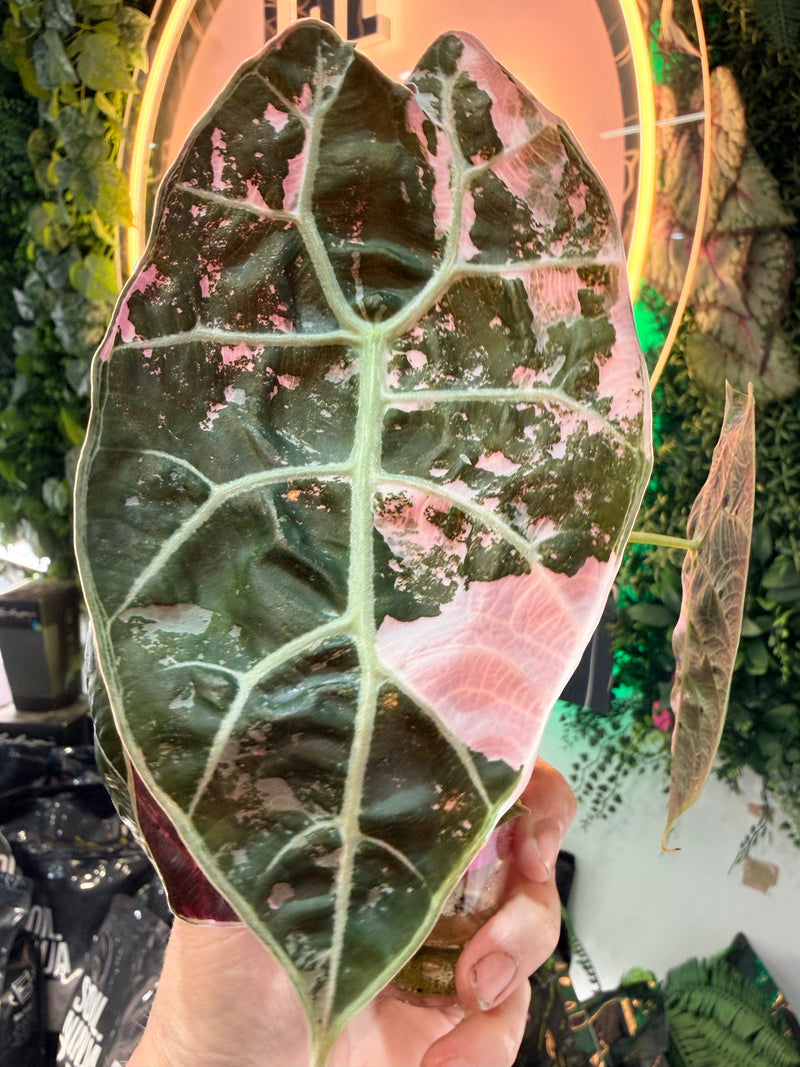
Aroidpedia gives the origin as West Kalimantan, Indonesian Borneo, and lists the climate and ecology as unknown. Synonyms recorded include 'Platinum', 'Emerald Dragon Scale', 'Bisma Silver' (or 'Bisma Mahap'), 'Bisma Mongko' and 'Bisma Cupang'. This means 'Platinum' is one of several trade names rather than a separately described plant. In our experience the 'Platinum' in the name refers to the silver-grey to platinum colouration of the leaf surface, which gives the plant a distinctly cool, metallic quality, similar in register to Alocasia nebula but with its own specific character.
One correction is worth making: Bisma is sometimes linked to a limestone outcrop locality in Sabah, but we cannot support that from Aroidpedia, which places it in West Kalimantan and records no habitat data. We have therefore not made any claims about limestone, dolomite or soil chemistry.
How to identify it
Aroidpedia gives no measurements or leaf description for Bisma, so size and leaf shape are not documented there. The only trait it records is variegation, in mottled white and yellow forms. Because the name covers several possibly distinct plants, the appearance of plants sold as Bisma varies from one to another, and it is best to judge each plant on its own leaves.
The albo variegation
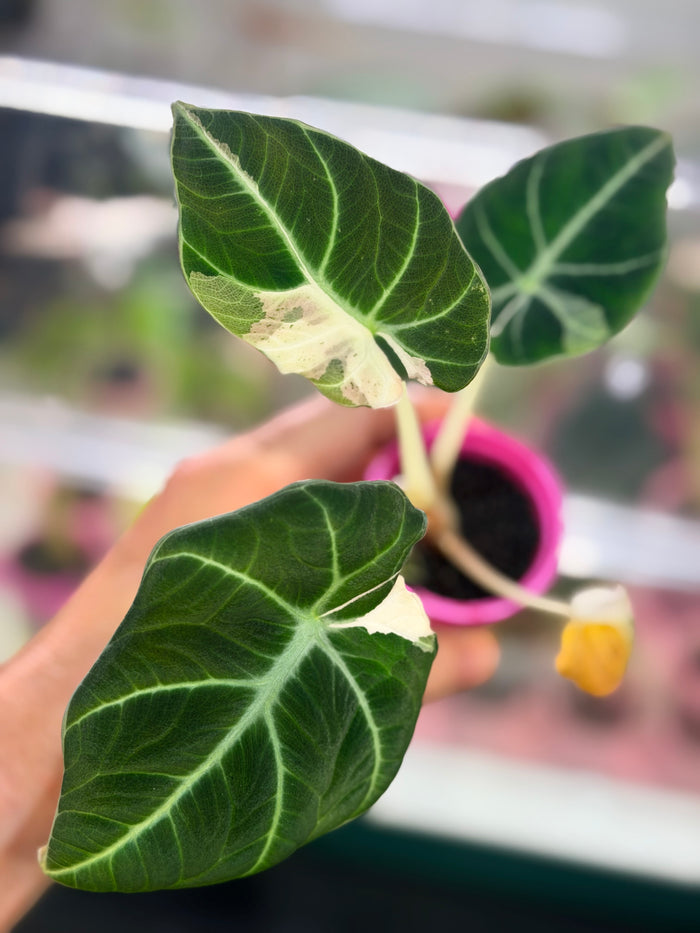
Albo means white sectors with no chlorophyll. Those areas cannot photosynthesise, so the plant has less leaf area working for it and tends to grow more slowly than a green form. On the silver-grey to platinum surface of the Bisma, chimeric albo creates a composition that is cool throughout: a cool platinum base and cool silver-white albo sectors, with only the deeper venation providing contrast. Albo is usually chimeric, meaning the white tissue can shift, shrink or be lost, and it may not carry over to plants grown from corms. Our guide to understanding albo variegation and our complete variegation guide cover this in detail. For comparison with other kinds, see aurea variegation and pink variegation.
Bisma Platinum Albo care
This is general Alocasia care, and it applies to this plant. Provide bright indirect light, supplemented with LED grow lights, and a temperature of 20 to 27°C. Keep humidity at 60 to 80 per cent, maintained with a dedicated humidifier. Water when the top 2 to 3cm of the substrate has dried, and avoid standing water. Fluval Stratum is our preferred substrate, and a heat mat beneath the pot helps if the room runs cool. Feed with our Alocasia feed from the plant feed range at half strength. Because albo tissue is non-photosynthetic, give a variegated plant steady light and avoid overfeeding. Our ultimate Alocasia care guide has more detail.
Propagation from corms
Our Alocasia corm propagation guide explains the self-wicking method: a healthy corm is set in Fluval Stratum inside a Corm Keeper, which supplies moisture evenly without waterlogging. See also growing corms in Fluval Stratum. A corm-grown plant may not reproduce the variegation of its parent.
How does it compare with related plants?
Aroidpedia lists Bisma as a parent of several hybrids, including 'Faizah', 'Kalila', 'Katya' and 'Ulla' (each crossed with Alocasia reginula 'Black Velvet'), and 'Silver King' and 'Silver Monarch' (each Alocasia longiloba crossed with Bisma). Our Reginula species guide and Longiloba species guide cover those parents.
We release Bisma forms through our drop model when material is ready. You can join the collector list for advance notice, or browse our albo variegated Alocasia and Alocasia house plants collections.
Frequently asked questions
Is Bisma a hybrid?
Aroidpedia does not record it as one. It files Bisma as a species, though it notes the name may cover undescribed species or cultivars.
Where is Bisma from?
Aroidpedia gives West Kalimantan, Indonesian Borneo, with no habitat data recorded.
What does 'Platinum' mean?
Aroidpedia lists it as a synonym of Bisma, so it is a trade name rather than a separately described plant.
How large does it grow?
Aroidpedia gives no size for Bisma, so we cannot state one.
Does it need limestone or special substrate?
Nothing documented supports that. General Alocasia care in a free-draining substrate such as Fluval Stratum applies.
Will corms keep the albo pattern?
Not reliably. Chimeric albo can be lost when a plant is grown from a corm.
Questions about Alocasia Bisma Platinum Albo? Contact our team for guidance from specialists who grow rare Alocasia in our UK-based private nursery. We will tell you plainly what is and is not documented about the plant.