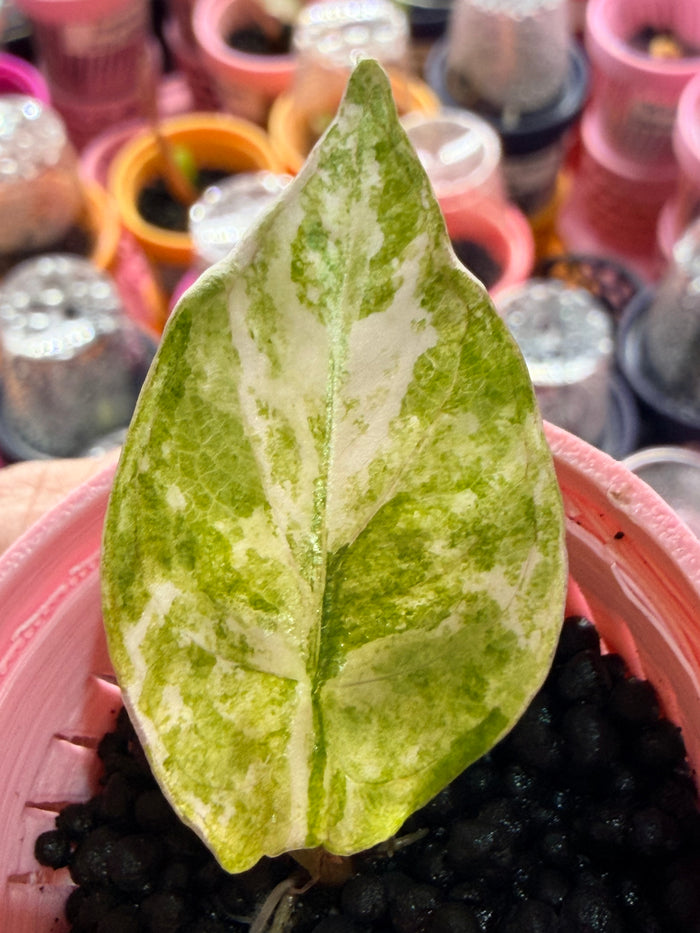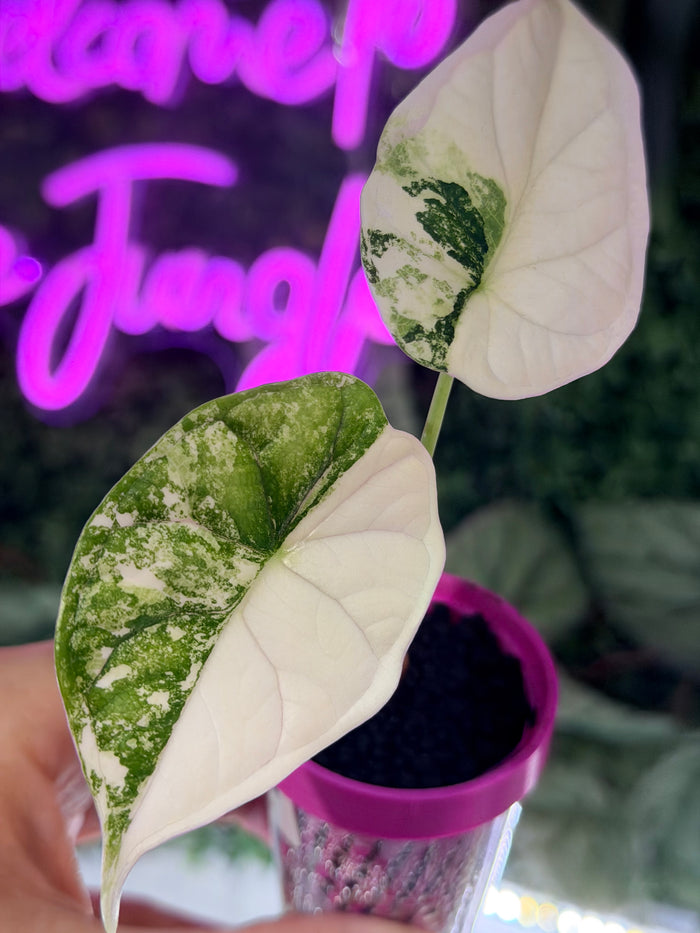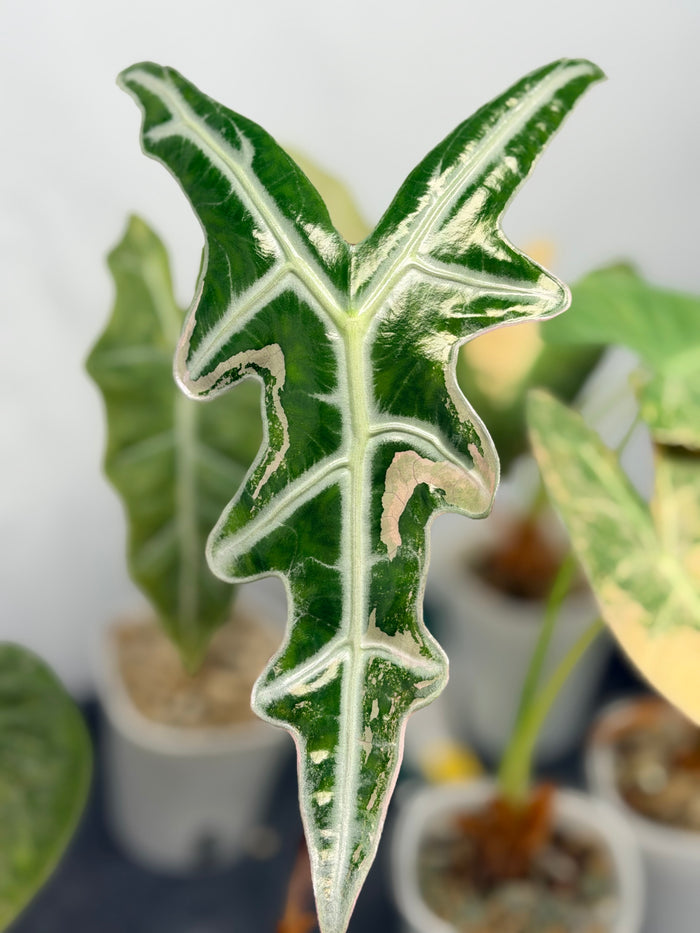

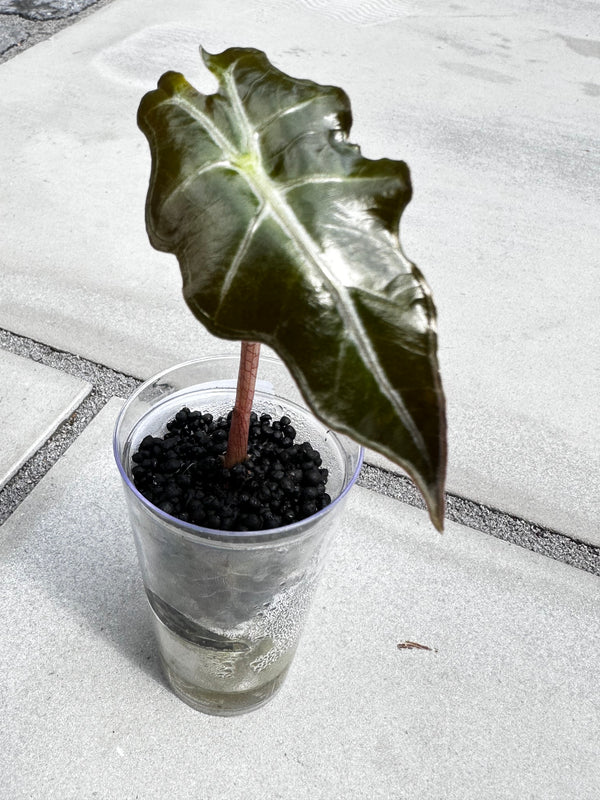
There is a naming subtlety attached to Alocasia sanderiana 'Nobilis' that serious collectors deserve to know about upfront. Aroidpedia is explicit on this point: Alocasia sanderiana var. nobilis is not an accepted cultivar, the name first appeared in botanical literature in 1893, nearly a decade after the species was introduced, and has remained in common trade use despite never having been formally established as a valid cultivar designation. What is sold in the trade under this name is a distinct form of Alocasia sanderiana with more deeply lobed and wavy leaves than the standard species, a form with genuine visual character, but one whose nomenclature carries more history than authority.
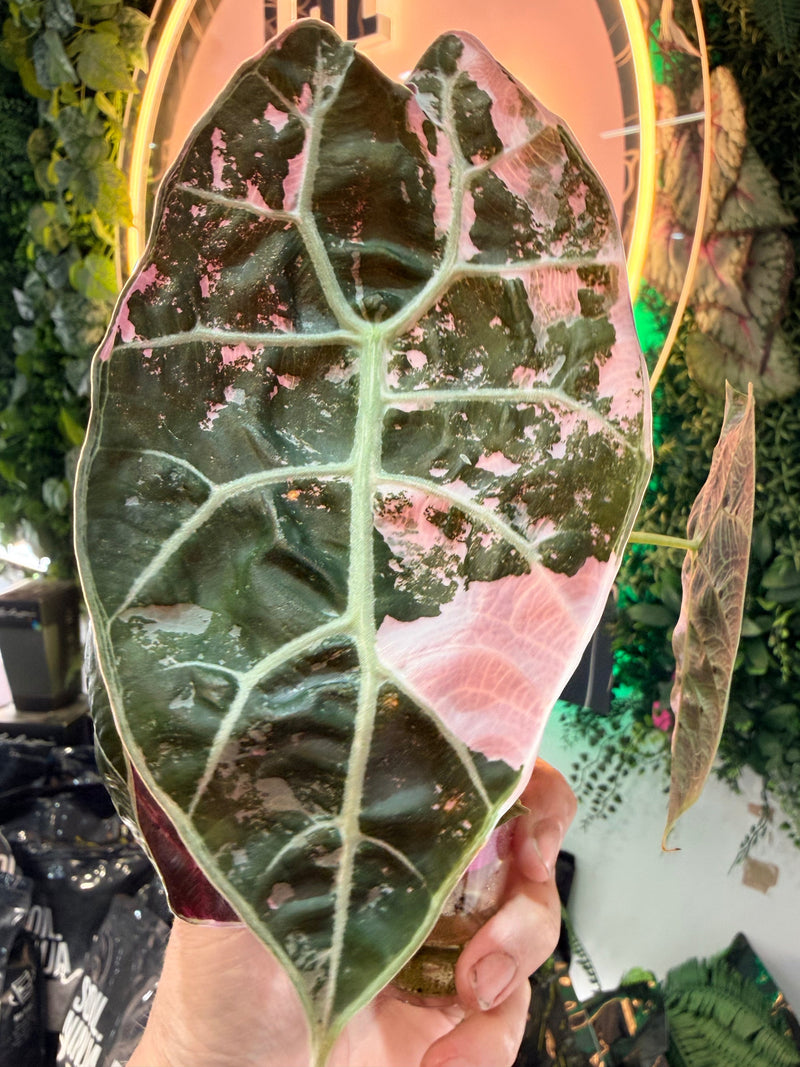
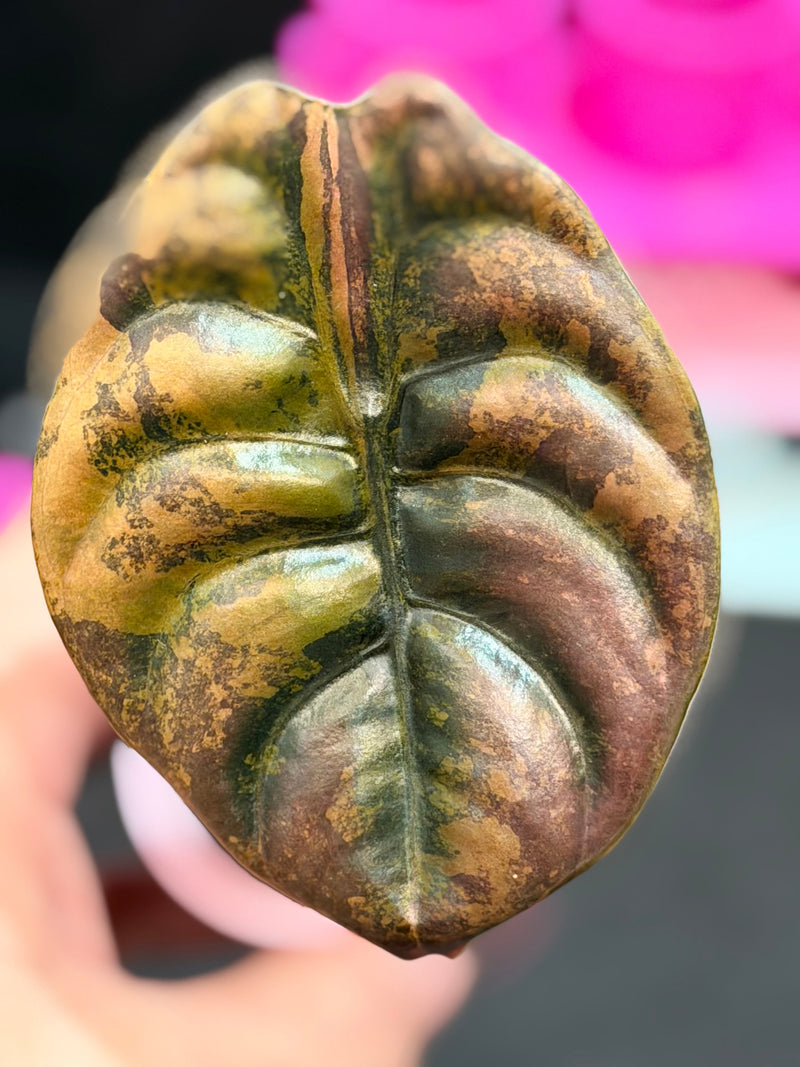
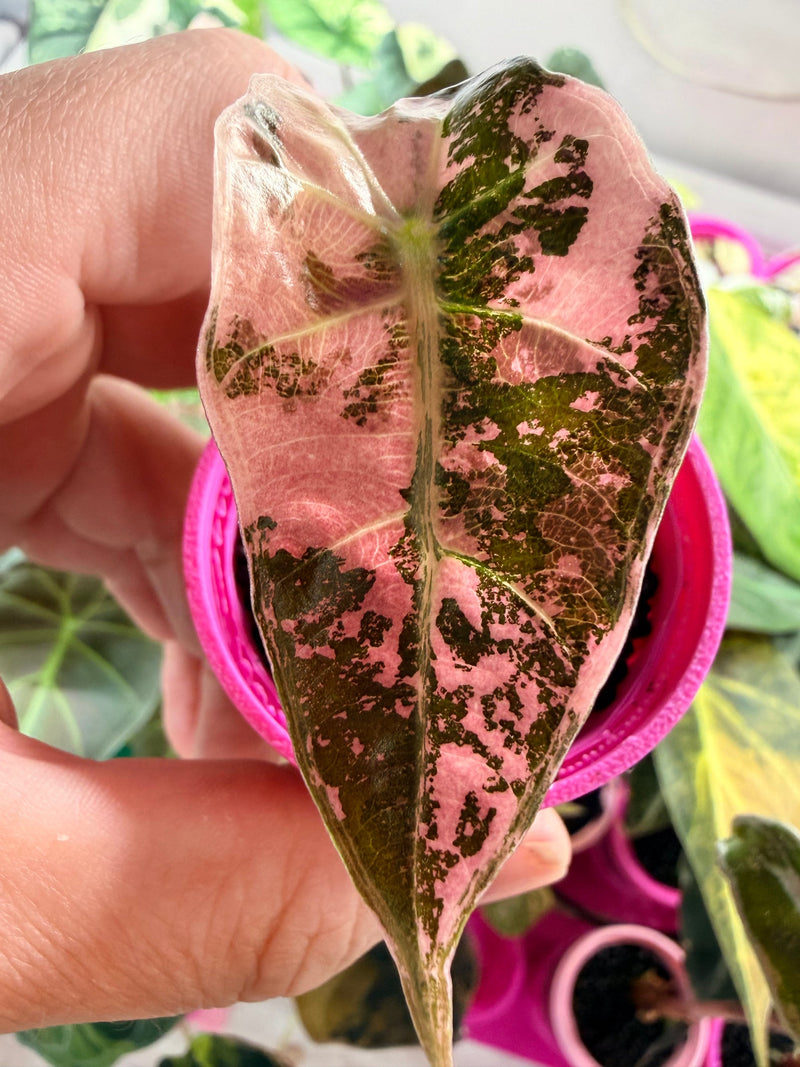
This honesty matters not to diminish the plant but to give collectors the full picture. Alocasia sanderiana 'Nobilis', or more precisely, the 'Nobilis' form of Alocasia sanderiana, is a genuinely striking plant: the deeply lobed, shield-like dark green blade with prominent white venation in a form more dramatically dissected than the standard species, creating the heavily architectural character that has earned it collector interest for over 130 years. The pink variegated form in our collection overlays chimeric pink variegation across this already dramatic blade, producing one of the most vivid colour combinations available in the collector Alocasia world.
The Species: Alocasia sanderiana
Formal Description and Introduction
Alocasia sanderiana was described from Philippine specimens collected by H.F. Sander in 1884, the same Sander whose nursery also introduced Alocasia micholitziana in 1912. The species is endemic to Mindanao and surrounding Philippine islands, formally documented in the garden records of Kew from 1886 and across multiple Philippine collection localities thereafter.
The species' significance in ornamental horticulture cannot be overstated. Aroidpedia documents that Alocasia sanderiana was once CITES listed (alongside Alocasia zebrina), reflecting its status as a commercially significant wild-collected species, it has since been removed from CITES schedules. It has been "used extensively in hybridization" as documented in Burnett (1984), an understatement given that Alocasia sanderiana × Alocasia longiloba produced Alocasia 'Amazonica', which became the most widely sold ornamental Alocasia in history.
The species exhibits remarkably high variability in the wild. Aroidpedia's documentation of in-situ specimens across Mindanao shows extraordinary diversity, leaf shape, abaxial colouration, and venation patterns vary significantly across populations, with some wild forms resembling the hybrid 'Amazonica' closely enough to require diagnostic analysis. The commercial tissue culture versions in circulation represent a narrow range of this wild diversity.
Ecology and Distribution
Alocasia sanderiana occupies the same Philippine subtropical humid forest ecology shared by micholitziana, scalprum, and zebrina, humidity 60 to 70 percent year-round, temperatures approximately 9°C to 31°C with minimums above 7°C, rainy season October through May, annual rainfall approximately 1,200 mm. Forest habitat in the Philippine island group.
The species' contribution to hybrid development links it directly to the longiloba group through the 'Amazonica' cross, and to the micholitziana group through documented hybrids. Its leaf architecture, the deeply lobed dark metallic green with prominent white primary venation, has proven genetically dominant across hybrid generations, appearing in modified form in 'Amazonica', 'Polly', 'Venom', and their relatives.
The 'Nobilis' Form
The 'Nobilis' form is distinguished by more deeply lobed and wavy leaf margins than the standard sanderiana species. The deeply dissected leaf creates a more dramatic, jagged silhouette, each sinus between the lobes cuts further toward the midrib, the margin undulation is more pronounced, and the overall architectural effect is more complex. Aroidpedia notes that the name var. 'nobilis' first appeared in literature in 1893 and has remained prevalent in the market despite not being a formally accepted cultivar designation. The plant exists; the naming is informal.
Pink Variegation on Nobilis Sanderiana
The pink variegated form of 'Nobilis' carries chimeric anthocyanin-based pink variegation across the deeply lobed dark blade, a combination that creates extraordinary visual impact. Against the dark metallic green base and the existing white primary venation of the species, pink chimeric sectors introduce warmth and softness that neither the base colour nor the white venation anticipates. The contrast is between cool, architectural darkness and warm, organic pink, a visual pairing that makes this one of the most arresting colour combinations in the collector Alocasia world.
The pink mechanism differs from albo variegation in a critical way: where albo sectors are completely without chlorophyll (producing white or cream), pink variegation results from areas where chlorophyll is absent but the plant's anthocyanin pigments, the red and purple tonal family, are retained or expressed. Against the dark green of the sanderiana base and the existing white venation, the anthocyanin pink reads with particular vividness.
For the full science of pink variegation, our pink variegation guide covers the cellular mechanism in detail. Our pink variegated Alocasia collection provides the broader collector context.
Growing Alocasia Nobilis Sanderiana in the UK
Light
The Philippine forest ecology and sanderiana heritage indicate a plant adapted to filtered forest light. The pink variegated form requires more light than an unvariegated equivalent, the de-greened pink sectors contain no functional chlorophyll and do not contribute to photosynthesis. Consistent bright indirect light from a south or east-facing window, or supplemented with LED grow lights, is the correct provision.
Adequate light is particularly important for maintaining pink expression. While variegation is genetically determined and cannot be altered by light, inadequate light causes the plant to produce progressively greener leaves in an attempt to compensate for reduced photosynthetic efficiency. Good light conditions maintain both growth momentum and the variegation quality that makes this plant distinctive.
Substrate and Watering
Fluval Stratum is the recommended substrate. The deeply lobed leaf form and robust growth character of sanderiana 'Nobilis' forms means the root system develops proportionately, pot size should accommodate this without being excessively large. Allow the top 2 to 3 cm to dry between waterings and ensure complete drainage.
Temperature and Humidity
The Philippine subtropical range of 16 to 27°C and 60 to 75 percent humidity applies. Cold draughts are the primary winter risk. Active humidity management through UK winter heating season supports leaf quality, particularly for the pink sectors which are more sensitive to humidity drops and environmental stress than fully green tissue.
Pests
Spider mites are the primary concern. The deeply lobed blade creates complex leaf architecture with more hidden surfaces than simple sagittate forms, inspection between lobes and at the undersides of the sinuses is particularly important. Pink sectors may show stress damage before green areas become visibly affected, providing an early-warning function.
Questions about Alocasia Nobilis Sanderiana, the sanderiana species, or pink variegation care in UK conditions? Contact our team for guidance from specialists at our UK-based private nursery.
From the nursery