
Currently sold out
LAUTERBACHIANA AUREA VARIEGATED
New plants go to the drop list first.
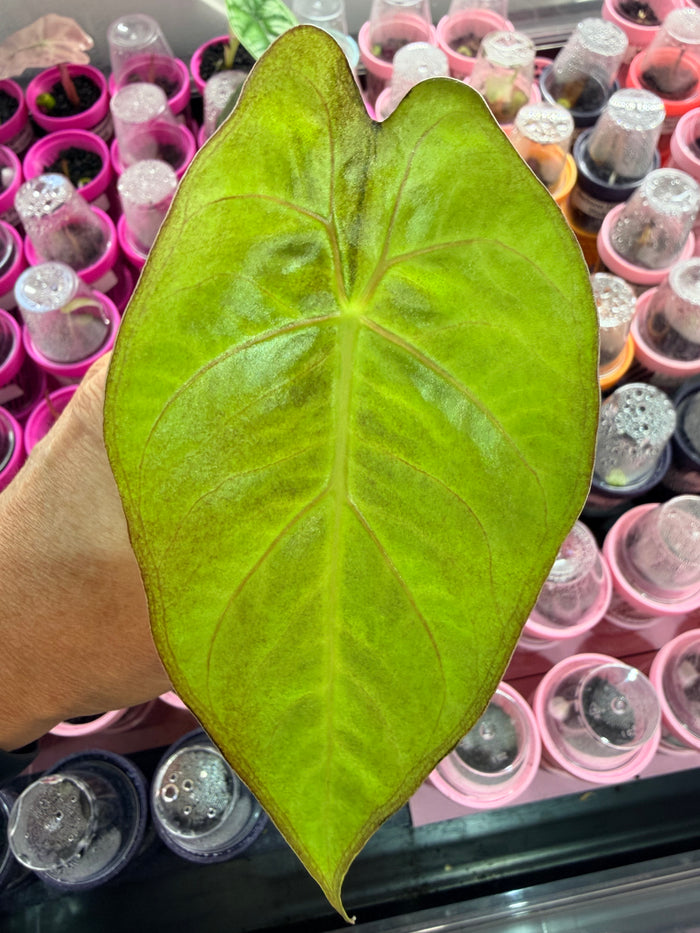
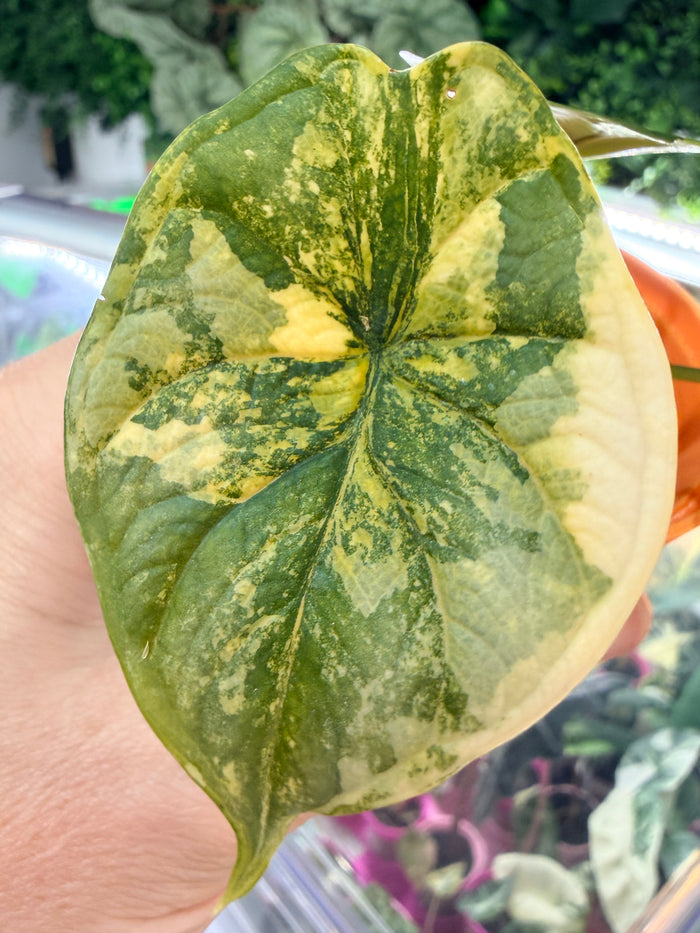
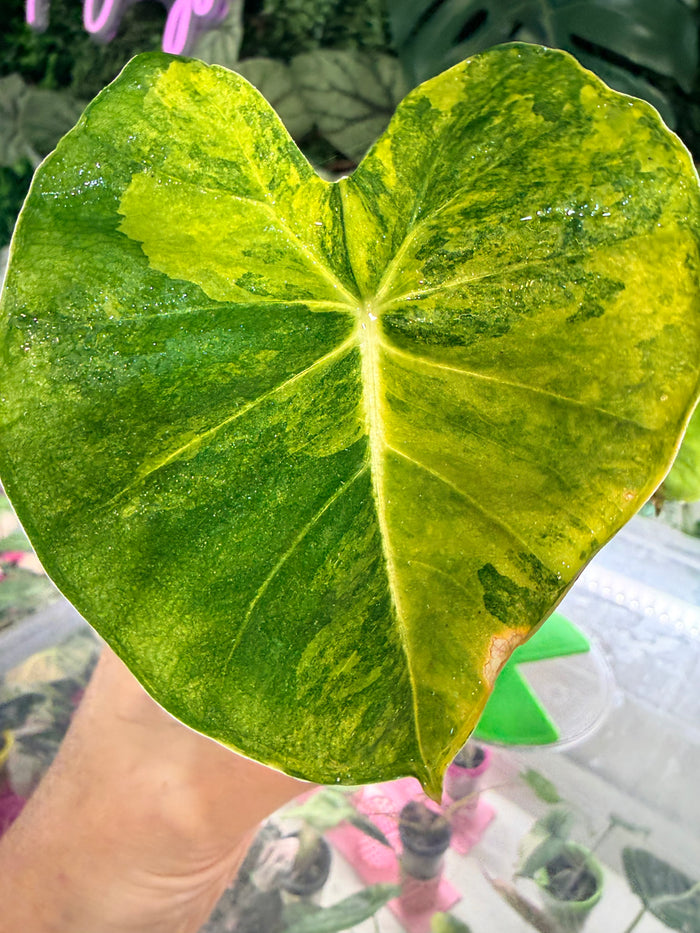
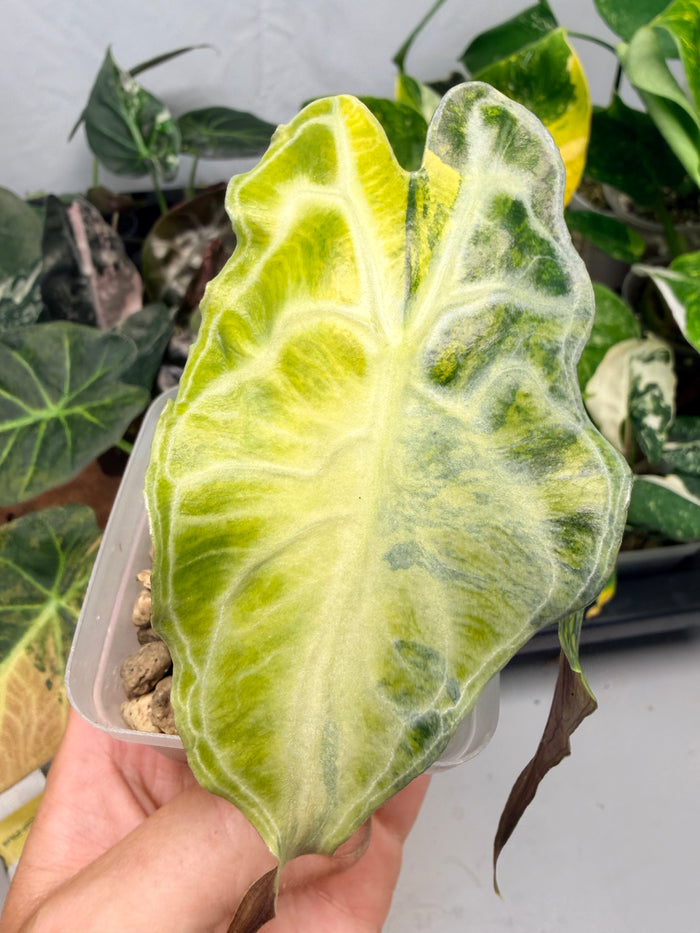
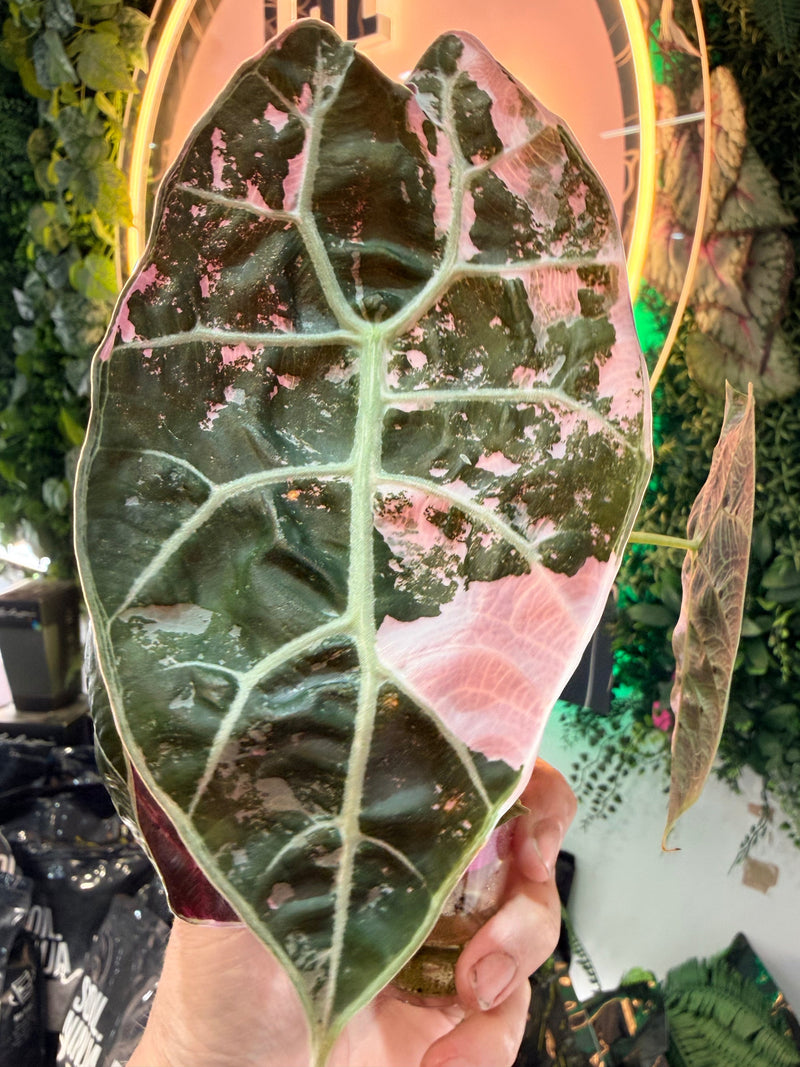
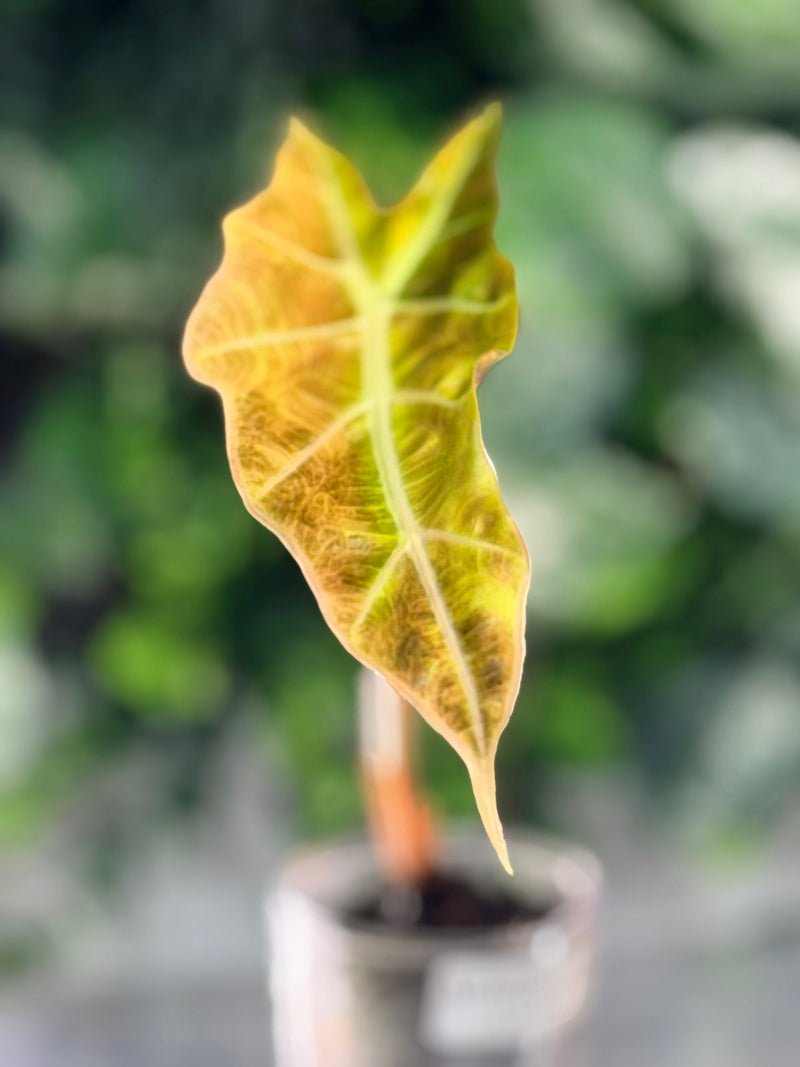
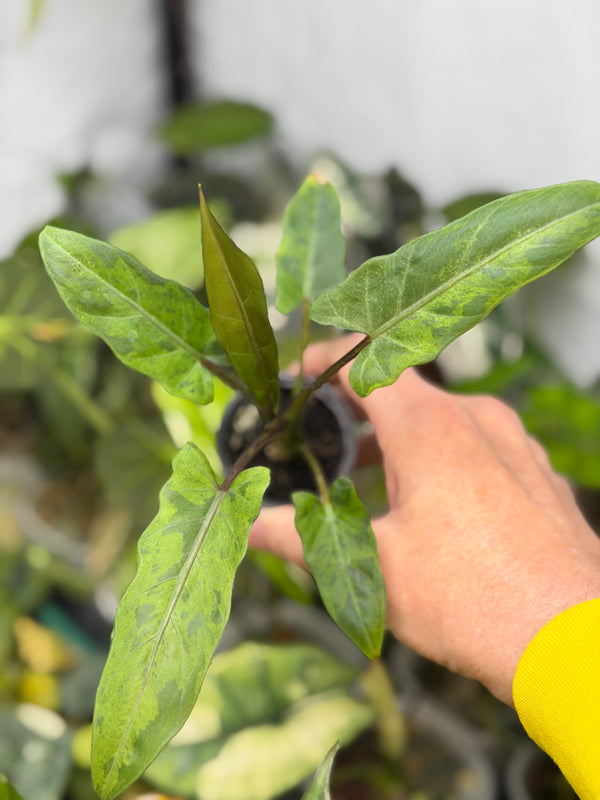
Join the drop listThe Alocasia Lauterbachiana Aurea presents golden-yellow carotenoid-based variegation on the long, narrow, serrated foliage of the Purple Sword, one of the most architecturally distinctive Alocasia species from New Guinea. The golden sectors on these sword-shaped leaves interact with the species' characteristic deep green blade and purple undersides in a particularly dynamic way: on a narrow blade pointing upward, the warm yellow sectors read as luminous bands or flowing areas of gold within the green, the colour catching the light differently at different points along the leaf's upward angle. The overall effect, gold, green, and purple simultaneously visible as the leaf catches the light, is unique among aurea variegated Alocasia.
Species Background: Alocasia lauterbachiana
Golden variegation reads differently on a plant whose leaves are shaped like blades, so it is worth knowing what Alocasia lauterbachiana is before looking at the gold. The species is native to northern New Guinea and the Bismarck Archipelago, a range that sits at the far eastern edge of the Alocasia genus distribution, well beyond the South-East Asian heartland from which most collected Alocasia come. Heinrich Gustav Adolf Engler described it formally in 1898, but placed it in a separate genus as Schizocasia lauterbachiana on the strength of features that then appeared distinct; the Australian botanist Alistair Hay returned it to Alocasia in his landmark 1990 work 'Aroids of Papua New Guinea'. The species epithet commemorates Dr. Karl Lauterbach, the German botanist and plant explorer whose late 19th century field investigations in New Guinea brought this and other remarkable plants to European scientific attention.
What the aurea form inherits from the species is a canvas of unusual colour and geometry. Its trade names, "Purple Sword", "Baroque Sword" and "Silver Sword", all point at the same thing: foliage unlike any other commonly cultivated Alocasia. The leaves are long, narrow and sword-like, held strongly upright on mottled chocolate-brown petioles, and the gently serrated, crispate margins give each edge an ornate, baroque quality. The upper surface is a deep, glossy green; the underside is a rich violet-purple that adds a dramatic warmth when leaves catch the light at an angle. Against those two tones, warm gold has real work to do. A mature specimen can reach 1-1.5m in indoor cultivation, which makes it one of the more substantial Alocasia for an indoor collection, and the species is a pentaploid, carrying 70 chromosomes rather than the usual diploid 28 of most Alocasia. That extra chromosome set contributes to its vegetative vigour and explains why it propagates freely from vegetative divisions.
Aurea Variegation on Alocasia lauterbachiana
Aurea variegation on the lauterbachiana produces golden-yellow sectors through carotenoid pigment accumulation, retaining some photosynthetic capacity, making this form more vigorous than the albo. The species' pentaploid constitution and natural vigour are assets here: the Lauterbachiana Aurea grows actively under good conditions and rewards consistent care with regular new sword-like leaves.
The serrated margins of Alocasia lauterbachiana interact with the aurea sectors in a visually interesting way, golden tissue at the leaf margins follows each serration, creating a delicate golden edge detail on variegated leaves that is one of the cultivar's most distinctive characteristics at close range. Under good light the golden sectors are well saturated and clearly distinct from the surrounding green; under reduced light they become progressively greener. LED supplementation from October to March maintains both growth rate and aurea colour quality through UK winters. Our aurea variegation guide covers the mechanism in full.
Care Requirements
Temperature 20-27°C, humidity 60-80%. Fluval Stratum substrate, thorough watering when top 2-3cm is dry. Feed at half to two-thirds strength from our plant feed range every 2-3 weeks during the growing season. A heat mat supports root health in winter. Position where the full sword-like height can be appreciated, ideally at a height where the plant can be viewed at the same level as the leaves.
We release Lauterbachiana Aurea through our drop model. Join the collector list for early access and view our Alocasia Lauterbachiana Aurea listing.
Questions about Alocasia Lauterbachiana Aurea or the Purple Sword family? Contact our team for specialist guidance.
From the nursery