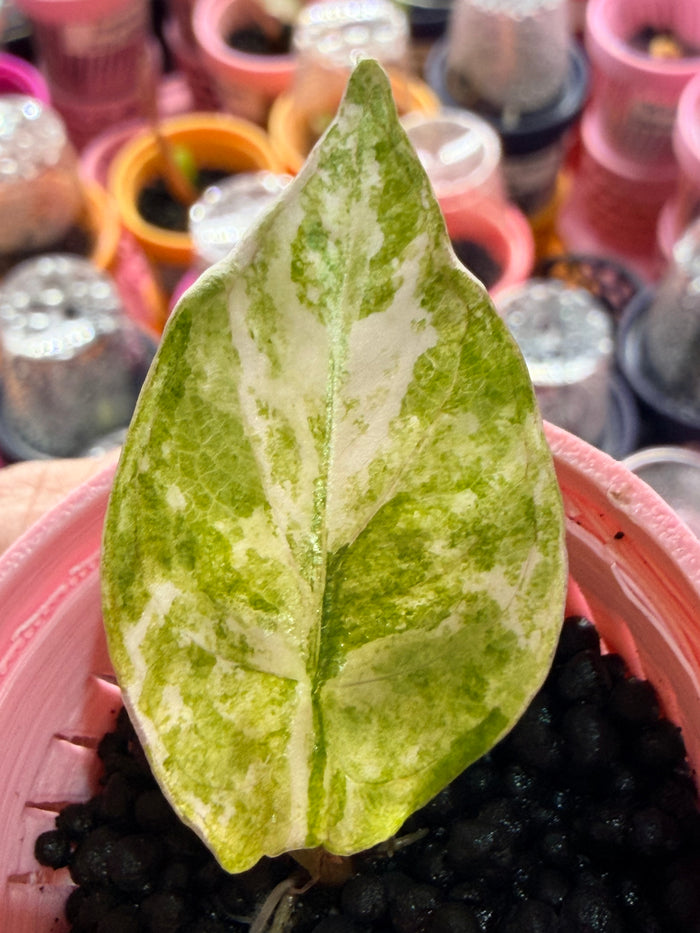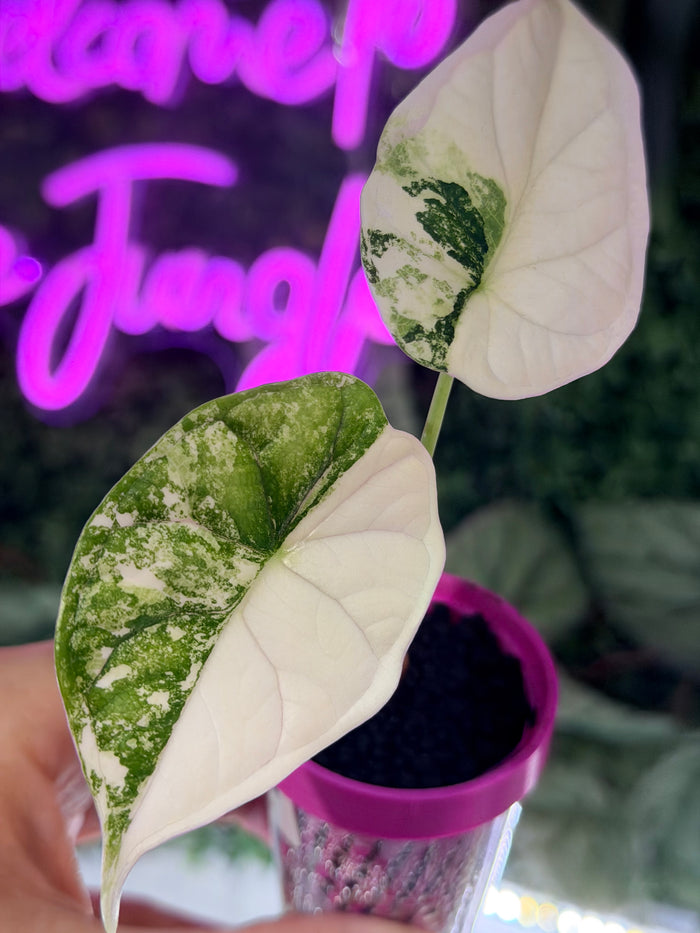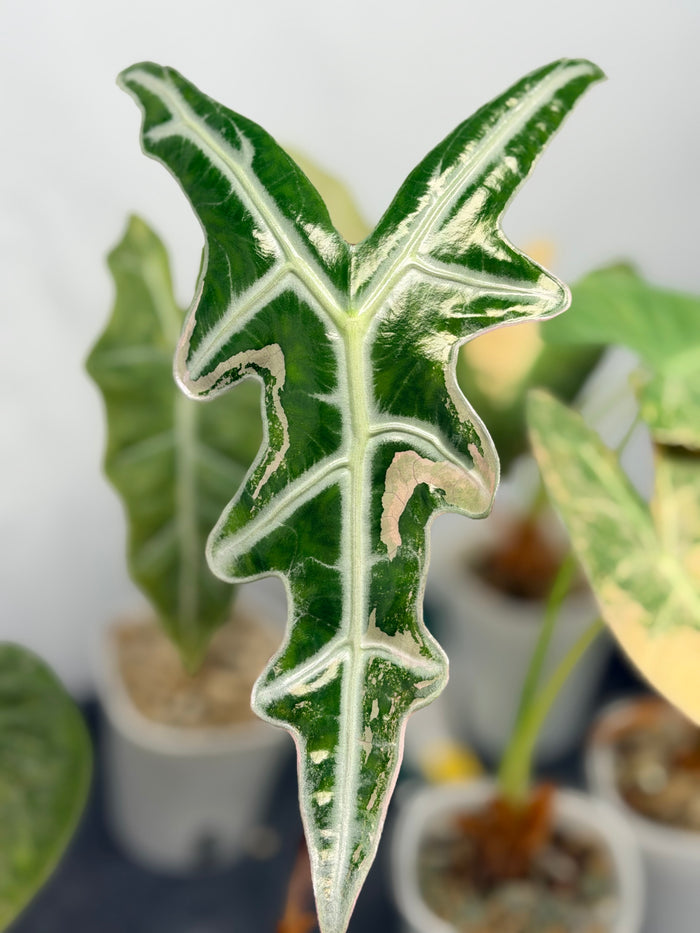

Alocasia 'Serendipity' is one of the more romantically named Alocasia cultivars in current circulation, and the name is genuinely earned. Plant breeder LariAnn Garner discovered this plant unlabelled at a nursery in 2015, initially thinking it resembled Alocasia sarawakensis. On closer inspection, the all-dark reddish-bronze leaves with their slightly fuzzy undersides and puckered texture set it apart from anything she could identify. She named it 'Serendipity' to honour exactly that, a happy accident, a discovery by chance, when she began selling it. That discovery story, combined with the plant's genuinely unusual character, makes it one of the few collector Alocasia whose origin narrative is both documented and genuinely engaging.
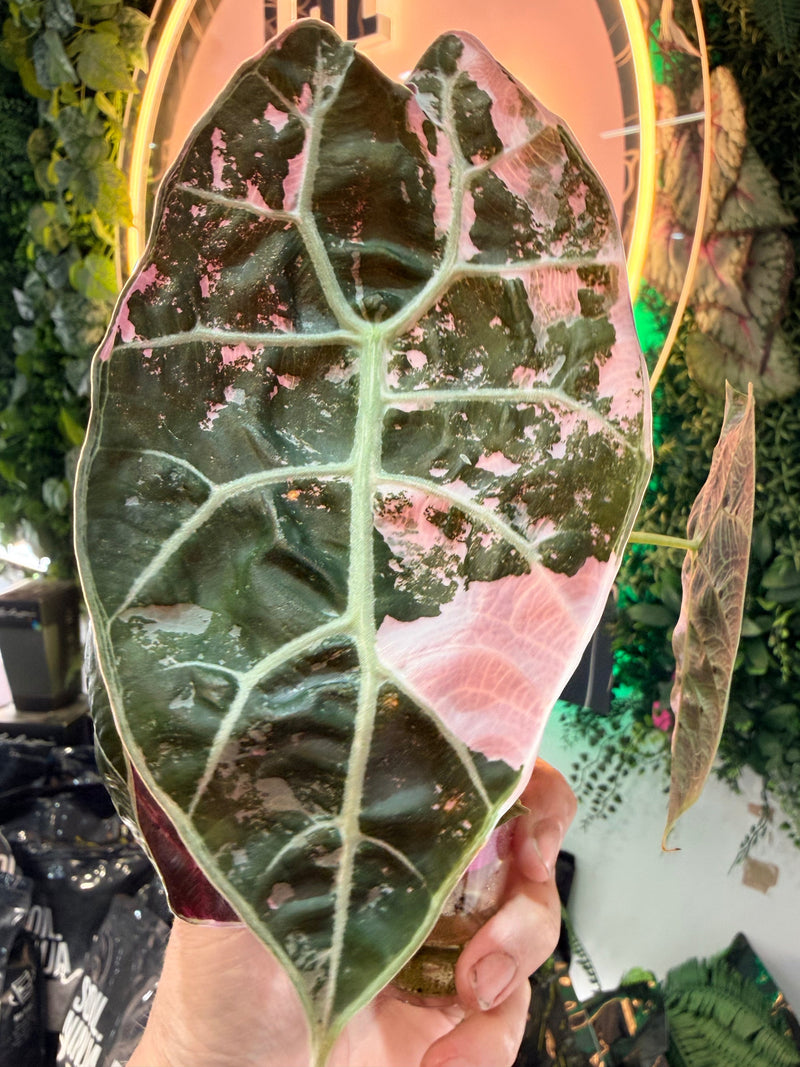
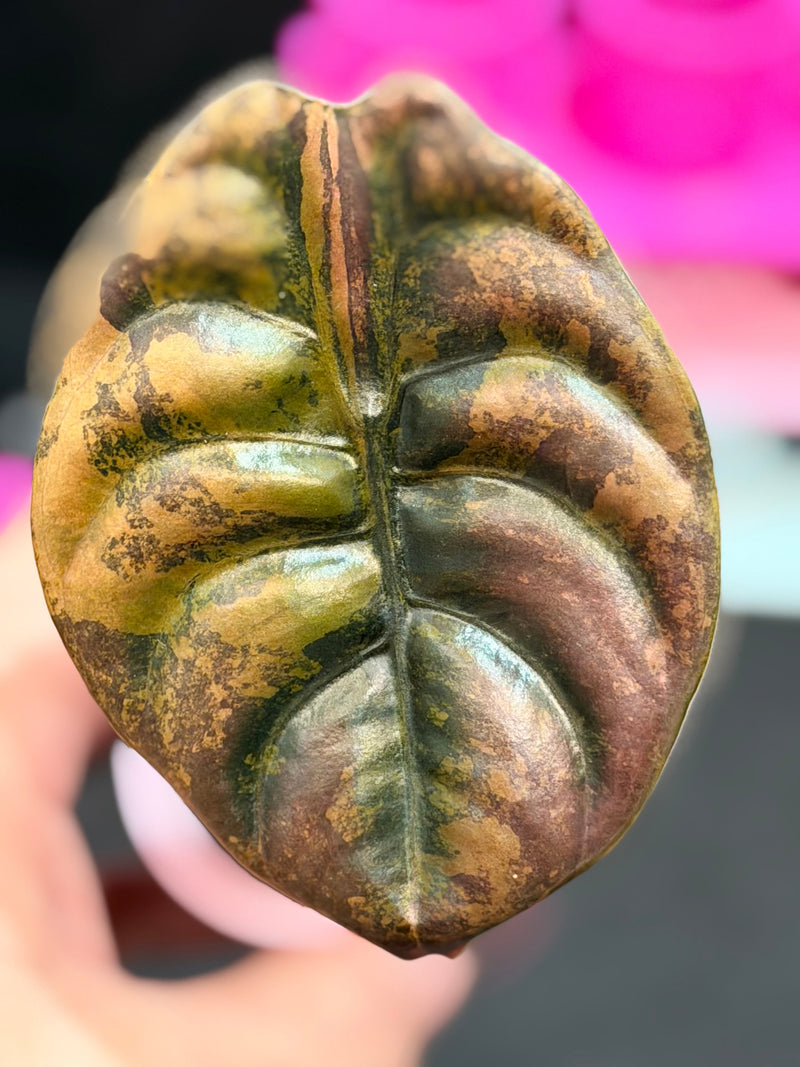
The standard 'Serendipity' is characterised by all-dark reddish-bronze foliage, not the near-black of reginula or the dark green of sanderiana, but a warm, reddish-bronze tone across the entire blade that is unusual among Alocasia and gives the plant a distinctly different visual register from the cool-toned dark jewel species. The slightly fuzzy undersides and puckered blade texture add tactile and visual depth. The plant is similar to Alocasia alba and Alocasia sarawakensis in overall form but distinguishable by its specific combination of colour and texture characteristics.
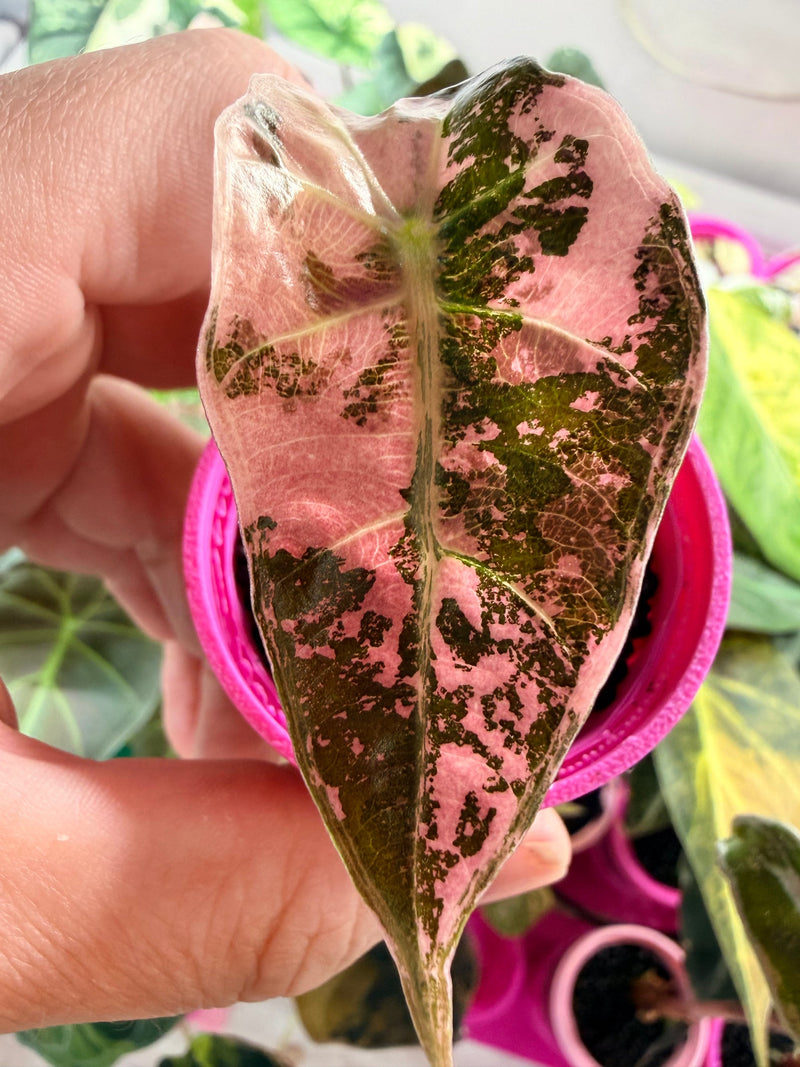
The Orange Pink variegated form of 'Serendipity' takes the cultivar's inherently warm colour register and adds chimeric orange-pink sectors, anthocyanin-driven variegation in the warm orange-pink spectrum, appearing against the already warm reddish-bronze base foliage. This is unusual variegation in a doubly unusual sense: the orange-pink colour expression is rare in chimeric Alocasia variegation (most chimeric pink variegation reads as a cooler, more purely pink tone), and it appears against a base that is itself warm-toned and unusual. The result is a plant operating entirely within the warm end of the colour spectrum, reddish-bronze, orange, pink, in a combination that is genuinely unlike any other variegated Alocasia in current cultivation.
Chimeric orange-pink sectors retain chlorophyll, giving this form meaningful photosynthetic capacity. Bright indirect light with LED supplementation from October to March is essential for maintaining colour expression.
Care Requirements
Bright indirect light year-round, LED supplementation from October to March. Temperature 20-27°C, humidity 60-80%. Fluval Stratum substrate, thorough watering when top 2-3cm is dry, never standing water. Appropriate-strength feeding from our plant feed range during the growing season. Heat mat beneath the pot through UK winters.
We release Serendipity Orange Pink through our drop model. Join the collector list and view our Alocasia Serendipity Orange Pink listing.
Questions about Alocasia Serendipity or this cultivar's discovery story? Contact our team for specialist guidance.
From the nursery