
Currently sold out
LONGILOBA BLACK SATUN STARDUST
New plants go to the drop list first.
Join the drop listOf all the species in the Alocasia genus, Alocasia longiloba carries perhaps the richest horticultural legacy. It is the most prolific hybrid parent in the entire genus, a role it has occupied since the mid-1800s, when Victorian horticulturists began crossing it with Alocasia sanderiana, Alocasia cuprea, and Alocasia odora to produce some of the most celebrated hybrid aroids ever introduced to cultivation. The lineage of longiloba runs through Alocasia 'Amazonica', Alocasia 'Balloon Heart', Alocasia 'Chelsonii', Alocasia 'Argyrea', and dozens of other named cultivars, a botanical family tree that spans nearly 170 years of documented hybridisation.
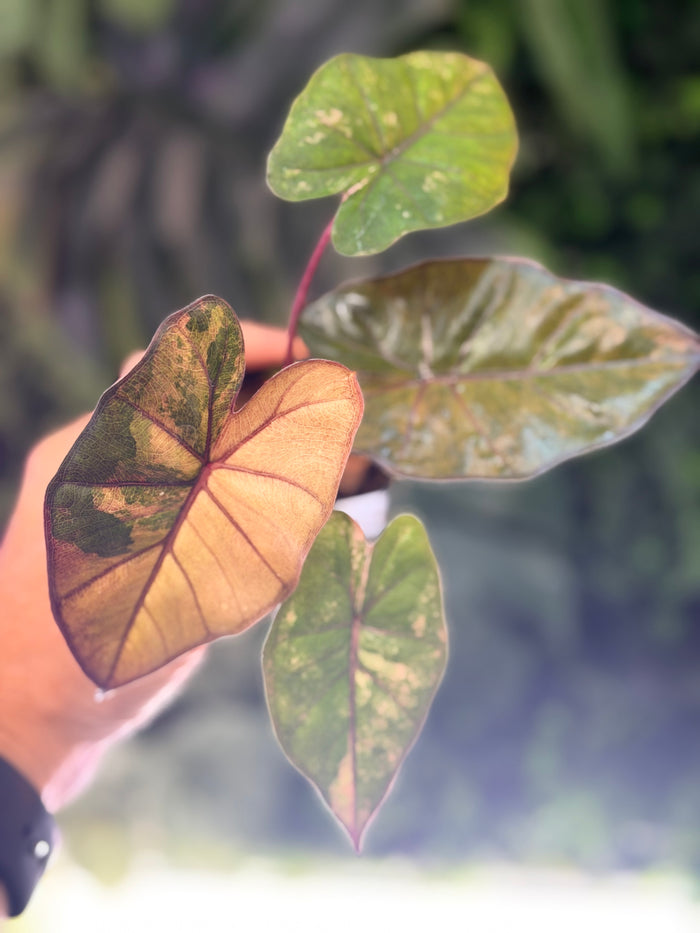
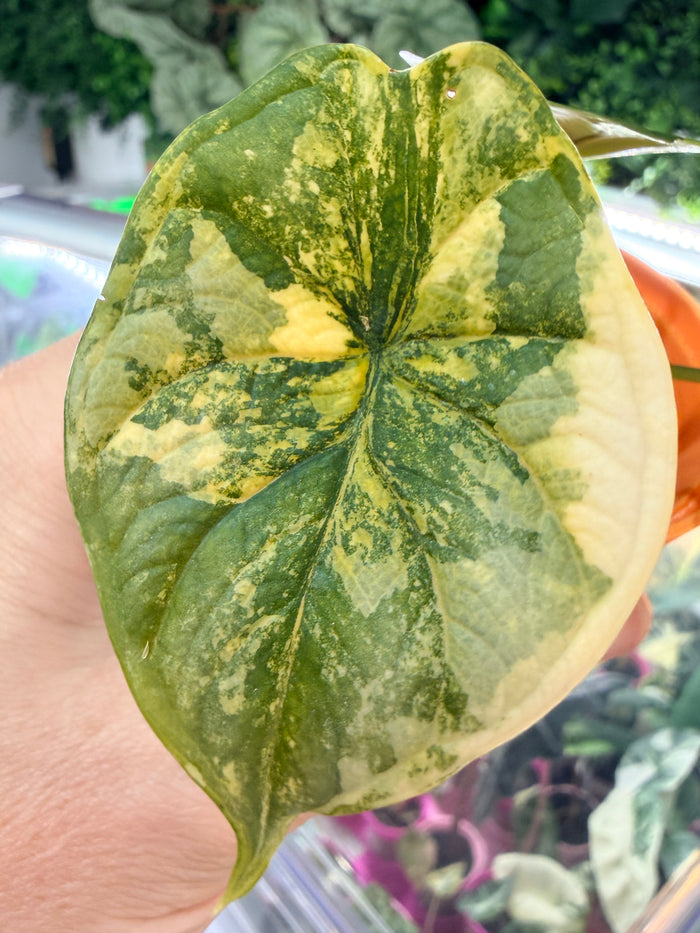
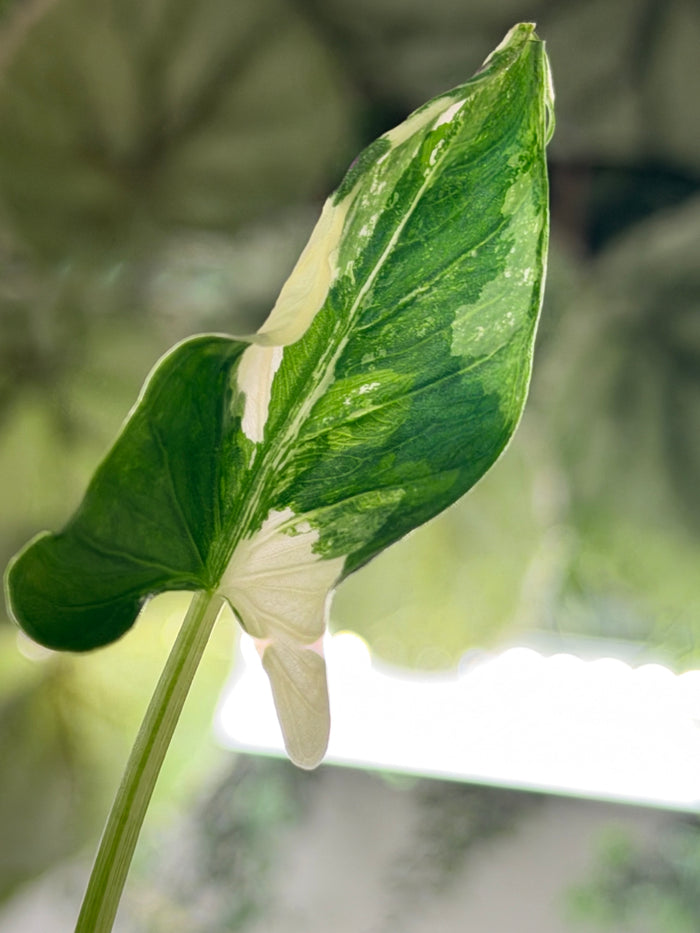
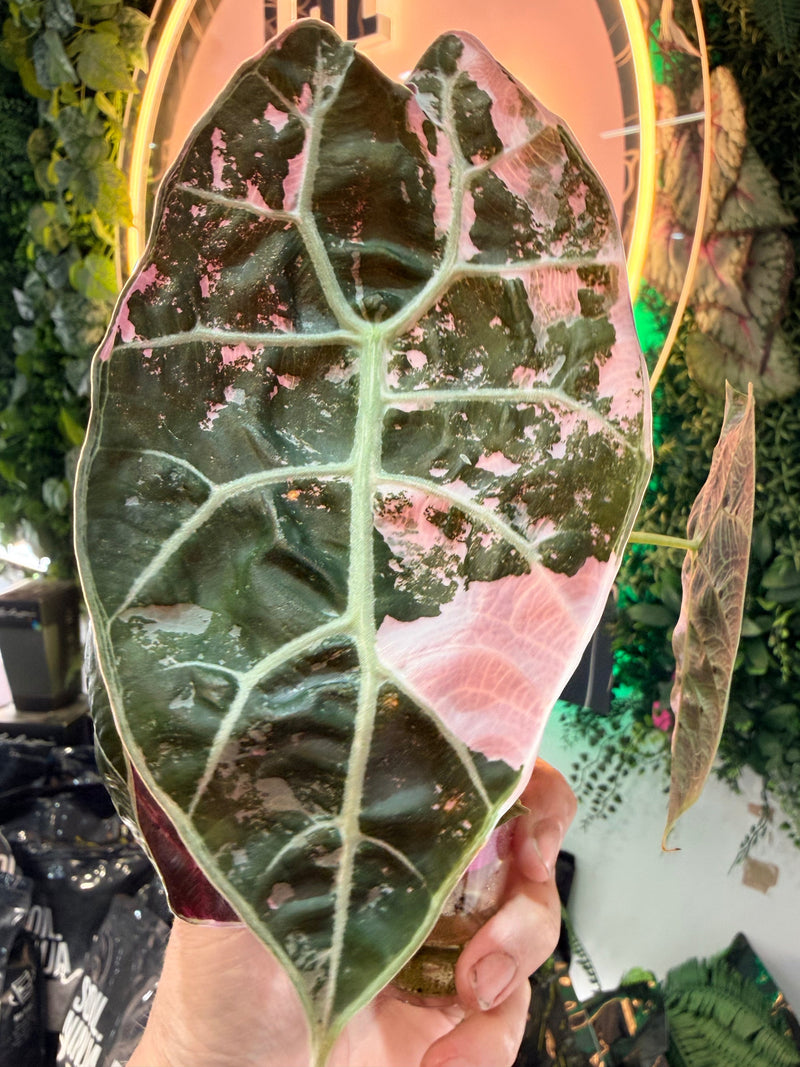
Within the longiloba group sits the 'Black Satun' cultivar, a form characterised by its dark, glossy, deeply lobed foliage and prominent silver primary venation. From this already striking base, the 'Stardust' selection introduces variegation that is unlike almost anything else in the collector's Alocasia world: fine, irregular white and cream speckling dusted across the dark blade surface, creating the visual impression of light scattered across a night sky. The name is entirely accurate, and for once in a genus where hyperbolic naming is common, undersells the effect.
This guide covers the botanical background of Alocasia longiloba as a species, the character of the 'Black Satun' cultivar, how the Stardust variegation pattern forms, and everything you need to know to grow this cultivar successfully in a UK collection.
The Species: Alocasia longiloba
Distribution and Historical Context
Alocasia longiloba is broadly distributed across Southeast Asia, with its natural range encompassing Borneo, the Malay Peninsula, Java, and surrounding island groups. Aroidpedia's extensive entry on the species documents a complex taxonomic history, the longiloba group is described as "most varied", with named cultivars including 'Denudata', 'Lowii', 'Silver', and 'Watsoniana' representing distinct morphological forms that have been in horticultural circulation for well over a century.
The species was first described and introduced to Western horticulture in the nineteenth century, and the variation within it created significant taxonomic complexity for early botanists. Aroidpedia notes that several former synonyms, including Alocasia singaporensis, described by Linden from Singapore-collected material, can be interpreted as falling within the longiloba 'denudata' form, based on the matching description of arrow-shaped leaves with large spreading basal lobes and dark green colouring. The breadth of variation within the species reflects its wide distribution across diverse tropical habitats, from the humid forest floors of Borneo to the lower canopy margins of peninsular Malaysia.
The climate across longiloba's natural range is characterised by high humidity, abundant rainfall exceeding 2,000 mm annually in many areas, and consistent warmth, the genus-level temperature range of 20°C to 35°C applies broadly, with the longiloba group naturally adapted to the everwet tropical forest environments of equatorial Asia. This climatic background informs the care requirements in UK cultivation: warmth, consistent moisture, and high humidity are not optional preferences for this species but direct requirements embedded in its evolutionary ecology.
longiloba as the Genus's Greatest Hybridiser
Aroidpedia's documentation of Alocasia longiloba lists it explicitly as the most prolific parent in Alocasia hybrid development, having been used in documented hybridisation efforts since the mid-1800s. The hybrid inventory is extraordinary:
Alocasia 'Amazonica', the single most widely grown ornamental Alocasia in the world, crossing longiloba 'Watsoniana' with Alocasia sanderiana in 1950s Florida. Alocasia 'Balloon Heart', a cross with Alocasia 'Aurora' via 'Lowii'. Alocasia 'Argyrea', crossed with Alocasia 'Pucciana', producing that distinctive large lanceolate leaf with silvery-white secondary venation. Alocasia 'Chelsonii', crossed with Alocasia cuprea at Veitch Nurseries, first documented in 1868. Alocasia 'Jean Merkel', Alocasia 'Kuching Mask', Alocasia 'Ivory Coast', and many others representing the breadth of what this species can contribute when crossed deliberately.
This hybridisation legacy matters as context when considering longiloba cultivars in isolation. A species that has contributed to such a wide range of successful crosses carries exceptional genetic plasticity, variation within longiloba itself is the foundation on which much of the modern collector Alocasia world was built.
The 'Black Satun' Cultivar
The 'Black Satun' name references the Satun Province of southern Thailand, a botanical naming convention that positions this form as originating from or being associated with that region, in a naming tradition common among Southeast Asian collectors and growers. 'Satun' forms of longiloba are characterised by their particularly dark adaxial leaf colour, a deep, glossy blue-green to near-black upper surface, and their elongated, sagittate leaf shape with deep basal lobes and bold primary venation. The silver primary veins contrast strongly against the dark blade, giving the standard 'Black Satun' form a high-contrast, architectural quality even without variegation.
The leaf shape is distinctly different from the compact, orbicular forms of jewel Alocasia. Longiloba carries long, narrow, sagittate leaves with extended posterior lobes that give the plant a more elongated, dramatic profile. At maturity, plants can reach 60 to 90 cm in height depending on conditions, producing multiple upright leaves from a central rhizome. The growth habit is more architectural than compact, with each leaf held upright on a petiole of proportionate length, creating a candelabra-like display when multiple leaves are active simultaneously.
The Stardust Variegation
Pattern and Character
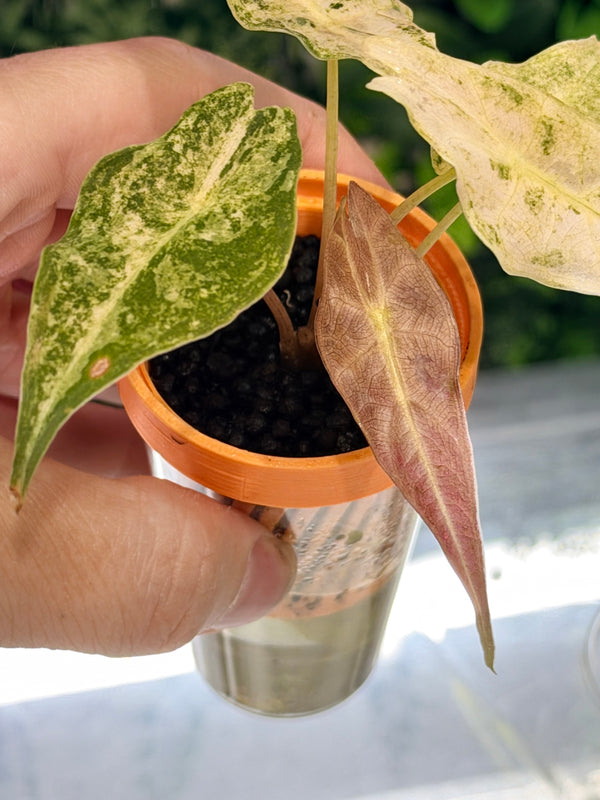
The 'Stardust' designation describes a specific variegation expression: fine, irregular speckling and sprinkling of cream to white across the dark blade surface, distributed unpredictably across the leaf area with no fixed pattern or sector arrangement. Unlike sectoral albo variegation, which creates large, clean areas of colour, or splash variegation, which tends toward concentrated irregular patches, the Stardust pattern is characterised by its granular, dispersed quality. Individual speckles are small, distributed across broad areas of the blade, and create a cumulative effect that genuinely resembles star fields when viewed against the very dark 'Black Satun' background.
The contrast this creates is remarkable precisely because of the base foliage. Against a conventionally mid-green leaf, fine cream speckles would be less dramatic. Against the deep, near-black glossy surface of 'Black Satun', each individual speck registers with clarity. The silver primary veins add a third tonal element, creating a tripartite dark green/silver/cream composition on each individual blade.
Some 'Stardust' specimens also carry a pink-tinted component to the variegation, where anthocyanin expression becomes visible in the de-greened speckling areas. This is particularly documented in tissue culture specimens where lower growing temperatures during the TC acclimatisation period can bring out pink tones in areas with reduced chlorophyll. The pink component, where it appears, adds yet another layer to what is already a complex visual composition.
Cellular Mechanism
The Stardust variegation pattern results from the same fundamental chimeric mechanism as other Alocasia variegation types, a somatic mutation in the apical meristem creating a population of cells unable to produce full chlorophyll content. What distinguishes the Stardust expression from sectoral or splash patterns is the distribution of these chimeric cells within the meristem layers.
In large sectoral variegation, a substantial proportion of the outermost meristematic layer (the L1 or L2 layers in three-layer meristem models) carries the mutation, producing large, clean sectors of variegated tissue. In the fine speckle pattern of Stardust, the chimeric cells are more discretely distributed, appearing as individual or small-cluster mutant cells surrounded by normally functioning green cells. As leaf tissue develops from the meristem, these isolated mutant cells produce small areas of de-greened tissue surrounded by normal green tissue on all sides, rather than coalescing into sectors.
This distribution pattern has a practical implication: because each individual speckle is small and surrounded by green tissue, the photosynthetic capacity of the blade is less compromised than in heavily sectorally variegated plants of similar total variegation percentage. A Stardust-patterned leaf with 30 percent variegated area may actually photosynthesise more efficiently than a sectoral albo leaf of the same percentage, because the individual speckles are supported by adjacent green cells. This makes Stardust-type variegation, in general terms, more tolerant of growing conditions than pure albo sectoral forms.
For context on the broader variegation science across albo, aurea, and pink types in the genus, our complete guide to Alocasia variegation covers the underlying cellular mechanisms in detail.
Tissue Culture and Acclimatisation Context
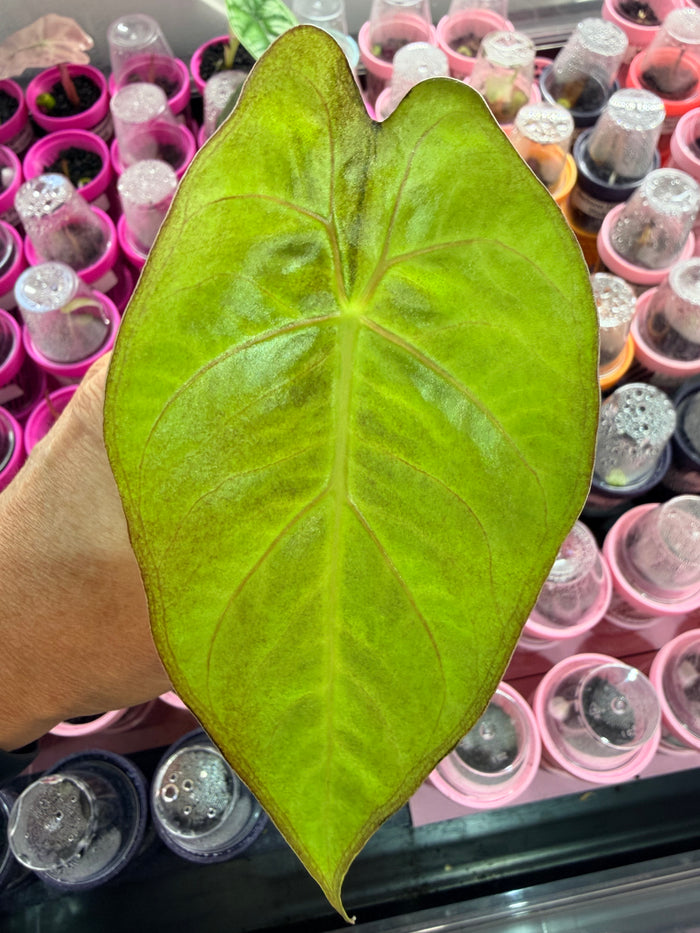
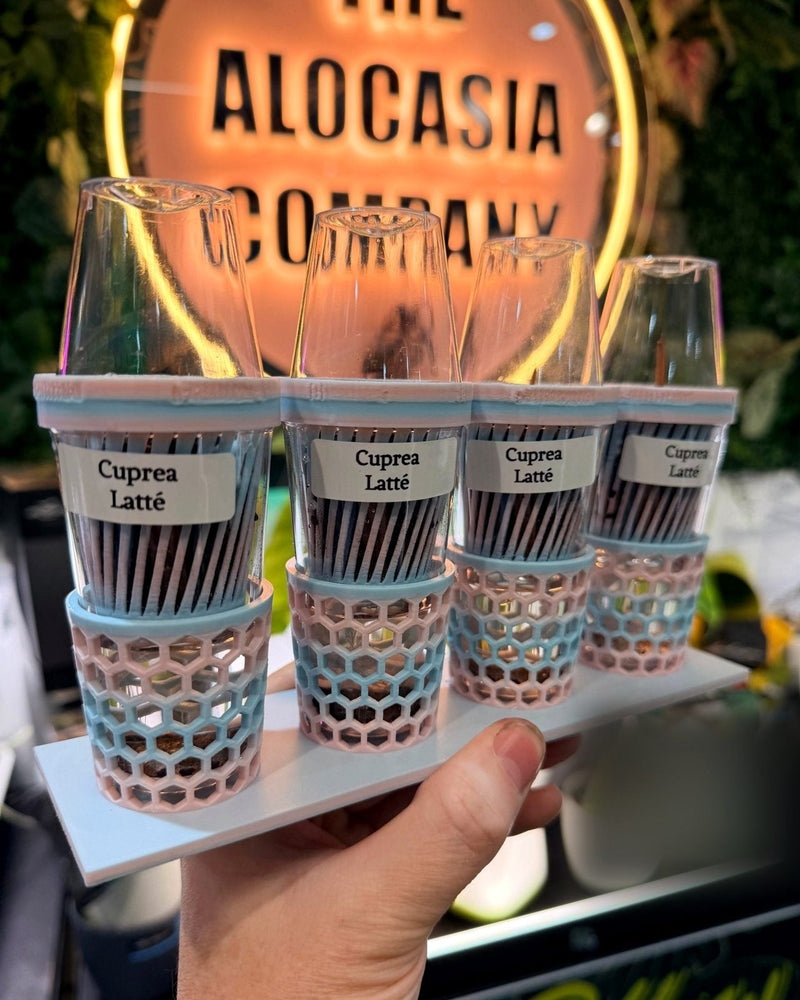
The Alocasia Longiloba Satun Stardust is available in our collection as a tissue culture-propagated specimen. This means plants have been raised from sterile laboratory conditions, consistent nutrient availability, controlled temperature, 95 percent or higher humidity, and zero environmental variation, and must be acclimatised to the variable conditions of a home growing environment before being treated as established plants.
Plants grown from tissue culture and acclimatised in sterile environment carry the genetic variegation stably, but the transition from laboratory to home environment requires careful management. For a full guide to the acclimatisation process, our tissue culture acclimatisation guide covers every stage from initial unboxing through to full establishment.
The pink colouration reported in some TC specimens of 'Stardust', documented by specialist growers, appears related to lower temperatures during the latter stages of tissue culture production. Once plants are acclimatised to stable home growing conditions, the pink expression may reduce to cream and white. This is normal behaviour and does not indicate a problem with the plant.
Growing Alocasia Longiloba Satun Stardust in the UK
Light
Alocasia longiloba in its unvariegated form tolerates a reasonable range of indirect light conditions, consistent with its forest floor ecology. The Stardust variegated form is more demanding of light because the speckled areas, despite their fine distribution, represent tissue with reduced photosynthetic capacity. Bright, indirect light, from a south or east-facing window position, or supplemented with LED grow lights, is the target. This is particularly important where natural light intensity and duration are low.
Direct sunlight is not advisable. The glossy, dark leaf surface of 'Black Satun' forms absorbs heat readily, and prolonged direct exposure can cause the blade to overheat and develop brown scorched areas. Diffused natural light or LED supplementation is the correct approach.
Substrate and Watering
The tropical forest floor ecology of longiloba indicates a plant adapted to consistently moist, humus-rich substrate with good drainage, quite different from the limestone cliff specialists among the jewel forms, but still requiring drainage to prevent waterlogging at root level. Fluval Stratum provides an excellent growing medium, maintaining appropriate moisture levels while preventing the anaerobic compaction that causes root rot. The root system of longiloba forms is more extensive than in compact jewel types, so pot size should be chosen to accommodate root spread rather than simply matching the above-ground mass.
Water when the top 2–3 cm of substrate dries, and water thoroughly until it runs freely from the drainage holes. Reduce watering frequency when growth slows, to reflect the reduced evapotranspiration rate of a plant in reduced light and lower temperatures.
Temperature
The tropical origin of longiloba means this is a plant that strongly prefers warmth. A minimum of 16°C at root level is advisable, with optimal growth occurring between 20°C and 27°C. In UK homes, the most common problem is cold windowsills, particularly at night, when glass can drop to near-outdoor temperatures in a cold snap. Moving the plant a short distance from glass during cold spells, or placing it on an insulating mat, prevents the substrate temperature from dropping to damaging levels.
Humidity
Consistent humidity at 60 to 75 percent is the target range. In the natural rainforest environment of longiloba, humidity is rarely below 70 percent, and the large leaves of the species are adapted to an environment where moisture is abundant. UK homes frequently drop well below this, particularly with central heating when radiators drive indoor humidity toward 30 to 40 percent. A humidifier in the growing area, grouping plants together, or situating the plant in a naturally humid room are all effective strategies.
Feeding
A balanced liquid feed at half to two-thirds strength every two to three weeks supports healthy growth and leaf production. Longiloba forms are active growers when conditions are appropriate and respond well to regular feeding. Reduce feeding when growth slows. Our plant feed collection covers appropriate formulations for mid-size aroids.
Pests and Common Problems
Spider Mites
Longiloba forms with dark, glossy leaves are particularly susceptible to spider mite infestations, and the Stardust's fine speckling can initially make early mite damage difficult to spot. Spider mites produce pale stippling across the adaxial surface as they feed on individual leaf cells, a subtle change on an already-speckled leaf that can go unnoticed until the infestation is established. Regular inspection of the undersides of leaves, where mites colonise first, is the most reliable early detection method.
Prevention through humidity management is the most effective approach. Spider mites struggle to establish populations in environments with consistent humidity above 60 percent. Where heating systems dry indoor air significantly, mite risk is greatest, making humidity management doubly important for protecting the leaf surface from both cold stress and pest damage.
If mites are identified, isolate the plant immediately and treat with an insecticidal soap or neem oil solution applied directly to leaf undersides. Multiple treatments are required to break the egg cycle, a single application will not eliminate an established population.
Thrips
Thrips are increasingly common in UK plant collections and can spread rapidly between specimens in a mixed growing area. They are characterised by silvery streaking across the adaxial surface and distorted or abnormally narrow new leaf growth. On the Stardust, where some surface mottling is expected from the variegation itself, thrips damage can be distinguished by the directional streaking pattern and by the presence of the insects themselves (or their frass) on leaf undersides or in emerging new leaf sheaths.
Treatment follows similar lines to mite management, isolation, repeated insecticidal treatment, and inspection of all surrounding plants in the collection.
Propagation via Corms
Alocasia longiloba produces corms at the base of the rhizome system that can be harvested and propagated using the same principles as other Alocasia corm propagation methods. Variegated corms from 'Stardust' specimens carry the chimeric genetics and have the potential to produce variegated offspring, though as with all chimeric variegation, expression in corm-grown plants is variable and cannot be guaranteed. Our Corm Keeper propagation system is designed to support corm germination success across mid-size Alocasia species including longiloba types.
Collector Context
The Alocasia Longiloba Satun Stardust occupies a distinct niche in the collector's Alocasia world. It is neither a compact jewel form nor a large architectural specimen, it sits in the mid-range of scale with a growth character that is manageable in most UK home settings while producing leaves of genuine visual complexity. The slow propagation rate of 'Stardust' variegated forms through tissue culture means availability remains consistently limited, which is why this plant retains its collector status despite the longiloba species as a whole being widely available in green forms.
If you are building a collection that extends across scale and variegation type, the Stardust sits naturally alongside the pink variegated Alocasia collection and the aurea variegated forms. Its speckling pattern creates a visual contrast with the sectoral and splash patterns of other variegated cultivars, adding textural variety to a display that benefits from diversity of expression rather than repetition of the same variegation type.
For context on how longiloba genetics translated into the hybrid Alocasia world, our guide to Alocasia 'Amazonica' and the longiloba hybrid tradition provides the broader historical narrative behind one of the most influential species in ornamental aroid cultivation.
Questions about Alocasia Longiloba Satun Stardust, tissue culture acclimatisation, or building a diverse variegated Alocasia collection? Contact our team for guidance from specialists who grow and acclimatise tissue culture Alocasia at our UK-based private nursery. We're happy to advise at every stage from acclimatisation through to long-term establishment.