

Plant Description
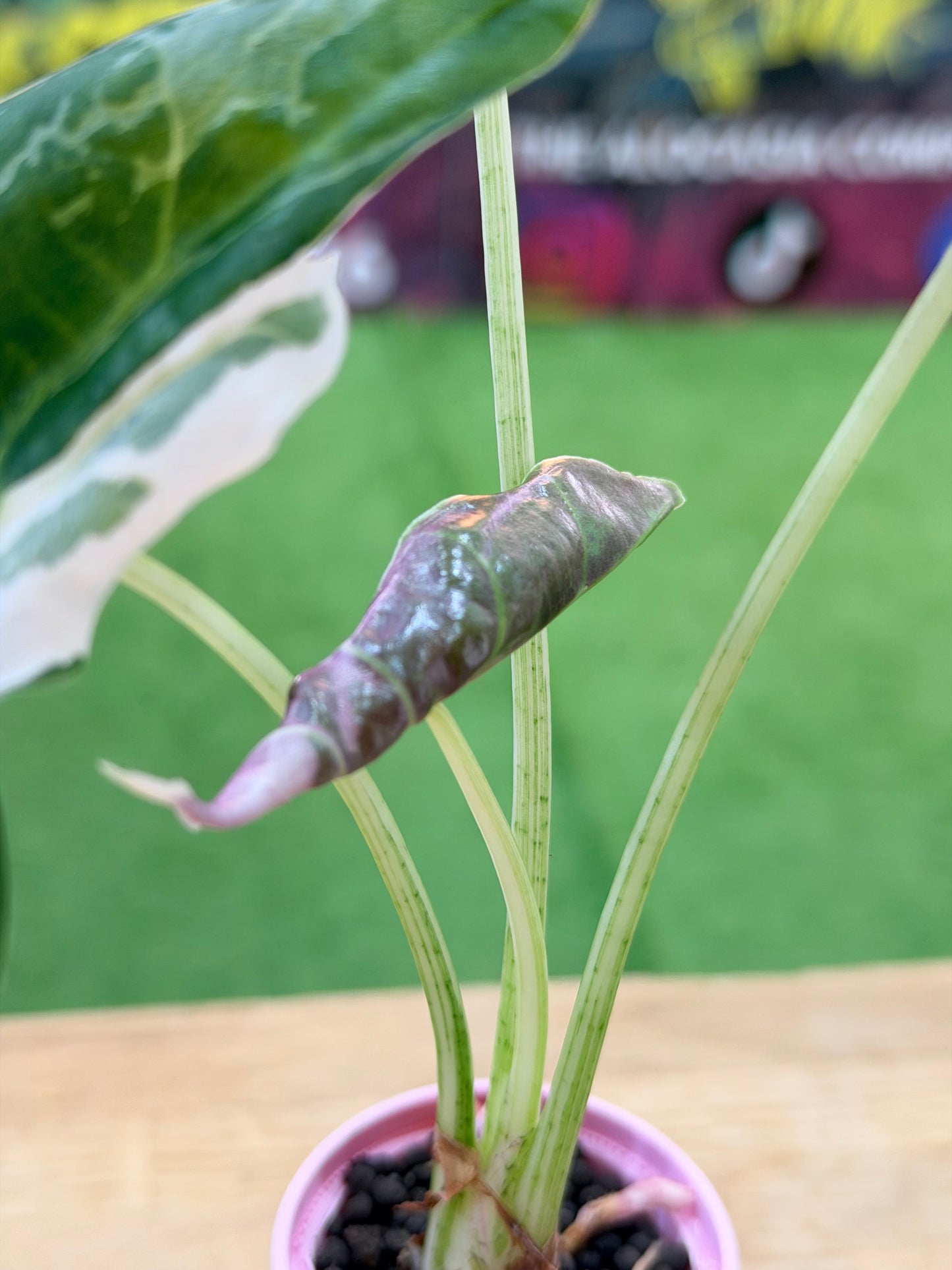
Alocasia longiloba Pink Back Albo is an exceptionally rare find. This cultivar shows a strong contrast, deep green leaf tops paired with pink and white undersides that glow when backlit. As new leaves unfurl, the interplay of colour is the point of the plant. It retains the same growth habit as the classic Longiloba, and it will suit a collection built around rare Alocasia.
Light
The Longiloba Pink Back Albo thrives in bright, indirect sunlight. Avoid direct sun exposure, which can scorch its delicate, variegated leaves. A spot near an east or north-facing window is ideal to keep its foliage in good colour and health.
Water & Humidity
Keep the growing medium evenly moist but not soggy. Water thoroughly when the top 1 to 2 inches feel dry. High humidity, 60% or above, is essential for good growth. Consider a humidifier, a pebble tray, or grouping with other tropical plants to hold moisture in the air.
Fertiliser
Feed monthly during the active growing season, spring through early autumn, with a diluted, balanced liquid fertiliser. Reduce feeding frequency or pause entirely during the winter months when growth slows.
Growth Rate
The Longiloba Pink Back Albo is a moderate grower, forming arrow-shaped foliage as it matures. Under good conditions you can expect new leaves every few weeks during the warmer seasons.
Pet Safety
The Longiloba Pink Back Albo is not pet-safe. Its leaves contain insoluble calcium oxalates, which can cause irritation and gastrointestinal distress if ingested by cats, dogs, or other animals. Keep out of reach of animals in the household.
Grow in Semi-Hydro
The Longiloba Pink Back Albo transitions well into semi-hydroponic setups. Use LECA (Lightweight Expanded Clay Aggregate) and a suitable vessel with a reservoir. Maintain consistent nutrient levels with a hydroponic fertiliser, and ensure roots remain oxygenated and never fully submerged.
All plants are grown in Fluval Stratum, our preferred early-stage medium for corms and baby Alocasia, held in our 3D printed Corm Keeper stand. Once fully rooted and at juvenile size we repot into our own pon mix, blended from components in our Soil Ninja range.
Tips
- Rotate your plant regularly to encourage even growth on all sides.
- Wipe the leaves occasionally with a damp cloth to remove dust and boost photosynthesis.
- If leaves start yellowing, check for overwatering or root rot, and adjust care accordingly.
- Repot every 1 to 2 years, or when the plant becomes rootbound, to encourage healthy development.
- Watch for common pests such as spider mites and aphids, and treat promptly with insecticidal soap if necessary.
Offered as Corm, Juvenile and Mature.
Plant Genus
Lighting Conditions
Alocasia thrive off good lighting. The use of grow lights can help with darker areas of your home.
Humidity & Water
The only rule! Don't over water, keep your substrate moist, not wet. Less is more in every watering. High humidity is essential; aim for 60% or higher. Use a humidifier, pebble tray, or regular misting
Semi Hydro Growing
Using LECA or pon you can grow your plants without soil. Read our blog for more information
Feed Your Plant
Every watering during the growing season (spring & summer) using a water-soluble nutrients
Pet Safety
Alocasia contain insoluble calcium oxalates and can be toxic if ingested by cats, dogs, or children