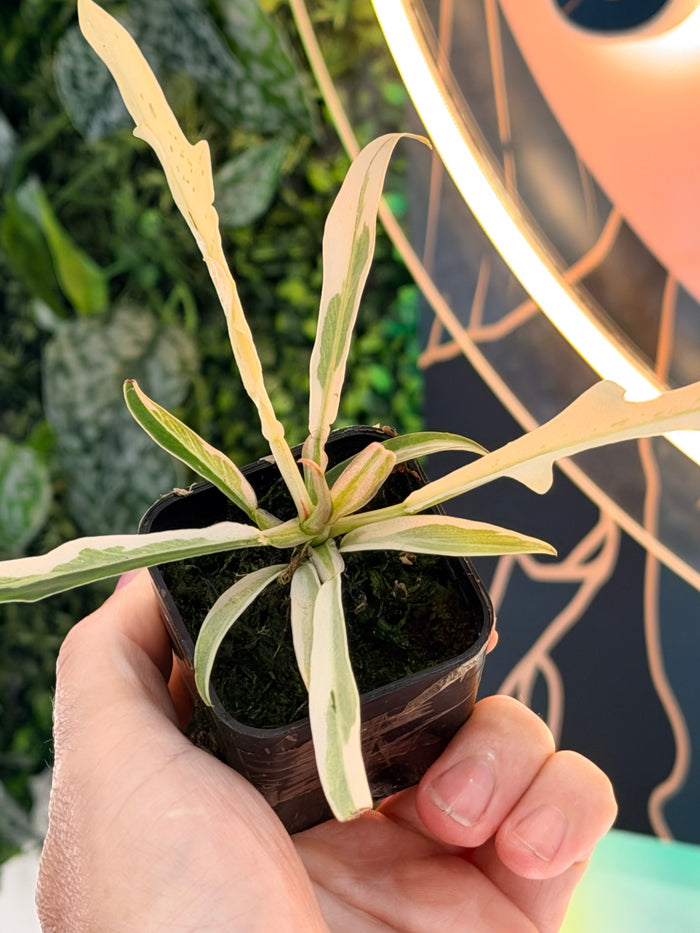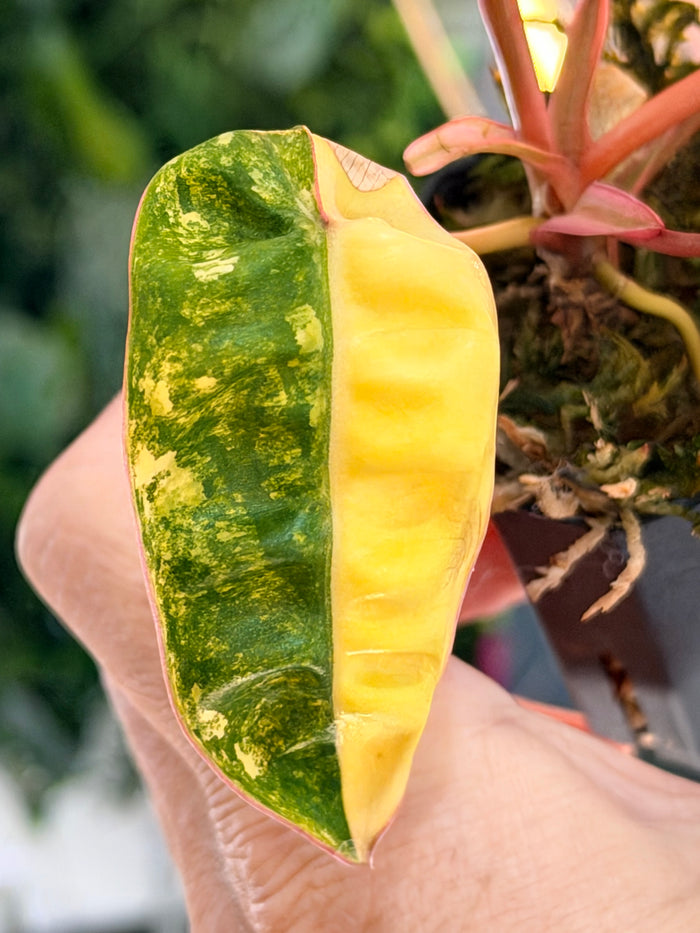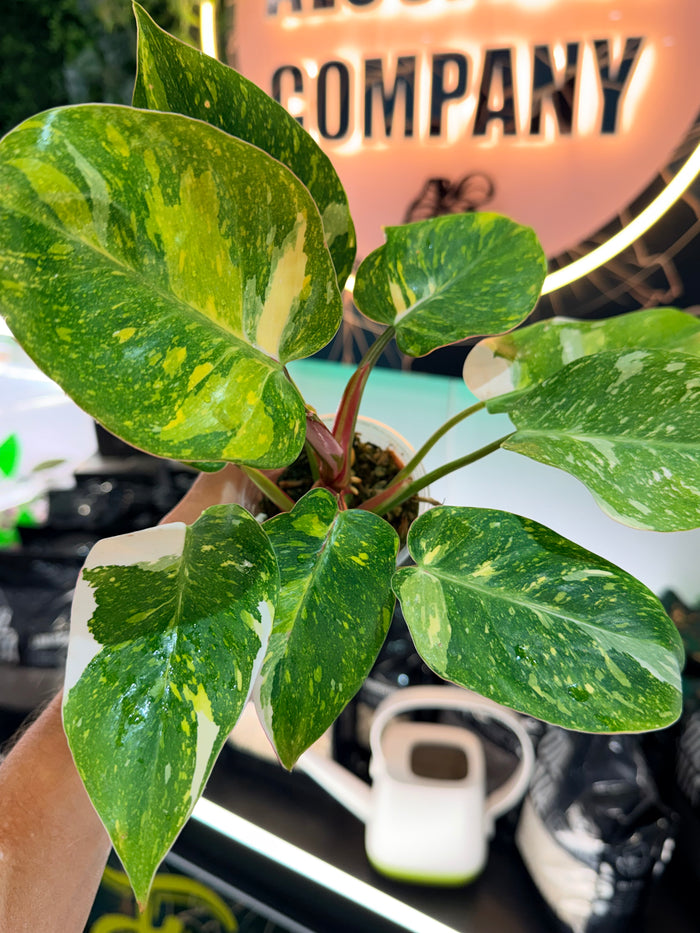
Alocasia Cucullata Mint Variegated: The Complete Collector's Guide

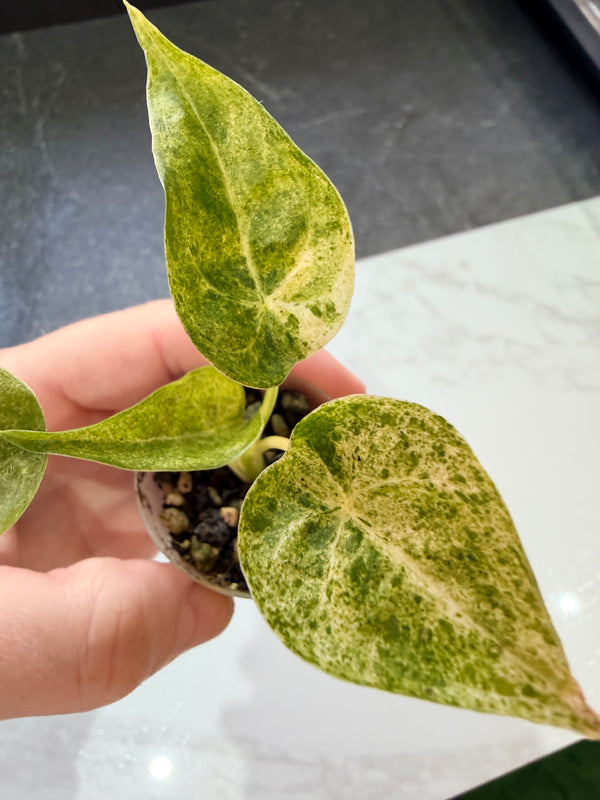
The Alocasia Cucullata Mint Variegated brings cool chartreuse-green mint variegation to one of the oldest and most culturally significant Alocasia species in the genus. Alocasia cucullata holds the distinction of being one of the first Alocasia ever formally described, published in 1790 under the genus Arum before the genus Alocasia existed, and has been cultivated in Buddhist temples in Laos and Thailand for centuries as a good-luck and blessing plant. Adding mint variegation to this species connects collector botany with one of the longest documented human-plant relationships in the Alocasia genus.
Alocasia cucullata is native from Sri Lanka through the Himalayan foothills, China, and Indo-China, a broad distribution that reflects a species long cultivated and spread by human activity alongside its natural range. The species name cucullata comes from the Latin cucullatus, meaning hooded, referring to the characteristic shape of the leaf tip and the spathe. Known also as Buddha's Palm, Chinese Taro, and Hooded Dwarf Elephant Ear, it is used traditionally across its range as a topical medicine for viper bites, abscesses, and rheumatism, and is among the few Alocasia species that branches naturally after a blooming cycle, an unusual botanical characteristic. In cultivation it reaches 60-100cm with glossy, bright to medium green heart-shaped leaves on robust upright petioles, growing with a compact, bushy character that makes it suitable for indoor display without requiring extreme space.
Mint variegation on Alocasia cucullata produces cool chartreuse-green sectors through the partial chlorophyll and carotenoid reduction mechanism characteristic of mint expression across the genus. On the bright, slightly glossy green of cucullata's blade, lighter and warmer in tone than many of the dark jewel species, the mint sectors create a relatively subtle tonal variation rather than high contrast. The cool mint reads against the slightly warmer bright green base as a refreshing, graduated difference rather than a dramatic opposition, giving the Cucullata Mint a restrained and elegant character. The compact, bushy habit means the mint expression is distributed across multiple leaves simultaneously, creating a more botanical, garden-like impression than the single-stem jewel specimens.
Mint sectors retain photosynthetic capacity, making this one of the more vigorous variegated forms, cucullata's inherent resilience and compact habit combine with the photosynthetically active mint tissue to produce a plant that is among the more approachable variegated Alocasia for collectors building experience.
Care Requirements
Bright indirect light year-round with LED grow lighting from October through March. Temperature 20-27°C, humidity 60-80% maintained with a dedicated humidifier. Fluval Stratum substrate, thorough watering when the top 2-3cm is dry, never standing water. Feed with our plant feed range at the appropriate strength for the variegation type during the growing season. A heat mat beneath the pot supports root zone health through UK winters. Our complete variegation guide covers all expression types in full detail.
We release Cucullata Mint through our drop model. Join the collector list and view our Alocasia Cucullata Mint Variegated listing.
Questions about Alocasia Cucullata Mint or this species' Buddhist temple heritage? Contact our team for specialist guidance.